
Fueling Persecution Part 4 of 4: When Economic Pressure Finishes What Persecution Started
By ICC Fellow Lisa Navarrette
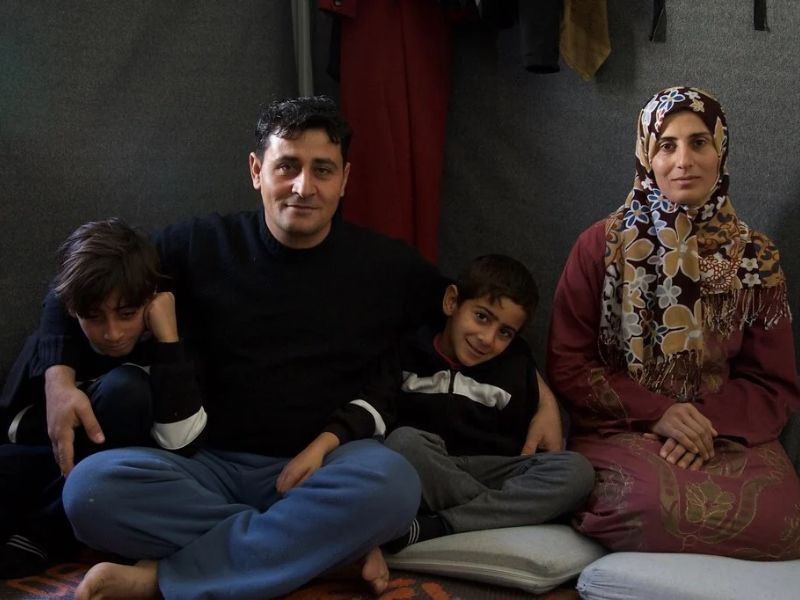
For years, Fadi has told his children the same thing: We stay.
He is a Christian father in Lebanon. His family has lived in the same town for generations, and his parents are buried nearby. Fadi’s children were baptized in the church where he married his wife, Nour. His small business survived political unrest, the economic collapse, the Beirut port explosion, and another round of regional conflict.
Leaving always felt like surrender. But lately, the calculation has changed.
Fuel costs have risen again. Groceries take a larger share of the family’s income. Electricity is unreliable, so the business depends partly on a generator. Transportation costs more. His oldest daughter has been accepted to a university abroad, while his younger son talks openly about finding work in Europe.
One evening, Fadi places two folders on the kitchen table. One contains bills. The other contains immigration documents.
“We don’t have to decide tonight,” she said. Fadi looks at the paperwork for a long time.
Years earlier, violence made the family afraid to leave home. Now economics is making them wonder whether they should leave the country. That is the final link in the chain this series examines.
Fighting to Stay
High fuel prices do not create religious persecution. But when families have already endured violence, displacement, discrimination, destroyed livelihoods, or political instability, rising energy costs can make recovery harder and staying less sustainable.
In 2026, the World Bank warned that the Middle East conflict had created a major energy shock, raising fuel prices, increasing inflation, disrupting transportation and logistics, and weakening economic growth. Its October 2026 regional economic update found that fragile and conflict-affected economies were experiencing especially severe pressure, with poverty still rising in parts of the region even as it declined elsewhere.
Those regional trends eventually become household questions: Can the business stay open? Can the family still afford food? Will there be jobs for the children? Is rebuilding worth the cost?
Lebanon illustrates how those pressures can accumulate. Christians there have not experienced the same mass expulsion seen in parts of Iraq or Syria, but International Christian Concern (ICC) has documented how economic collapse, political instability, regional conflict, and emigration continue to weaken one of the Middle East’s most important Christian communities.
No single crisis explains why a family leaves. That is what makes the process easy to overlook.
A Christian family may survive violence but lose its savings. It may survive political instability but lose its business. It may rebuild after displacement only to discover that electricity, fuel, food, and transportation have become increasingly expensive.
Eventually, the question is no longer only whether the family is safe. It is whether the family can build a future.
Affording Daily Life
The same dynamic is evident in Syria, where many people have tried to return after years of war.
In May 2026, ICC reported that about 1.67 million refugees and 1.9 million internally displaced Syrians had returned since December 2024. Yet the agency warned that damaged housing, limited livelihoods, weak infrastructure, poverty, and restricted access to basic services continued to threaten the sustainability of those returns.
A separate 2026 assessment hosted by UNHCR reached a similar conclusion: whether people remain after returning depends heavily on housing, employment, services, and economic opportunity.
For Christian communities, that distinction matters. Imagine a family returning to a Syrian town after years abroad. They repair part of their home. Their children reenter school. The father begins rebuilding a small business. Then expenses start adding up. Electricity remains unreliable. Fuel for the generator costs more. Transportation to work and school takes a larger share of income.
Food prices rise because merchants and farmers are also paying higher transportation costs. The family may have survived the war. The question now is whether life after the war is sustainable. This is where energy inflation becomes part of the long aftermath of persecution.
In June 2026, the World Bank warned that higher energy prices and inflation were slowing global growth and disproportionately affecting developing economies.
For families with savings, stable employment, functioning infrastructure, and access to credit, those shocks may be painful but manageable. A displaced or persecuted family may have far fewer resources with which to absorb them.
That difference matters because recovery is not simply about rebuilding buildings. A family must also be able to afford daily life once it returns.
If a shop cannot operate profitably because generator fuel is too expensive, reopening it may not be enough. If transportation to school or work becomes unaffordable, returning home may not feel like recovery. And if children see few opportunities ahead, parents begin considering alternatives.
Over time, those household decisions affect entire communities. When young families leave, churches lose members. Christian schools lose students. Businesses close. Fewer young adults remain to build families and institutions locally. What begins as an economic decision at the household level becomes a demographic shift at the community level.
A New Narrative
Back in Lebanon, Fadi and Nour are still sitting at the kitchen table. Their church remains open. No militant is standing outside their door. No law orders them to leave. But they are comparing two futures.
One offers history, belonging, faith, family graves, familiar streets, and a community their ancestors helped build.
The other offers more stable employment, reliable infrastructure, educational opportunities, and the possibility that their children will spend less of their lives recovering from one crisis after another. That is the central lesson of this series. The global energy crisis does not create religious persecution; it magnifies its consequences.
Part one showed how higher fuel prices can turn ordinary inflation into a survival problem for families already damaged by persecution. Next, part two showed how those same costs make humanitarian assistance more expensive to deliver. Part three examined how economic strain can deepen existing social and religious fault lines. Part four brings those pressures together at the household level.
ICC continues helping persecuted Christians rebuild livelihoods, access emergency assistance, and remain resilient in communities affected by violence and instability.
Supporting recovery does more than meet an immediate need. It can help families believe that rebuilding at home is still possible.
To read more news stories, visit the ICC Newsroom. For interviews, please email us. To support ICC’s work around the world, please give to our Where Most Needed Fund.