
Fueling Persecution Part 2 of 4: When Aid Becomes More Expensive
By ICC Fellow Lisa Navarrette
By 7 a.m., Connor has already checked the fuel gauge twice.
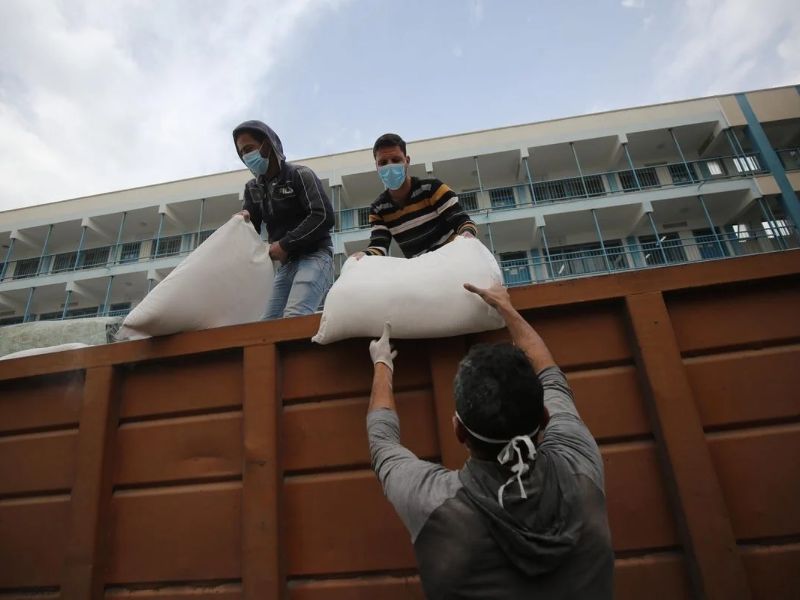
He works with a small Christian relief team in Syria, where his day begins before the roads become crowded. In the back of the van are boxes of food, medicine, bottled water, and hygiene supplies destined for several Christian families still struggling after years of war and displacement.
The route is familiar. The cost is not.
At one time, the van made the trip without Connor thinking much about fuel. Now diesel costs more, food costs more, and replacement parts cost more. The organization has the same donors, the same families waiting for assistance, and roughly the same amount of money to work with.
Something has to give.
He looks at the list on the passenger seat. Twenty-four families are scheduled to receive assistance that day. One includes an elderly widow living with two grandchildren. Another returned to Syria after years abroad but has not been able to find steady work. A third family lost its small business during the conflict.
He also knows the math. If transportation costs keep rising, the organization may eventually have to make fewer trips, reduce what each family receives, or postpone assistance to communities farther away.
Several miles away, Hana is waiting. She is a Syrian Christian mother whose husband has struggled to find consistent work since returning to their hometown. Their family receives occasional food and medical support through a local church. The assistance does not provide everything they need, but it helps close the gap between what the family earns and what daily life costs. When the van arrives late, she worries. When it doesn’t arrive at all, she worries even more.
Compounding Difficulties
The global energy crisis looks different from inside a humanitarian aid vehicle. In the U.S., rising gasoline prices affect household budgets, trucking companies, airlines, and retailers.
Humanitarian organizations experience those same increases, but they often work where transportation is already difficult, and those they serve have few alternatives.
In 2026, the World Food Programme warned that rising fuel costs were directly increasing the cost of humanitarian operations. According to WFP reporting on global trade disruptions, shipping costs had risen by about 20% and aviation fuel costs by roughly 35% as global supply disruptions intensified.
The problem is simple: humanitarian budgets are finite. If transporting food costs more, less money may remain for the food itself.
That pressure was already visible in Syria. In May 2026, WFP announced that funding shortages had forced it to cut emergency food assistance from 1.3 million people to 650,000 people, and halt a nationwide bread subsidy program that had helped millions afford a basic food staple. At the time, 7.2 million Syrians were acutely food insecure.
Fuel prices weren’t the only cause. Funding shortages, conflict, displacement, poverty, and economic instability played a role. But rising transportation costs made an already difficult humanitarian response more expensive.
For Christians, those constraints can be especially serious. International Christian Concern (ICC) has documented how Syrian Christians were denied assistance during previous crises, including the devastating 2023 earthquake. Christians in marginalized areas often depended on churches and the few organizations able to reach them.
This is where logistics becomes part of the persecution story. Food sitting in warehouses doesn’t help a family until someone moves it. Medicine doesn’t help a patient until it reaches a clinic. Building materials cannot restore a damaged home until they’re delivered.
Every stage depends on transportation. Transportation depends on fuel.
Crunching Numbers
Back in Connor’s van, those global calculations become local decisions. If fuel, generator use, and delivery costs consume more of the organization’s monthly budget, something else may have to shrink.
One remote village might receive assistance less often. A food package might become smaller. A livelihood project might be postponed.
No dramatic headline appears when that happens. Yet those reductions matter to families already living close to the edge. The problem becomes even more serious because persecution can create dependency before rising costs make that dependency harder to support.
A family may first lose a home, business, farm, or income because of violence. Then it depends on outside assistance. Finally, the cost of delivering that assistance rises. The people least able to absorb an economic shock become dependent on organizations that are also struggling to absorb it.
ICC’s work in Syria shows why long-term recovery matters. It has supported Christian families with food, water, medical care, emergency assistance, and projects designed to create sustainable sources of income.
Going the Extra Mile
For Hana’s family, the difference between emergency aid and long-term support could be profound. A food package helps them survive this month. A project that helps her husband reopen a small shop could eventually let them buy food without depending on future deliveries.
Yet even rebuilding livelihoods requires transportation, equipment, supplies, and often electricity. The energy crisis reaches both sides of the equation: it makes emergency relief more expensive and economic recovery harder.
This is why the effects of rising fuel prices extend beyond the gas pump. They influence how often and how far humanitarian organizations can travel, how much assistance they can carry, and how quickly families can become economically independent.
For an American household, higher fuel prices may mean cutting something from the monthly budget. For a humanitarian organization, they may mean deciding which community to reach first.
Of course, for persecuted Christian families, those decisions can shape whether recovery continues or stalls.
Connor eventually reaches Hana’s neighborhood. The van doors open, families gather, and boxes are unloaded one by one. For that day, the assistance arrives. But every delivery carries hidden costs the family receiving it may never see.
And as fuel prices rise, helping persecuted Christians becomes more expensive precisely when vulnerable communities can least afford to be forgotten.
Part three will examine the next link in the chain: how rising fuel and food prices can intensify scarcity, social tension, and competition for resources — and how extremists and political movements can exploit that frustration by turning vulnerable religious minorities into convenient scapegoats. Be sure to read the rest of the four-part series.
To read more news stories, visit the ICC Newsroom. For interviews, please email us. To support ICC’s work around the world, please give to our Where Most Needed Fund.