
Pastor Jin’s Release Does Not End China’s Persecution of Christians
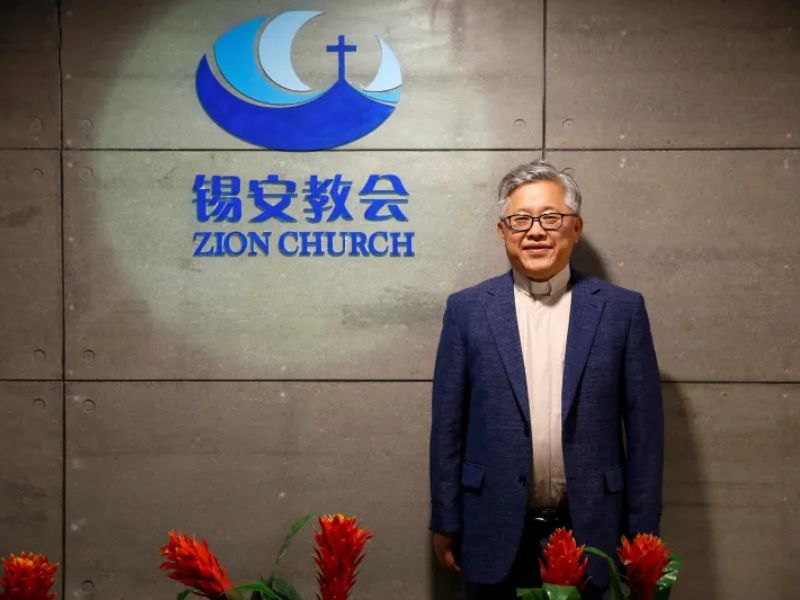
The release earlier this year of Pastor Ezra Jin Mingri after nine months in Chinese detention marked a significant victory for religious freedom advocates, but it has done little to change the circumstances facing Christians who refuse to submit to government control.
Eight leaders of Jin’s own Zion Church remain imprisoned, while other independent congregations across China continue to face raids, surveillance, and restrictions on worship.
Jin, founder of one of China’s largest unregistered Protestant churches, was arrested in October 2025 during a nationwide crackdown on Zion Church leaders and members. He was released on July 3, 2026, after U.S. President Donald Trump appealed to Chinese President Xi Jinping during their May meeting in Beijing.
The intervention demonstrated that the United States can use its diplomatic influence to secure the release of religious prisoners in China. Yet the continued imprisonment of Jin’s colleagues underscores the limits of pursuing one high-profile case at a time.
Jin has since urged Americans to continue advocating for those left behind. His release should mark the beginning of a broader effort to defend religious freedom in China, not the conclusion of one.
8 Zion Church Leaders Remain Imprisoned
Chinese authorities arrested Jin and dozens of other Zion Church leaders and members in October 2025. Eight remain detained: Wang Lin, Yin Huibin, Wang Cong, Lin Shucheng, Liu Zhenbin, Gao Yingjia, Elder Wang Zhong, and Wu Qiuyu.
The detainees face charges connected to their church’s activities, including the use of information networks and alleged illegal business operations. Their cases stem from the congregation’s efforts to continue Christian worship outside the government-controlled religious system.
Zion Church had faced years of pressure before the arrests. Authorities shut down its main Beijing location in 2018 after the church refused to install facial recognition cameras to monitor worshippers. Officials also pressured landlords to evict the congregation, disrupted services, and restricted its ability to gather openly.
The church continued through smaller gatherings and online worship, eventually expanding its reach across dozens of Chinese cities. Authorities later targeted its leaders in a crackdown that extended well beyond Jin.
Jin’s release has not ended the campaign. The eight remaining leaders are still deprived of their freedom, while other Zion Church members face criminal charges and restrictions. The persecution of the congregation demonstrates that the Chinese government’s objective extends beyond detaining a particular pastor: it seeks to bring independent Christian ministry under state control.
American Influence
Trump’s intervention helped secure Jin’s release and reunite him with his family in the United States after nearly a decade apart — they had fled China years before his imprisonment. The outcome showed the potential of direct presidential engagement to influence how China treats prisoners.
However, Beijing’s continued imprisonment of Jin’s colleagues shows that the underlying system of repression remains intact.
Jin has recognized this danger. Rather than treating his freedom as the end of the matter, he has called on Americans to continue speaking out for his imprisoned colleagues and other prisoners of conscience in China.
“I hope people don’t think ‘We succeeded’ and forget the others,” Jin told The New York Times after his release. “We must go all out and speak out. That’s what my family did, and look at the result.”
Advocates have continued to call for the United States to continue pressing for the unconditional release of the eight Zion Church leaders and all others imprisoned for their religious beliefs. Jin and others advocate making religious freedom a consistent priority in U.S. dealings with Beijing, alongside trade, security, and other strategic concerns.
Ultimately, the goal must be more than securing individual releases. It must be a global effort to ensure that governments cannot imprison people for peacefully practicing their faith, regardless of their religion, nationality, or political significance.
A Nationwide Campaign Against Religion
The persecution of Zion Church is part of a broader campaign by the Chinese Communist Party (CCP) to subordinate religious life to party ideology. Under President Xi Jinping, the government has intensified its Sinicization of religion policy, requiring religious communities to align their teachings and activities with the party’s political priorities.
The government strictly supervises registered religious groups, while independent congregations face pressure to join state-controlled organizations or stop operating.
Authorities have closed churches, removed crosses, restricted religious materials, monitored worshippers, and prosecuted religious leaders. New restrictions on online religious activity have further limited independent pastors’ ability to teach and organize congregations.
The crackdown extends beyond Protestant Christianity. Uyghur Muslims in Xinjiang face mass detention and coercive assimilation, while Tibetan Buddhists face restrictions on religious practice and interference in religious leadership. Independent Catholic clergy and other religious minorities also face state pressure.
China’s government seeks to ensure no religious institution operates beyond the CCP’s reach. When churches maintain independent leadership, teach without political interference, or build networks beyond state supervision, authorities treat that independence as a challenge to their control.
The consequences are visible in the cases of Zion Church, Early Rain Covenant Church, and other congregations whose leaders have been imprisoned for continuing their religious activities.
Pastor Jin’s release has not changed the conditions that led to his arrest, and Christians across China continue to face the same fundamental choice between submitting to government control and risking punishment for practicing their faith.
A Global Push for Religious Freedom
The United States demonstrated that its diplomatic influence can help secure the release of an individual religious prisoner. That influence should now be directed toward the broader goal of ending the persecution that makes such interventions necessary.
The eight Zion Church leaders still detained must be released, and the Chinese government must stop criminalizing peaceful religious activity. The United States should work with allies, international institutions, and religious communities across faith traditions to consistently press for these changes.
Religious freedom cannot depend on a prisoner’s prominence, personal connections, or ability to attract a world leader’s attention. It is a fundamental right belonging to every person.
Pastor Jin is free, but until Christians and other religious believers in China can practice their faith without fear of imprisonment, the struggle for religious freedom remains unfinished.
To read more news stories, visit the ICC Newsroom. For interviews, please email us. To support ICC’s work around the world, please give to our Where Most Needed Fund.