
President Trump Advocates for Religious Prisoners During Beijing Trip
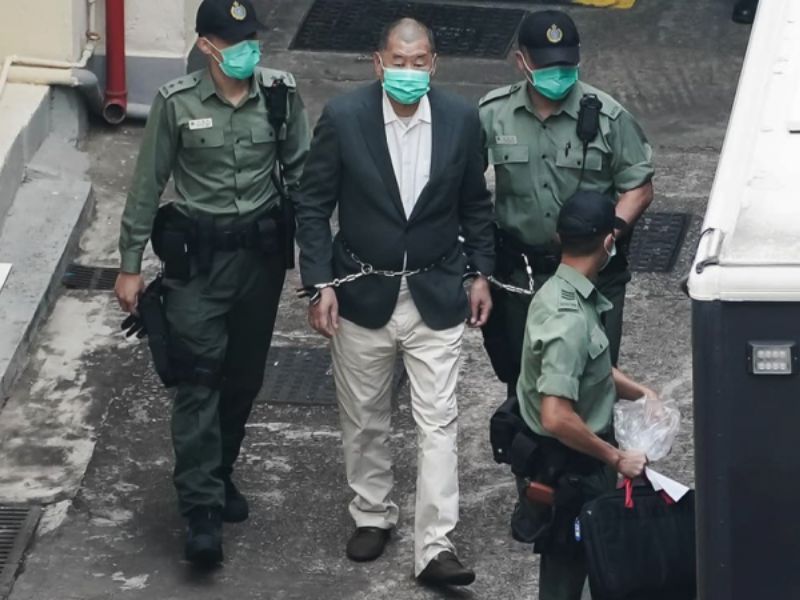
In the weeks leading up to President Donald Trump’s recent trip to Beijing, a broad array of lawmakers and human rights advocates pressed him to push for the release of Pastor Ezra Jin, Jimmy Lai, and others unjustly imprisoned in China.
Trump publicly pledged before the summit that he would raise both cases with Xi.
“I’ll bring them both up,” Trump told reporters before departing for China. Speaking to reporters aboard Air Force One on the return journey from Beijing, President Trump confirmed that he had, indeed, raised the prisoners’ cases.
“He said he’s going to strongly consider the pastor,” Trump said, referring to Pastor Jin, continuing to say that Xi promised to “strongly consider” the pastor’s release — a rare public acknowledgment from Beijing amid China’s ongoing crackdown on independent Christianity.
Pastor Jin
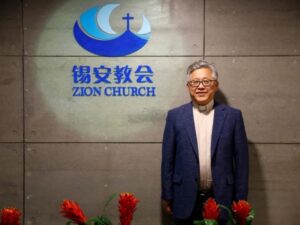
Pastor Jin, founder of Beijing’s Zion Church, was detained last year alongside nearly 30 church leaders and members in what observers have described as one of the most significant crackdowns on China’s house church movement in years.
Chinese authorities accused the church leaders of illegally distributing religious teachings online under newly tightened regulations governing religious activity and internet speech.
Zion Church had previously grown into one of China’s largest unregistered Protestant congregations before authorities shut it down in 2018 for refusing to submit to state control through the government-sanctioned Three-Self Patriotic Movement.
Grace Jin Drexel, Pastor Jin’s daughter, responded to Trump’s remarks by calling the development “miraculous” and thanking the administration for elevating her father’s case directly with Xi.
The diplomatic intervention followed growing pressure from lawmakers and advocacy groups urging the White House to prioritize religious freedom and political prisoners during the Beijing summit. Ahead of Trump’s trip, members of Congress introduced resolutions calling for the release of both Pastor Jin and Jimmy Lai, arguing that human rights concerns should remain central to U.S.-China relations.
Jimmy Lai
While the apparent movement on Pastor Jin’s case has encouraged advocates, Lai’s continued imprisonment remains a stark reminder of the Chinese Communist Party’s broader campaign against dissent.
Lai, the founder of the now-defunct Apple Daily newspaper, is serving a 20-year prison sentence under Hong Kong’s sweeping national security law. International human rights groups and religious freedom advocates have repeatedly condemned the prosecution as politically motivated.
Reports from his family indicate that authorities are preventing him from participating in practices important to his Catholic faith, including receiving communion.
“I did bring [Lai’s case] up, but it’s a tougher one for him,” Trump said of his conversation with Xi.
Lai, a pro-democracy media mogul and a devout Catholic, was sentenced earlier this year to 20 years in prison on national security charges — essentially a life sentence for the 78-year-old defendant, whose health is deteriorating under inadequate prison medical care.
Ahead of his trip, Trump likened Lai to his own political enemies, expressing understanding for why Xi may prefer to hold him in prison given his politically inconvenient activities.
The contrast between Xi’s reported willingness to review Pastor Jin’s case and his reluctance regarding Lai may reflect how Chinese authorities distinguish between underground religious activity and figures perceived as major political threats to Communist Party authority.
Still, advocates caution that public statements from Beijing do not guarantee action. China has frequently signaled openness on prisoner cases during high-level diplomatic engagements, only for detentions to quietly continue afterward.
For Christians inside China, however, the fact that an imprisoned house church pastor was discussed at the highest levels of U.S.-China diplomacy is itself significant.
The Chinese government continues to intensify restrictions on religious practice outside state-approved institutions, targeting Protestant house churches, Catholic communities loyal to Rome, Uyghur Muslims, Tibetan Buddhists, and other religious groups viewed as insufficiently loyal to the Communist Party.
To read more news stories, visit the ICC Newsroom. For interviews, please email [email protected]. To support ICC’s work around the world, please give to our Where Most Needed Fund.