
Attacks Against Christians in Nigeria Continue Despite U.S. Military Presence
A Christian leader in Nigeria’s Plateau state has alleged that efforts to secure international protection for communities facing repeated attacks in the country’s Middle Belt did not result in assistance for the most affected areas, despite earlier appeals to the United States.
Rev. Ezekiel Dachomo, the Barkin Ladi Regional Chairman of the Church of Christ in Nations (COCIN), made the claim in a video available on his official Facebook page, in which he described his previous request for intervention by former U.S. President Donald Trump. According to Dachomo, the appeal followed a series of violent incidents affecting rural communities in Plateau state, many of which he identified as predominantly Christian.
Dachomo stated that although the United States later conducted military operations in parts of northern Nigeria, Plateau state wasn’t an area of focus. He alleged that decisions by Nigeria’s security leadership influenced the redirection of attention toward other regions, including Sokoto state and surrounding areas.
The cleric’s remarks come amid ongoing reports of genocidal attacks across Nigeria’s Middle Belt, particularly in Plateau and Benue states, where farming Christian communities have experienced recurring attacks over several years.
International Christian Concern (ICC) documents such attacks. Eyewitnesses from the affected communities have often attributed these incidents to armed Fulani militias. However, Nigerian authorities frequently describe the violence as communal or farmer-herder conflict, while others claim it is a result of climate change.
Data from multiple civil society organizations and international monitoring groups indicate that thousands of Christians have been killed in Nigeria’s Middle Belt during the past decade. In Benue state alone, reports suggest that more than 5,000 people have been killed since 2011 in attacks on rural communities. Plateau state has also recorded heavy casualties, with hundreds of deaths reported in recurring cycles of violence, including attacks on villages in Barkin Ladi, Riyom, and Bokkos local government areas.
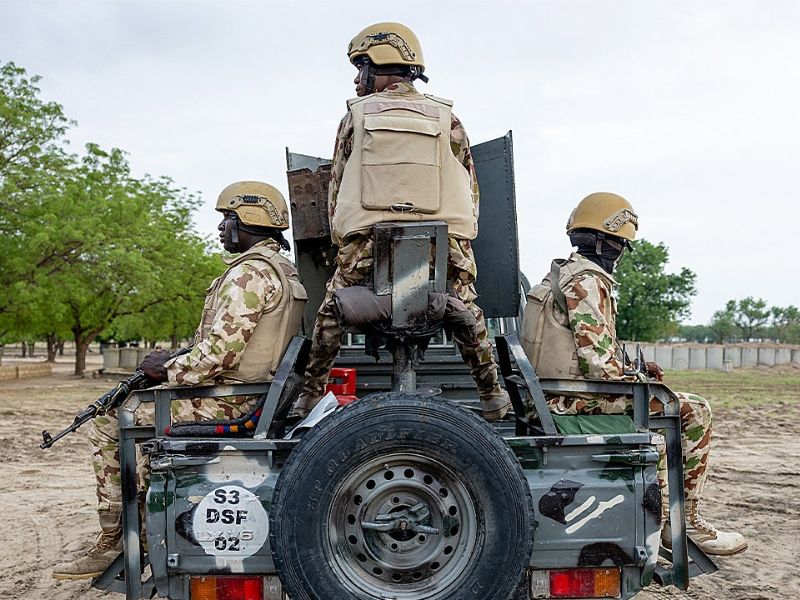
Despite the presence of Nigerian military forces and periodic security operations, attacks have continued to be reported. Survivors and local leaders have frequently described incidents involving armed groups entering villages, destroying homes, and targeting residents. In several cases, witnesses stated that attacks occurred in areas near security installations or shortly after security patrols had passed.
Dachomo, who has consistently spoken about the situation in Plateau state, claimed that the anticipated benefits of foreign support did not extend to communities that had initially sought assistance. He also questioned the geographical focus of international military cooperation within Nigeria, suggesting that some of the areas most affected by violence were not prioritized.
In his remarks, he referenced ongoing incidents not only in Plateau but also in other states, including Benue, Kaduna, Borno, and parts of Kwara, where local communities have reported killings, displacement, and destruction of property. Independent reports by human rights groups have similarly documented patterns of attacks across these regions, often affecting rural farming communities.
The Nigerian government has maintained that it is addressing insecurity through military operations and community-based interventions. Security agencies have also emphasized efforts to combat armed groups throughout various regions of the country, including insurgent groups in the northeast and banditry in the northwest.
However, the situation in the Middle Belt remains complicated, with overlapping factors including land disputes, ethnic tensions, and religious identity causing the violence. International observers have noted that while these factors are interconnected, many of the victims in affected communities identify as Christians, particularly in Plateau and Benue states.
Humanitarian organizations estimate that tens of thousands of people have been displaced across the Middle Belt due to repeated attacks. Internally displaced persons (IDP) camps in Plateau and Benue continue to house families who have fled their homes, some for several years.
The presence of foreign military support in Nigeria has primarily focused on counterterrorism operations, particularly against extremist groups in the northeast. There has been limited public information about any direct deployment of U.S. ground forces in Middle Belt states such as Plateau and Benue.
As violence persists in parts of central Nigeria, local leaders, religious organizations, and community groups continue to call for increased protection, accountability, and attention to affected areas. Reports of attacks, displacement, and casualties continue to emerge from rural communities, adding to ongoing concerns about security and humanitarian conditions in the region.
To read more news stories, visit the ICC Newsroom. For interviews, please email [email protected]. To support ICC’s work around the world, please give to our Where Most Needed Fund.