ASEAN Continues Exclusion of Myanmar’s Military Junta Amid Ongoing Conflict
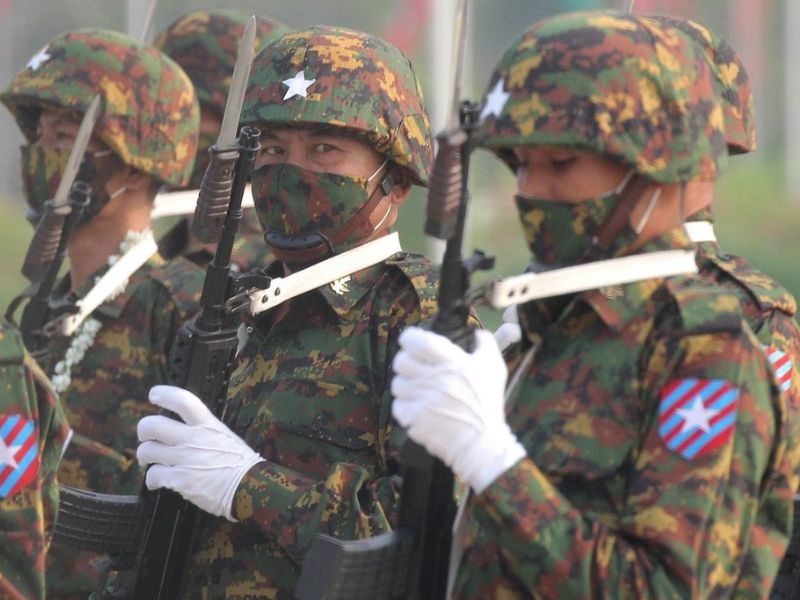
Southeast Asian leaders reaffirmed their opposition to Myanmar’s military government at the Association of Southeast Asian Nations (ASEAN) summit in Manila on Nov. 15, extending restrictions on the country’s political representation after concluding that its military leadership had made insufficient progress toward ending the country’s civil war.
The decision came as leaders from the 11-member regional bloc gathered in the Philippines for three days of discussions on international conflicts, regional security, and economic stability. Myanmar’s continuing violence and humanitarian crisis featured prominently, alongside disputes in the South China Sea and the broader consequences of conflicts in the Middle East and Ukraine.
In a statement following their review of Myanmar’s implementation of a five-point peace plan adopted in 2021, ASEAN leaders expressed deep concern over the continuing conflict. They denounced attacks against civilians and public infrastructure. They called on all parties to halt indiscriminate violence, protect civilian populations, and allow humanitarian assistance to reach those in need.
The leaders also agreed to maintain the restriction preventing Myanmar’s military leader and foreign minister from attending ASEAN summits and foreign ministers’ meetings until meaningful progress is made toward implementing the peace plan. Myanmar will continue to be represented at those meetings by lower-level diplomatic officials.
The decision represents a positive continuation of ASEAN’s effort to pressure Myanmar’s military leadership while preserving diplomatic channels with the country.
A Peace Plan with Little Progress
Myanmar has been embroiled in a nationwide civil war since February 2021, when the military overthrew the elected government of Aung San Suu Kyi. The coup prompted widespread protests and a violent crackdown by security forces. Armed resistance subsequently emerged across the country, with longstanding ethnic armed organizations also intensifying their campaigns against the military.
In April 2021, ASEAN developed a five-point consensus intended to address the crisis. The agreement called for an immediate cessation of violence, constructive dialogue among all parties, mediation by an ASEAN special envoy, humanitarian assistance, and engagement between the envoy and relevant stakeholders.
Despite repeated diplomatic efforts, the plan has produced little meaningful progress toward ending the conflict.
ASEAN has struggled to balance its traditional policy of noninterference in member states’ domestic affairs with the need to respond to the increasingly severe humanitarian and political crisis in Myanmar. The bloc has maintained contact with the military government while withholding full political recognition at its highest-level meetings.
In May 2025, ASEAN attempted to strengthen its approach by making the special envoy position permanent rather than replacing the representative annually. The change was intended to provide greater continuity in diplomatic engagement and improve the prospects for negotiations.
However, continued military operations and widespread abuses have undermined those efforts.
According to the Assistance Association for Political Prisoners, an independent monitoring organization, more than 8,600 people had been killed and 32,406 arrested by Myanmar’s security forces as of this week. The figures reflect the extensive human cost of the conflict and the government’s continued repression of opposition.
Myanmar’s military leadership has also attempted to restore its international standing. Military chief Min Aung Hlaing became president in April following elections conducted in phases in December and January. Opposition groups and international observers criticized the elections as an effort to consolidate military control rather than restore genuine civilian government.
Despite visits to several ASEAN member states, Min Aung Hlaing remains excluded from the bloc’s highest-level political meetings.
Religious Minorities Among Those Facing Violence
The conflict has had particularly severe consequences for Myanmar’s religious and ethnic minorities. Christian communities in Chin, Kachin, Karen, and Karenni states have faced military attacks, displacement, and the destruction or occupation of churches and other religious properties.
Christian identity is closely associated with several of Myanmar’s ethnic minority populations. The Chin community, for example, is overwhelmingly Christian, while substantial Christian populations are also found among the Kachin and Karenni. As a result, military operations in these areas have frequently affected religious communities and their institutions.
International Christian Concern (ICC) has documented a continuing pattern of attacks against Christian communities since the 2021 coup.
In September, the Burmese military reportedly shot and killed Rev. Dal Thawn Tuang, an assistant pastor at Lamzang Baptist Church in Chin state. Tuang had served his congregation for 22 years and left behind his wife and two children.
His death followed the June killing of Baptist pastor Rev. William and another Christian, Nam Ceu. The military reportedly detained both men before they were killed on June 4.
Church buildings have also become targets of military activity. In October, ICC reported that militias associated with the military were using church properties in Kachin state for military purposes. A building belonging to St. Joseph’s Catholic Church was reportedly used as a militia headquarters, while Nant Mun Baptist Church was used for military training activities.
The military’s conduct has also affected Myanmar’s Muslim population, particularly the Rohingya. The Rohingya have endured decades of discrimination, restrictions on citizenship and movement, and violent military operations. In 2017, a military campaign drove hundreds of thousands of Rohingya into neighboring Bangladesh. The United States subsequently determined that the military’s actions constituted genocide.
The ongoing conflict has further complicated efforts to protect displaced Rohingya and other vulnerable populations. Humanitarian organizations have repeatedly warned that civilians face severe restrictions on access to assistance and protection.
International Pressure and Humanitarian Assistance
ASEAN’s Nov. 15 statement acknowledged some progress in delivering humanitarian assistance, including a month-long distribution effort intended to reach more than 11,000 households. The operation, coordinated through the ASEAN Coordinating Centre for Humanitarian Assistance, included four priority townships that had not previously received assistance through the program.

The bloc also reiterated its commitment to working with the United Nations and international partners to address the crisis. However, its decision to maintain restrictions on Myanmar’s political representation demonstrates that regional leaders remain dissatisfied with the military government’s response.
Human Rights Watch urged ASEAN leaders ahead of the summit to increase pressure on Myanmar’s military leadership, particularly over attacks against civilians, restrictions on humanitarian access, and the lack of credible political dialogue. The organization also warned against treating the country’s recent elections as a legitimate restoration of civilian government.
The international community faces the challenge of ensuring that diplomatic engagement does not provide legitimacy to a military government that continues to commit widespread abuses.
For Myanmar’s religious minorities, the consequences of the conflict extend beyond the immediate dangers of armed violence. Destroyed churches, displaced congregations, killed religious leaders, and restrictions on humanitarian assistance threaten the long-term survival of vulnerable communities.
ASEAN’s latest decision maintains diplomatic pressure on Myanmar’s military leadership, but the continued failure to implement its peace plan raises questions about whether the regional bloc can meaningfully influence the course of the conflict.
As international governments continue to engage with Southeast Asia, the protection of religious minorities and the restoration of fundamental freedoms in Myanmar remain essential measures of meaningful progress toward peace.
To read more news stories, visit the ICC Newsroom. For interviews, please email us. To support ICC’s work around the world, please give to our Where Most Needed Fund.