
Plateau Christian Leaders Question Military Response to Attacks
Christian leaders representing indigenous youth organizations in Nigeria’s Plateau state have accused security authorities of failing to adequately protect vulnerable communities from armed attacks, calling for investigations into alleged security lapses and the continuation of joint operations against armed groups.
The demand follows a petition dated Oct. 5, submitted by representatives of Fulani organizations who alleged that security operations conducted by the Department of State Services (DSS), the Mobile Police Force, and Operation Rainbow were biased against Fulani communities.
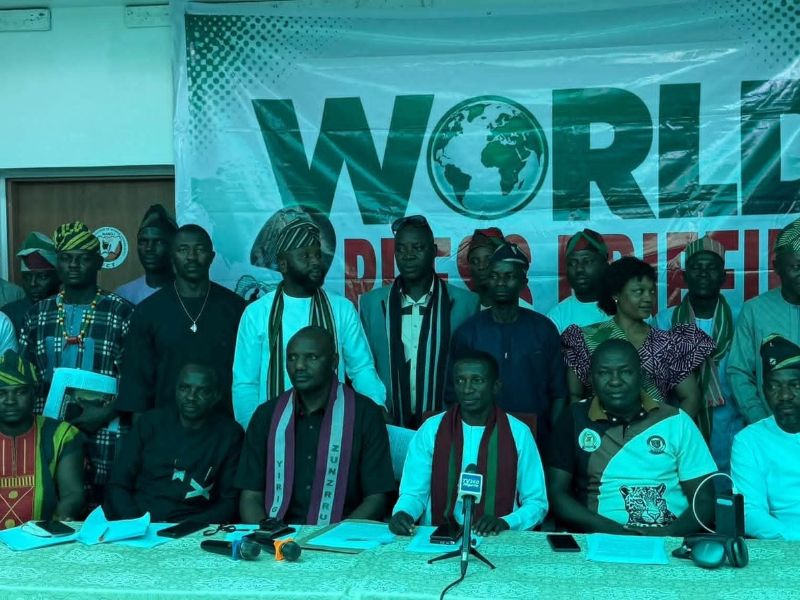
During a press conference on Oct. 21 at the Nigeria Union of Journalists (NUJ) FCT Abuja Council, the Coalition of Plateau Indigenous Youth Nationalities rejected the allegations, arguing that the petition and a related social media video risk undermining security operations in communities that have experienced repeated attacks, displacement, and destruction of property.
Ezekiel Peter Bini, president of the Irigwe Youths Movement, chairs the coalition. Other signatories include Dalyop Solomon Mwantiri, president of the Berom Youths Moulder-Association; Amb. Miri Timnan Nyantau, president of the Tarok Progressive Youths Association; and Jonathan Kyesmang Yusuf, president of the Mwagavwul Youths.
The organizations represent indigenous communities in Plateau state, where Christian communities have repeatedly reported attacks by armed groups.
Indigenous Communities Question Military Protection
The coalition accused the Nigerian security establishment of failing to address the threats facing rural communities adequately and called for greater accountability over the response to attacks.
Its statement described a pattern in which armed men allegedly move with cattle into farming communities, destroy crops, and attack settlements. The coalition said it had documented at least 152 hamlets, villages, and communities affected by such incidents.
The coalition also questioned whether all military personnel deployed to Plateau state were adequately fulfilling their responsibility to protect civilians. It called for an investigation into allegations of misconduct and possible collaboration between individual security personnel and armed groups.
The concerns nevertheless raise questions about civilian protection, accountability, and the effectiveness of security deployments in communities facing persistent violence.
Security Personnel Killed in Attacks
The coalition cited several attacks in which security personnel were reportedly killed or injured while operating in Plateau state.
According to the statement, two DSS officers were killed during an attack on the Tanjol and Tarai villages of Jol community on Aug. 23. The coalition alleged that the attackers took rifles belonging to the officers and retreated toward Rankum, in Mahanga, Riyom local government area.
The statement also reported that Mobile Police officers were killed in separate incidents at Dares and Kwi villages in Bokkos and Riyom local government areas.
It further cited the killing of DSP David Babale, identified as an operations officer with Operation Rainbow, who was reportedly ambushed near a military checkpoint around Rakok village, outside Barkin Ladi.
The coalition also referred to DSS personnel who sustained injuries during attacks at Kantoma and Alohgom in Mangu local government area while responding to distress calls from threatened communities.
Christian Communities Continue to Face Deadly Attacks
The coalition’s concerns come amid a sustained pattern of deadly violence in Plateau state, where predominantly Christian farming communities have suffered attacks attributed in various reports to armed Fulani militants and other unidentified gunmen.
On May 8, suspected Fulani ethnic militias attacked Ngbra-Zongo, an Irigwe community in Bassa local government area, killing 11 Christians, according to International Christian Concern (ICC). The victims included children, elderly residents, and two pregnant women. Ten other residents reportedly survived with gunshot wounds and machete injuries.
The attack was part of a wider wave of violence in Plateau state. ICC reported on Oct. 4 that 27 Christians had been killed across Bokkos, Riyom, Barkin Ladi and Mangu local government areas within seven days, citing community eyewitnesses and local sources.
Earlier, from April 13 to 14, 2025, gunmen attacked Zikke village in Bassa Local Government Area. Amnesty International condemned the killing of at least 54 people and called for an investigation into the security failures that allowed the attack to occur.
These incidents have intensified concerns among Christian residents about their ability to remain in their ancestral communities, cultivate their farms and worship without fear of armed attacks.
Amnesty International reported in May 2025 that at least 2,630 people had been killed in Plateau state during the first two years of the current Nigerian administration, based on its investigation into attacks across several states. That figure covers deaths from armed violence generally and should not be interpreted as a count of Christians killed exclusively by Fulani militants.
Calls for Accountability Over Christian Deaths
Christian communities in Plateau have repeatedly called for protection against armed attacks that have killed residents, destroyed homes and farms, and displaced families from their ancestral settlements.
 The coalition argued that security operations should be strengthened, not discontinued, in response to allegations of discrimination. It credited joint operations involving the DSS, Mobile Police, Operation Rainbow, and local security volunteers with arrests and, it said, a reduction in mass attacks and crop destruction.
The statement specifically referenced the arrest of Ardo Mahmoud Adams, whom the coalition described as an alleged leader of armed Fulani militants and bandits. The statement did not independently establish the circumstances of the arrest, the allegations against him, or the status of any prosecution.
For Christian communities seeking justice, a central concern remains whether those responsible for killings and other attacks have been identified, arrested, and prosecuted.
Security Operations Under Scrutiny
The coalition warned that campaigns by Fulani Leaders seeking the removal of the DSS state director, Paul Damian, could weaken ongoing security operations. It urged federal authorities to assess the allegations against security agencies through evidence-based investigations rather than political pressure.
At the same time, allegations of discrimination, unlawful conduct, or abuse by security personnel require impartial investigation. Protecting indigenous Christian communities and ensuring that Fulani civilians are treated lawfully are not mutually exclusive responsibilities.
The coalition called on the federal government to maintain lawful security operations, improve cooperation among security agencies and community-based security groups, and hold personnel responsible for misconduct accountable.
The Nigerian Army, the DSS, the Mobile Police Force, Operation Rainbow, and the organizations that submitted the Oct. 5 petition should be allowed to respond to the specific allegations.
For communities affected by repeated attacks, the critical questions remain whether threatened villages receive timely protection, whether displaced residents can return safely, and whether those responsible for killings and destruction are brought before the courts.
To read more news stories, visit the ICC Newsroom. For interviews, please email us. To support ICC’s work around the world, please give to our Where Most Needed Fund.