
Christians Rendered Homeless in Chhattisgarh’s Tribal Belt
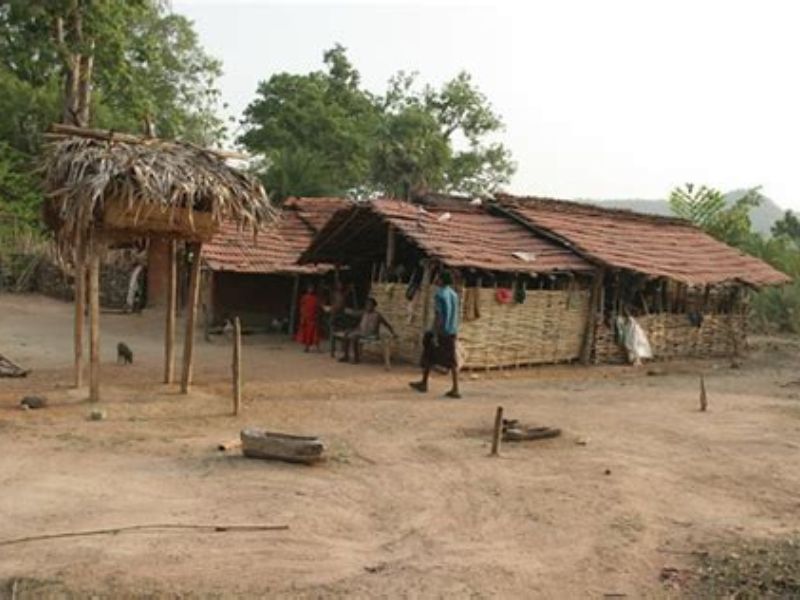
In southern Chhattisgarh’s tribal belt, localized community disputes over religious adherence have rapidly escalated into severe civil rights violations and forced displacement, in which Christian families are being forcibly evicted from their homes, with their houses demolished and belongings thrown out.
While police and district authorities remain mute spectators, religious fanatics in cahoots with right-wing vigilantes are wreaking havoc among poor and defenseless Christian families who live in villages away from the big cities.
On Oct. 24, a Christian family living in a hamlet in the Kanker district of Central India’s Chhattisgarh was evicted from their house, and all their household belongings were thrown out of their house following their explicit refusal to renounce their Christian convictions.
This happened in Chindpal village, located under the administrative jurisdiction of Durgkondal in Kanker district.
A strikingly similar pattern of coercion and house demolition unfolded in Sukma district, also in Chhattisgarh, but further south, just 10 days earlier.
In Sukma’s Deorpalli village, located within the Gorgunda Panchayat (village administration province), perpetrators removed the metal tin roofs first from the pastor and subsequently from four houses belonging to two Christian families, leaving them exposed and homeless.
They did this because the Christians refused to renounce their faith and return to their old religion and rituals.
These developments underscore a growing pattern of intimidation, community-led sanctions, and property destruction directed against villagers who exercise their constitutional right to freedom of belief.
Poor Institutional Response
The above-mentioned are just a few documented instances. Many such unreported attacks are occurring across Chhattisgarh, leaving the poor, marginalized Christians at the mercy of fanatics who receive tacit support from the government dispensation to carry out such attacks with impunity.
The Hindu-nationalist Bharatiya Janata Party (BJP) rules Chhattisgarh and also heads the federal government under Prime Minister Narendra Modi.
The targeted actions in Chhattisgarh show a volatile breakdown in civil order, where non-compliance with localized traditional mandates leads to immediate humanitarian distress and physical displacement.
A critical gap remains between initial police deployment to de-escalate frenzied crowds and the establishment of durable legal protections or administrative resolutions for the victimized Christians.
While local police units can arrive quickly at crisis locations, police intervention has largely served as short-term crowd control rather than an effective way to protect constitutional freedoms, enforce property rights, or facilitate the safe return of displaced families.
Faith at a Cost
According to human rights workers who provide relief and legal help to the victims of such attacks, all such incidents and attacks stem from the refusal of Christians to participate in tribal and traditional rituals conducted in the village.
The structural catalyst driving these localized conflicts stems from an escalating tension between traditional tribal social expectations and individual freedom of religious conviction. In many indigenous tribal hamlets across southern Chhattisgarh, customary governance structures enforce strict compliance with traditional rituals, collective financial contributions, and tribal deity worship.
Within this framework, village-level social boycotts operate not merely as responses to private doctrinal shifts, but as administrative sanctions against perceived infractions.
When Christian converts abstain from communal events — most notably collective worship or the final rites of prominent leaders — traditionalists interpret this non-participation not as a personal religious choice, but as an explicit rejection of tribal community solidarity, collective duty, and customary authority.
Curtailing Freedom
Consequently, individual freedom of religion, guaranteed under Article 25 of the Indian Constitution, has become a source of volatile social and legal confrontations.
Christians have no protection through law enforcement interventions, and there are no long-term administrative resolutions to safeguard the constitutional rights.
As such, there is a grave humanitarian and civil rights crisis in which Christians are not just targets of intimidation and physical violence but are forced to live bleak and precarious, homeless, and penniless lives, said Pastor Negi, who is actively involved in helping the displaced Christians.
To read more news stories, visit the ICC Newsroom. For interviews, please email us. To support ICC’s work around the world, please give to our Where Most Needed Fund.