
Forced Into a ‘Double Life’ as a Malay Christian
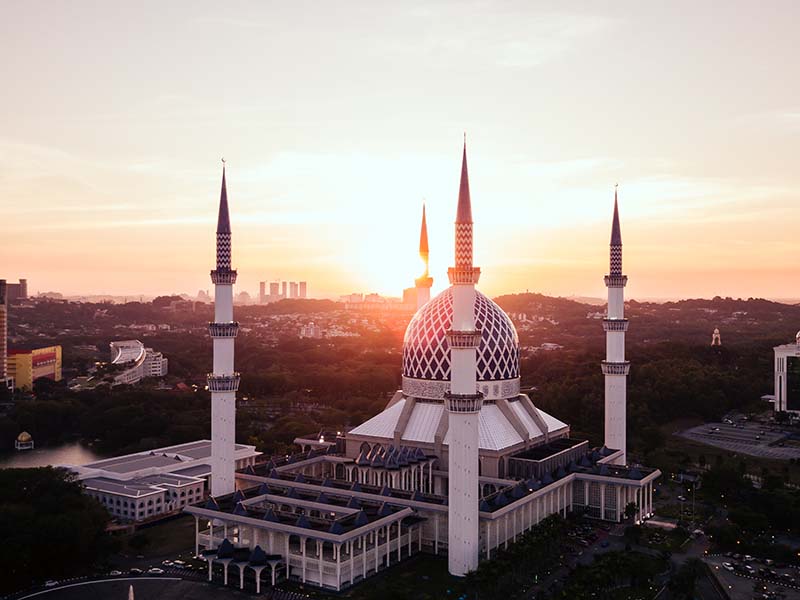
Malaysia has long had a reputation as a relatively moderate, majority-Muslim country. In some ways, this is deserved: sizable groups of several faiths largely coexist and practice openly in this Southeast Asian nation of 36 million people.
At the same time, though, the vast majority of non-Muslim worship is undertaken by citizens who are not ethnic Malays. For Malays themselves, there is essentially no freedom of religion. Malaysia’s own constitution defines all ethnic Malays as Muslims.
So, technically speaking, it is all but impossible for a Malay to leave Islam. And yet some do.
“I essentially have to live a double life,” said “Deborah,” a young ethnic Malay Christian woman.
The Challenges of Changing
Growing up Muslim, Deborah followed what was taught and expected of her. “But deep down, there was always a feeling that something was missing,” she said.
Nobody persuaded her to change her religion. She explored Christianity on her own, and it felt like “I was finally finding something my heart had been searching for.”
The pastor at her church knows about her background. Although her presence is accepted, she has not been able to be baptized.
“That is something I personally wish I could experience,” she said. “But my legal status makes it complicated.”
Deborah also must avoid church activities that require participants to provide their Malaysian ID card, which specifies a person’s religion. Displaying her ID card in this context would be risky.

After all, an openly practicing Malay Christian would stand out. There are a small number of cases in which Malaysian Muslims reportedly obtained legal recognition of their conversion to Christianity. But these cases are extremely rare exceptions.
“You learn to measure your words, hide parts of yourself, and constantly consider risks that most people never have to think about,” said “Lukas,” a Malay convert to Christianity who expressed pride in both parts of his legally conflicting dual identity. “I carry the history, language, culture and memories of my people, while embracing the faith that I have come to believe is true.”
Remaining Under the Radar
To protect himself, Lukas avoids local churches and attends services “much farther from home.” He said the chance of exposure is the “greatest pressure,” explaining that such exposure would “not merely be a social embarrassment” but could also affect his livelihood and family situation.
There is also the prospect of being sent to a “moral rehabilitation center, where the goal would be to bring me back to Islam,” he added.
Penalties for apostasy in Malaysia vary by region. But under the existing laws, it is virtually impossible for Malay converts to receive a Christian wedding or burial, no matter what part of the country they reside in.
Muslims comprise 63.5% of the overall population in Malaysia, which has a dual legal system of both civil and Shariah courts — with Shariah tending to apply exclusively to the Muslim population.
Christians, most of whom are ethnic Chinese or indigenous peoples, comprise nearly 10% of the population.
For ethnic Malay Christians, there are not only legal restrictions but also the chance of discovery by Islamic religious authorities.
“Whenever I attend church, there is always a fear that someone might report me or that the authorities could find out,” Deborah said. “I also worry about whether this could put the church itself at risk, such as facing investigation or being forced to stop operating.”
Forced Disappearances
Though ethnic Malay Christians have a far more inherently difficult predicament, Deborah shared that, “Even non-Malay Christians can face serious harassment and discrimination, especially from some holier-than-thou Malay Muslims who believe that being Christian means you are going to hell.” She knows of some non-Malay Christians who have faced pressure to convert to Islam.
Lukas said that non-Malay Christians should also use caution “about when, where and with whom they discuss matters of faith.” He added that, even without legal restrictions, “The wrong conversation with the wrong person can create problems that are completely disproportionate to what was actually said.”
Despite these circumstances, reports of religiously motivated violence against Christians are infrequent in Malaysia. That said, a notable wave of hostility took place in January 2010, when at least nine churches were targeted in multiple regions with rocks or Molotov cocktails. These incidents followed a court verdict allowing Christians to use the word “Allah” in Malay-language media.
Other notable incidents include the Nov. 30, 2016, disappearance of Joshua Hilmy, a pastor and convert, and his wife. The U.S. Department of State has said that Pastor Hilmy was targeted due to his conversion. Neither he nor his wife has resurfaced.
Another notable incident involved the Feb. 13, 2017, abduction of Raymond Koh, a prominent Malaysian pastor, who was forcibly taken from his vehicle by a large group of police officers. There were rumors that his charity organization was seeking to convert people to Christianity.
On Nov. 5, 2025, Malaysia’s High Court ruled that Malaysian authorities were liable for Pastor Koh’s disappearance, whose whereabouts remain unknown.
Such a ruling shows at least some concern for due process in Malaysia, one of Southeast Asia’s stronger democracies.
Increased Intolerance
At the same time, some religious minorities cannot help but notice that the Malaysian Islamic Party, Parti Islam Se-Malaysia, has grown more influential in recent years and is currently the largest single party in Malaysia’s parliament.
Moreover, the party’s president recently spoke out about his desire to limit the number of positions that non-Muslims could hold in Malaysia’s parliament.
Deborah expressed concern about political movements that have sought to make one religion “a stronger part of politics and public life.” 
Pointing out that Malaysia has been a multi-religious society for centuries, she worries that such a trend could make her country “less tolerant and less moderate, particularly toward religious minorities and people who do not fit the expected religious identity.”
“It’s hard to say where things are headed,” Lukas said. His interactions with other Malay Christians forced to live “double lives” suggest that “while some parts of society are becoming more open, others are becoming more entrenched in their views.”
Deborah said she doesn’t think that most ethnic Malay Christians are necessarily seeking to leave Malaysia. But migration remains a consideration for ethnic Malays who wish to get married as Christians or live their faith openly in other ways.
“I don’t want to leave Malaysia just because I practice another religion,” she said. “I’m still Malay … I don’t think I should have to leave my own country just because my faith is different.”
“It pains me to even think about leaving,” Lukas said. “Circumstances may eventually force me to make a different decision.”
Story by R. Cavanaugh
To read more news stories, visit the ICC Newsroom. For interviews, please email us. To support ICC’s work around the world, please give to our Where Most Needed Fund.