
Burmese Military Occupying Two Churches in Kachin State
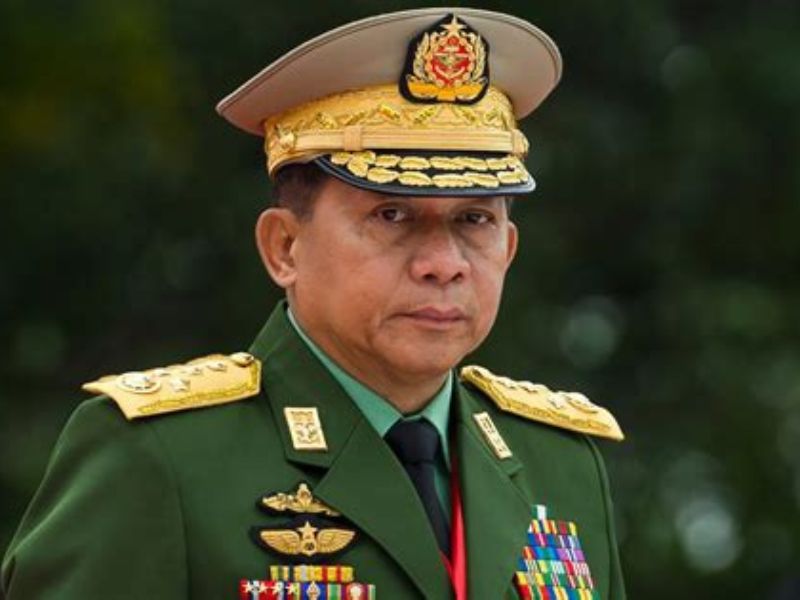
According to civil society sources, militias associated with the Burmese military dictatorship operating in Kachin state are using church grounds for military purposes. The U.S.-based Burma Research Institute (BRI) verified reports of a militia graduation ceremony at Nant Mun Baptist Church in Mohnyin Township.
A building of St. Joseph’s Catholic church was also being used as a militia headquarters, and militia troops ransacked another building in the same complex. The Kachin ethnic community is made up mostly of Christians, and Kachin State stands out in Myanmar for its unusually strong Christian demography.
The Shanni Nationalities Army (SNA) conducted the ceremony in September. Sources familiar with the situation told BRI that militia members danced and drank alcohol inside the sanctuary during the event.
The incident is part of a broader pattern of military occupation and mistreatment of Christian religious sites in Kachin State, where fighting has displaced much of the local population.
According to UCA News, joint forces of the SNA and Burma’s military have occupied both Nant Mun Baptist Church and the compound of St. Joseph’s Catholic Church. The SNA has also used the Baptist church as a military training site; sources report that six batches of recruits have trained there. 
The SNA, which represents the predominantly Buddhist Shanni ethnic group, is aligned with the military junta and has fought against other ethnic armed organizations, including the Kachin Independence Army. Joint military-SNA forces advanced into Nantmun in late 2024, forcing hundreds of Christian households to flee. Residents now report that only about 80 Kachin Christian households remain in the town, many unable to relocate because of financial constraints and restrictions on movement.
Kachin Christian leaders in the United States have condemned the occupation of the church and urged the Trump administration to respond.
“I extend my prayers and solidarity to Nant Mun Baptist Church and the Kachin Baptist Convention. I also condemn, in the strongest terms, the Burmese military’s ongoing and severe violations of religious freedom in Burma,” said Zo Tum Hmung, president and CEO of BRI.
Rev. Dr. La Seng Labya, president of the Kachin American Baptist Association, urged the Trump administration to protect Christians in Burma. Rev. Lakang Dau Qae, general secretary of Kachin Baptist Churches USA, called on the White House to redesignate Burma as a Country of Particular Concern (CPC), the U.S. government’s designation for governments responsible for particularly severe violations of religious freedom.
The church desecration comes amid other reported restrictions on Kachin Christians. On June 9, Burma’s military-controlled Supreme Court issued an order revoking the licenses of three Baptist pastors to solemnize Christian marriages.
Christian leaders have faced personal persecution for speaking out against the junta. Rev. Dr. Hkalam Samson, former head of the Kachin Baptist Convention, met with President Donald Trump at the White House in July 2019 to discuss the persecution of Christians in Burma. He was later arrested and sentenced by a military-regime court to six years in prison, according to the U.S. Commission on International Religious Freedom (USCIRF). He has since been released.
Burma was designated a CPC from 1999 through 2023 because of severe religious freedom violations but has not been redesignated since. In its 2026 annual report, USCIRF recommended that the State Department restore the designation.
A CPC designation could provide a basis for further U.S. diplomatic and economic measures against the military regime, including targeted sanctions and restrictions on assistance.
For Kachin Christians displaced from their homes and unable to return, the occupation of their churches represents another blow to communities already struggling to preserve their religious life amid years of conflict. Their leaders are now asking Washington to respond not only to the desecration of a sanctuary but also to the wider pattern of persecution that continues to threaten religious freedom in Burma.
To read more news stories, visit the ICC Newsroom. For interviews, please email us. To support ICC’s work around the world, please give to our Where Most Needed Fund.