
24 South Korean Christians Arrested at Nepalese Bible College

Nepalese Police have arrested 24 South Korean Christians after complaints were lodged against them for “illegal religious teaching, training, and promotion.”
Sources in Nepal and South Korea state that the Koreans were arrested at a gathering at the Nepal New Covenant College (NNCC) in Morang District on Oct. 9. NNCC Principal Sarad KC told UCA News that “the visitors were interacting with believers inside a local bible college and not preaching or sharing the gospel in public with the intention of proselytization.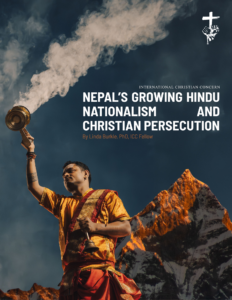
The arrest raises fears over targeted hostility towards Christians by the state.” The NNCC has been teaching theological courses for Nepalese Christians since 2013.
A Negative Trend
This incident is yet another example of the growing hostilities toward active Christianity in Nepal. Nepal is more than 80% Hindu and has a relatively small yet fast-growing Christian population of about 1.5 million people (5% of the total population).
Unlike Christians in the neighboring state of India, believers in Nepal have, until recently, been more protected from state-sanctioned discrimination and violence. However, the tide is turning as the persecution that Indian Christians have known for some time slowly bleeds across the border.
Several reports have suggested that proximity to India is not the only reason for this shift. Some evidence suggests that funds have been sent directly from the pro-Hindu nationalists who control India into Nepal, resulting in increased violence toward religious minorities. Christians, Muslims, and Buddhists have seen their sacred buildings, holy ceremonies, and specific individuals targeted by the Hindu majority.
Additionally, there have been increasing reports of South Korean Christians and missionaries being arrested, detained, and discriminated against in Nepal, Russia, and other nations.
To read more news stories, visit the ICC Newsroom. For interviews, please email us. To support ICC’s work around the world, please give to our Where Most Needed Fund.