
Christians Reel Under Effects of Floods, Persecution in Chhattisgarh
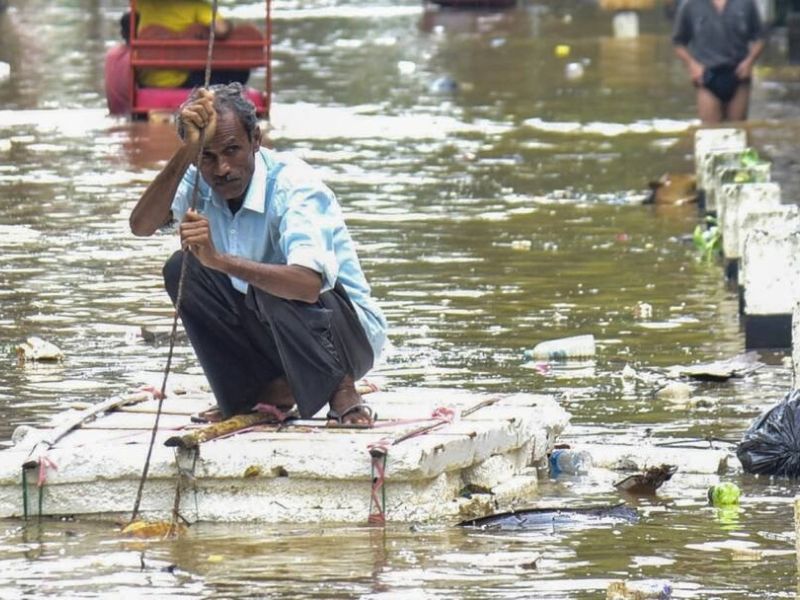
Christians in Chhattisgarh, India, facing relentless pressure from Hindu nationalists, must now deal with the aftermath of recent floods.
The flooding unfolded between Sept. 24 and 27 along the volatile banks of the Indravati River in Chhattisgarh’s Bastar district, which suffered its worst flooding in nearly 15 years, triggered by relentless monsoon rains from a cyclonic storm and massive water discharges from a major dam in neighboring Odisha.
The dam discharge caused the Indravati River, which runs along the edges of Jagdalpur town, the district headquarters, to breach its banks, submerging riverside villages and vast agricultural tracts and displacing thousands of families.
According to official estimates, eight people were killed, and around 16,000 others were rescued from flood-hit areas of the Bastar region.
More than 22,000 were sheltered in relief camps as 5the floods hit 571 villages.
A significant portion of the minority tribal Christians are also hit by the devastating historic floods, living on either side of the Indravati riverbank.
A Dual Threat: Water and Wrath
Pastor Golu Singh, who lives in a suburban area adjacent to Jagdalpur town, has seen his mud house collapse under heavy rains and rising floodwaters.
He thanked God that his small church building, which can house around 20 people, adjacent to his collapsed house, was not affected.
Singh and his family, his wife and three children, are now sheltered in the church building itself along with five more families whose houses either got washed away or suffered extensive damage due to the flooding.
Many of the families are using tarpaulins as roofs to cook and sleep.
Singh himself was just recovering from the intense pressure of a threat to his life from Hindu nationalists in August and September, for standing with a believer woman who refused to return to her old tribal religion to bury her dead husband.
Similarly, many other Christians, who were forced to stop cultivating their lands for paddy and other crops during the monsoon season by Hindu nationalists, are now staring at those same fields which have become just sand and stones.
Double Displacement
For the Christian community, the loss of homes, livestock, grain stocks, and cultivable lands represents only half of the struggle. For more than a year, these families have faced a severe rise in anti-Christian hostility. Driven by tribal hardliners and radical Hindutva factions, tribal converts are undergoing intense pressure to renounce their faith through forced Ghar Wapsi, a Hindu reconversion ritual.
Even before the deluge, numerous village councils had enacted unconstitutional socio-economic boycotts. Local Christian families were cut off from village water wells, banned from buying groceries locally, and denied the right to bury their dead in ancestral lands.
When the floods peaked towards September-end, many displaced Christians found themselves in a state of double displacement. While the state administration deployed emergency boats and Indian Air Force helicopters to rescue stranded residents, local activists note that Christian families face deep unease.
In many instances, the social isolation they endure in their home villages follows them into shared makeshift shelters, where they are viewed with suspicion by the very neighbors who targeted them weeks prior.
Meanwhile, Christian civil society groups like Esai Ekta Manch (Christian Unity Forum) and local unity forums mobilized for prayer and to provide relief.
Operating through local networks, volunteers distributed dry rations, tarpaulins, clean drinking water, and emergency medical kits to flood-ravaged families stranded along the Indravati banks.
As floodwaters slowly recede from the Indravati basin, the long-term outlook for Bastar’s Christians remains precarious. They must now rebuild their mud-brick homes and replant destroyed crops under the shadow of a hostile environment. But it comes at a cost — spiritually, physically, and financially.
To read more news stories, visit the ICC Newsroom. For interviews, please email us. To support ICC’s work around the world, please give to our Where Most Needed Fund.