
The Disappearing Christian Middle East, Part I: Can Christianity Disappear from the Land Where It Was Born?
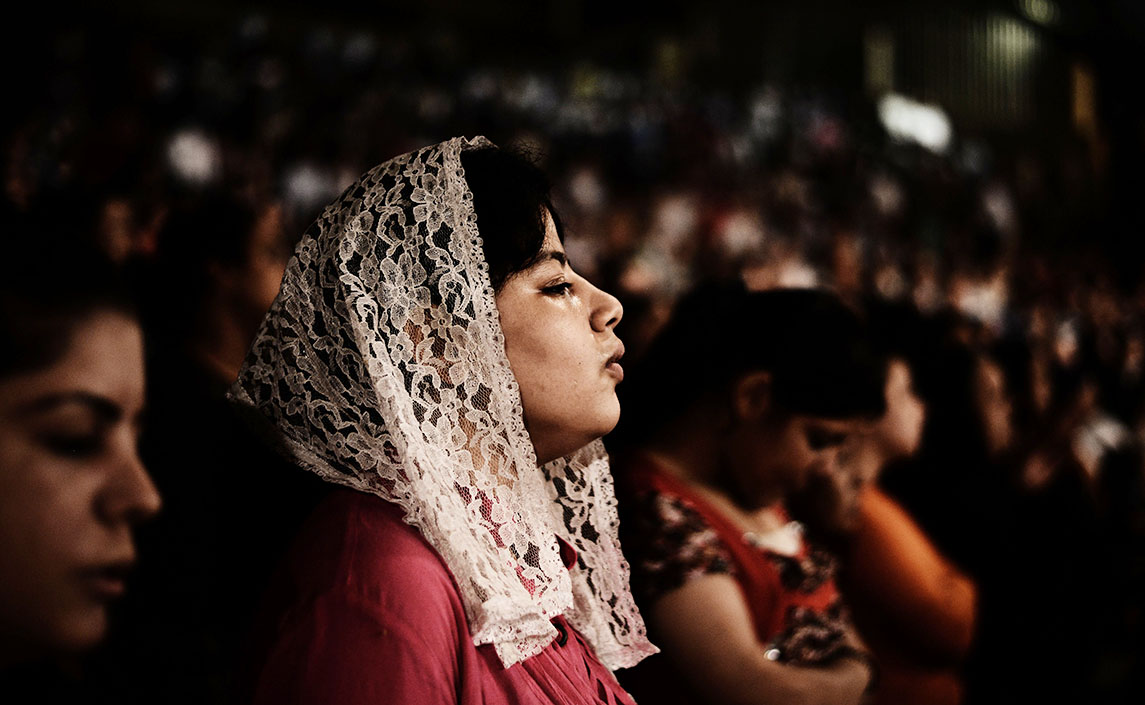
By ICC Fellow Lisa Navarrette
On a Sunday morning somewhere in the Middle East, an old church bell still rings.
It may sound across a neighborhood in northern Iraq, an ancient quarter of Damascus, or a village tucked into Lebanon’s mountains. Inside, families gather beneath stone arches worn smooth by centuries of worship. Some recite prayers in Arabic. Others worship in Syriac, a language closely related to the Aramaic spoken in Jesus’s time. But if you look more closely, you’ll see something is missing.
The pews that once held several generations of families are empty. Young adults have left for Europe, Australia, Canada, or the United States. Parents wonder whether their children can have a future in their homeland. Elderly Christians remain in homes their families have occupied for generations, while sons, daughters, grandchildren, cousins, and neighbors build new lives thousands of miles away.
The churches remain, but the communities around them are shrinking. This is one of the quieter stories of Christian persecution in the modern world. A gunman is not always at the door. There is not always a burned church or a dramatic mass massacre. Sometimes persecution works more slowly. A family leaves. Then, another. Then, another. Eventually, the Christian community that survived wars, empires, invasions, and centuries of political change begins to disappear.
Christianity’s Birthplace
For many Christians in the West, the Middle East can seem like a distant place with a small Christian minority. While that is true today, the opposite was historically true.
Christianity was the dominant religion across large parts of the Middle East between the fourth and seventh centuries, before Islam’s rise. Christianity was born there. Jesus lived and taught in what is today Israel and the Palestinian territories. 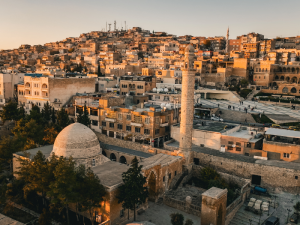
Some of Christianity’s earliest communities developed in Jerusalem, Antioch, Damascus, Alexandria, Mesopotamia, and Asia Minor. The Apostle Paul traveled through cities that now lie within modern Turkey, Syria, Greece, and surrounding regions. Long before Christianity reached much of northern Europe, and centuries before Christianity arrived in the Americas, Christian communities were already worshipping across the Middle East.
Some still speak languages descended from those used by the earliest Christians.
Some churches in the Middle East trace their histories back to Christianity’s earliest days. That is what makes today’s demographic changes so significant.
The question is no longer simply whether Christians face discrimination or persecution in particular Middle Eastern countries. It is whether some of Christianity’s oldest communities will remain large enough to survive.
Church leaders across the region have increasingly sounded that alarm. In 2025, Maronite Patriarch Cardinal Bechara Raï warned that migration was continuing to reduce Christian populations across the Middle East and argued that their presence contributed to pluralism and moderation in the region.
The Economics of Disappearance
Security is only part of the equation. A community cannot survive on history alone. Families need jobs, housing, schools, hospitals, functioning infrastructure, and confidence that their children will have opportunities. That is why economic instability can become intertwined with religious persecution.
In 2025, organizations warned that high unemployment and shrinking opportunities were creating additional pressure for Christians to emigrate. Church organizations have increasingly emphasized employment and community development because rebuilding churches alone is not enough if families cannot earn a living. A rebuilt church surrounded by empty houses is not a restored community. Neither is a reopened Christian school if no children are left to attend it.
This is why the disappearing Christian Middle East cannot be understood only through statistics about attacks. The story includes bombs and militants, but it also includes unemployment. Political exclusion, discrimination, and destroyed property contribute to migration. Falling birthrates, family separation, and the psychological memory of past events affect families for generations.
What Is Lost When a Community Disappears?
Another danger is describing this story only as a Christian tragedy. The disappearance of Middle Eastern Christianity would alter the Middle East itself. These communities are part of the region’s linguistic, cultural, political, and historical fabric.
Christians have been educators, physicians, merchants, writers, political leaders, journalists, craftsmen, and community builders across the region for centuries. Their churches and monasteries are not foreign outposts. They are Middle Eastern institutions. Their history is Middle Eastern history.
 Their departure also reduces something increasingly precious in societies struggling with sectarianism: daily religious coexistence. These include a neighbor who celebrates Christmas, a Christian pharmacist, a Muslim teacher working beside a Christian teacher, and families exchanging holiday greetings.
Children grow up knowing that religious differences do not necessarily mean separation. Once those relationships disappear, rebuilding pluralism becomes harder. That may be the greatest danger.
The Middle East could retain its ancient Christian monuments while losing the living communities that gave those buildings meaning. A monastery could become a tourist destination.
A church could become an archaeological site. A Christian village could retain its name long after the Christian families are gone. History would remain. The people would not.
A Question That Cannot Wait
Some Christians are still determined to remain. Families continue rebuilding homes in Iraq. Churches continue operating schools, hospitals, charities, and humanitarian programs. Priests and pastors continue serving communities whose numbers have dramatically declined.
There is resilience in that story. However, resilience should not be confused with permanence.
Christianity has survived in the Middle East for nearly 2,000 years because generation after generation remained there. The danger today is not necessarily that Christianity will suddenly vanish from the region. It is that it could disappear one family at a time.
One plane ticket. One abandoned home. One young person decides there is no future there.
Perhaps nowhere illustrates that possibility more clearly than Iraq.
In part two of this series, we will travel to Iraq and the Nineveh Plains, where Christianity survived nearly two millennia — only to lose much of its population within a generation. The question facing Iraqi Christians today is no longer simply whether they can rebuild after the Islamic State group (ISIS). It is whether enough of them will remain to call Iraq home.
To read more news stories, visit the ICC Newsroom. For interviews, please email us. To support ICC’s work around the world, please give to our Where Most Needed Fund.