
Nigeria Advances Police Reform as First Constitutional Amendment to Reach States
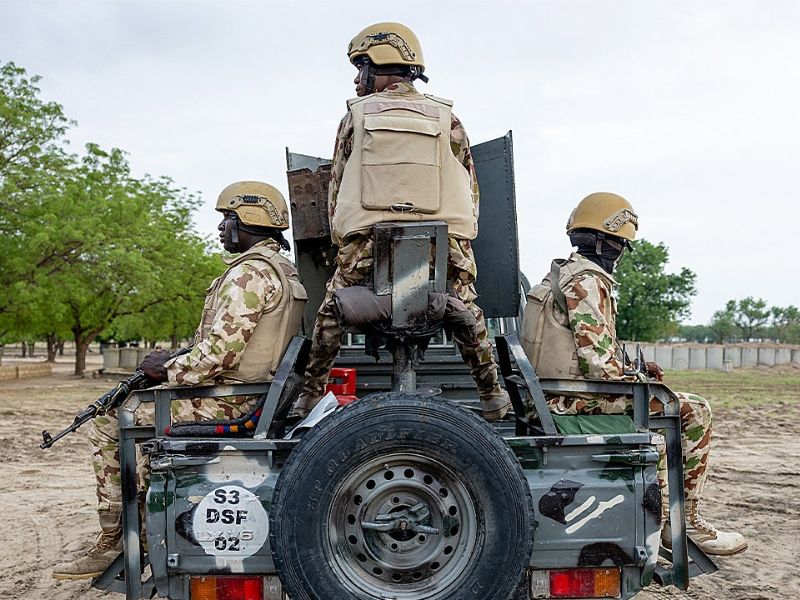
Nigeria has taken an important step toward decentralizing its policing system after the National Assembly transmitted a constitutional amendment establishing state police services to all 36 state Houses of Assembly for consideration.
The measure, formally titled the Constitution of the Federal Republic of Nigeria 1999 (Sixth Alteration) Bill, 2026, would establish state police forces alongside the federal Nigeria Police Force. It must be approved by at least two-thirds of the state assemblies, or 24 of the 36 states, before the constitutional amendment can take effect.
The National Assembly’s decision to prioritize the state police legislation is itself significant. While lawmakers are considering numerous proposed constitutional amendments, the State Police Bill is the first such measure to be transmitted to the states.
National Assembly Clerk Kamoru Ogunlana said the decision reflected widespread public demands and concerns regarding security and policing in Nigeria.
For a country that has endured years of terrorism, kidnapping, banditry, communal violence, and other forms of insecurity, the decision to advance state policing represents an important acknowledgment that Nigeria’s centralized security system has struggled to protect many vulnerable communities.
A Longstanding Security Challenge
For decades, policing in Nigeria has been overwhelmingly centralized under the federal government. State governors bear significant political responsibility for security within their states but have historically had limited direct control over police operations.
This arrangement has generated persistent frustration among communities affected by violence.
In northern and central Nigeria, residents have repeatedly reported attacks occurring while security forces were stationed nearby but failed to intervene quickly enough. By the time police or military personnel arrived, homes and churches had been burned, civilians killed or abducted, and communities displaced.
 International Christian Concern (ICC) has documented numerous cases in which Christian communities reported threats or attacks to authorities but questioned whether adequate action was taken to protect them.
Boko Haram and Islamic State West Africa Province (ISWAP) continue to threaten communities in northeastern Nigeria, while armed banditry, criminal kidnapping, communal violence, and conflicts involving farming and pastoralist communities have caused widespread suffering in other parts of the country.
For Christians living in areas repeatedly targeted by armed groups, the effectiveness and responsiveness of local security institutions can have direct consequences for their ability to worship, remain in their communities, and live without fear.
Why State Police Matters
Supporters of state police argue that decentralization could make law enforcement more responsive to local security threats.
Police officers operating within their own states possess greater knowledge of local communities, languages, geography, and social dynamics. State-level institutions could also allow authorities to respond more quickly to threats rather than relying exclusively on a centralized federal force operating across a country of more than 200 million people.
Greater local responsibility could also create clearer lines of accountability.
State officials face intense pressure from residents when security deteriorates but currently lack direct operational authority over the police. State police could give state governments greater responsibility for both security successes and failures.
This could matter most in communities where residents have long complained that distant federal institutions have been slow to respond to attacks.
Opportunities and Risks
The proposed reform is not without challenges.
Critics of state policing have raised concerns that governors or other political leaders could misuse local security forces against political opponents, protesters, or minority communities. Questions also remain about funding, recruitment, training, professional standards, coordination with federal security agencies, and mechanisms for investigating misconduct.
These concerns should be taken seriously. Decentralization alone will not guarantee better security or stronger protection for religious minorities. State police forces will need effective oversight, transparent procedures, professional training, and safeguards against political abuse.
At the same time, the risks of decentralization must be considered alongside the shortcomings of the existing system.
Nigeria’s federal policing structure has not eliminated political interference or prevented serious failures to protect vulnerable communities. Greater local accountability could address some of those weaknesses if paired with appropriate safeguards.
A Potential Turning Point
The transmission of the State Police Bill to the state assemblies does not mean that state police will immediately become operational. The measure must still secure approval from at least 24 state assemblies before becoming law, and then it will need implementation.
Nevertheless, its advancement represents an important development in Nigeria’s long-running struggle with insecurity.
The reform is especially significant for religious communities that have endured years of violence and displacement. Christians in northern and central Nigeria, as well as Muslims and other civilians affected by terrorism and criminal violence, need security institutions capable of responding quickly and protecting them regardless of their religious identity.
Nigeria’s government has a responsibility to protect all its citizens. Effective policing is essential to fulfilling that responsibility.
If implemented with strong accountability and respect for human rights, state policing could provide Nigerian communities with security institutions that are more responsive to local conditions and more directly accountable to the people they serve.
The next step now rests with Nigeria’s state assemblies. Their consideration of the measure will determine whether the country’s most consequential policing reform in decades moves closer to becoming reality.
To read more news stories, visit the ICC Newsroom. For interviews, please email us. To support ICC’s work around the world, please give to our Where Most Needed Fund.