
New Legislation Threatens Independent Documentation of Persecution in Nigeria
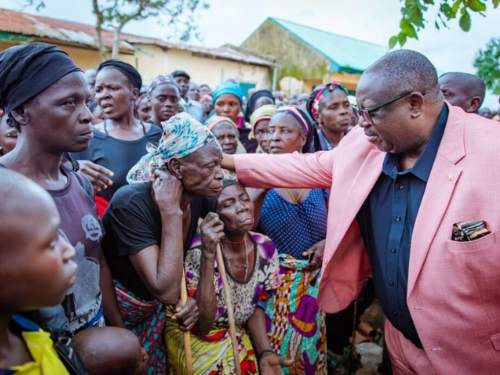
Nigeria’s Senate is advancing legislation that could significantly expand government oversight of organizations receiving foreign funding, raising concerns that the measure could affect the ability of churches, humanitarian organizations, human rights groups, and independent researchers to document religious persecution and violence.
The Foreign Aid (Regulation, Transparency and Disclosure) Bill, 2026, designated SB. 1034, passed its second reading in the Senate in July and is undergoing further consideration. This bill would establish a Foreign Aid Regulatory Commission to oversee foreign assistance entering Nigeria and impose additional registration, disclosure, auditing, and compliance requirements on organizations receiving foreign funding.
The legislation’s stated objectives include improving transparency, preventing misuse of foreign assistance, coordinating development programs, and ensuring that foreign-funded activities support Nigeria’s development priorities.
However, human rights organizations and Nigerian religious leaders have raised concerns that some provisions could give government officials broad discretion over independent organizations whose work includes documenting abuses and criticizing government policies.
The Catholic Bishops’ Conference of Nigeria (CBCN) has now joined those concerns, specifically warning that the bill could affect churches, mosques, schools, and humanitarian organizations serving vulnerable communities.
Bishops Warn of Excessive Government Oversight
The CBCN issued its warning following its Second Plenary Meeting, held this September in Osun state. Bishops called on the National Assembly and federal government to halt the legislation, arguing that organizations receiving foreign assistance already face existing regulatory requirements.
The bishops specifically objected to provisions that could allow authorities to deny or refuse registration renewal when an organization’s activities are deemed not to be “in the national interest.” They warned that such language could give government officials excessive discretionary power over independent organizations.
 The bishops also warned that the proposed framework could create another layer of bureaucracy and give the government excessive control over independent civic organizations.
Their concerns are particularly significant for religious organizations because churches and other faith-based institutions are deeply involved in humanitarian work throughout Nigeria and in reporting persecution incidents to the outside world. Religious organizations operate schools, provide assistance to displaced families, serve communities affected by terrorism and criminal violence, and frequently maintain a presence in areas where government institutions and security forces have limited reach.
Those same organizations are vitally important sources of information about attacks against religious communities.
Nigeria’s religious-freedom crisis could not be understood without independent documentation.
Christian communities in northern and central Nigeria have experienced years of attacks, kidnappings, displacement, and destruction. Islamist extremist organizations such as Boko Haram and Islamic State West Africa Province (ISWAP) have repeatedly attacked civilians and religious institutions.
At the same time, Nigeria’s security crisis extends beyond Islamist terrorism. Armed banditry, communal violence, criminal kidnapping, and conflicts involving farming and pastoralist communities have also caused extensive civilian suffering.
In many of these situations, local churches, humanitarian organizations, journalists, and civil society groups are among the first actors to document what happened. They may record the identities of victims, the destruction of homes and churches, the displacement of communities, and the humanitarian needs of survivors.
Independent organizations can therefore provide information that outside researchers or government officials cannot obtain directly.
This makes those organizations’ independence particularly important.
If organizations receiving foreign funding must obtain additional government approval, submit to expanded inspections and audits, or demonstrate that their activities align with government-defined national priorities, organizations conducting sensitive research could face additional uncertainty about whether their work will be viewed as acceptable.
Human Rights Watch has raised a similar concern, arguing that the bill’s requirement that foreign-funded activities align with Nigeria’s national development plans and priorities is insufficiently defined and could create uncertainty for organizations engaged in human rights and accountability work. The organization warned that penalties could include financial sanctions, loss of operating licenses, and imprisonment.
Religious Freedom Information at Risk
For religious freedom advocates, the potential consequences extend beyond the organizations directly affected by the legislation.
International understanding of religious persecution depends heavily on information collected by organizations operating on the ground.
Researchers cannot independently visit every village attacked by Boko Haram or every community displaced by armed violence. International organizations cannot maintain personnel in every remote region. Governments also have their own interests and limitations when reporting on security failures.
 Local churches, journalists, humanitarian workers, and civil society organizations often fill those gaps. Their reports can help establish patterns that individual incidents alone may not reveal.
A kidnapping may initially seem like an isolated criminal act. A series of attacks against Christian communities may reveal a broader pattern of persecution. The destruction of churches, the displacement of Christian populations, and the killing or abduction of religious leaders can become visible as part of a larger crisis only when independent organizations consistently document those events.
If organizations become reluctant to publish information that could be viewed as critical of government policy, the international community could receive a less complete picture of Nigeria’s religious-freedom situation.
Regulatory uncertainty itself can influence behavior. Organizations dependent on foreign funding may become more cautious about what they investigate, publish, or publicly criticize if they believe their funding or operating status could be affected.
Human Rights Watch has described this potential effect as a threat to civil society independence and warned that broad regulatory powers could create a chilling effect on organizations that scrutinize government actions or expose abuses.
Nigeria’s Continuing Religious-Freedom Crisis
The debate over the legislation comes as Nigeria continues to face serious security and religious-freedom challenges.
Boko Haram and ISWAP remain active in northeastern Nigeria, while Christians and Muslims in other regions continue to experience attacks, kidnapping, displacement, and communal violence.
The Nigerian government has a responsibility to protect its citizens regardless of their religion and to ensure that perpetrators of violence are held accountable.
 When independent organizations document attacks, identify victims, record displacement, and report failures by authorities to protect vulnerable communities, they provide the information government officials, Nigerian citizens, and international partners need to understand the country’s security and religious-freedom challenges.
Restricting that information, whether intentionally or as an unintended consequence of regulation, could make those challenges more difficult to confront. Nigeria has an opportunity to strengthen transparency around foreign assistance while preserving the independent civil society institutions that document the country’s most difficult problems.
For religious freedom advocates, ensuring that those institutions remain able to operate independently will be essential to ensuring that the suffering of Nigeria’s vulnerable communities does not become harder to see.
To read more news stories, visit the ICC Newsroom. For interviews, please email us. To support ICC’s work around the world, please give to our Where Most Needed Fund.