
Churches Restrict Entry of Non-Christians in Persecution-Hit Region
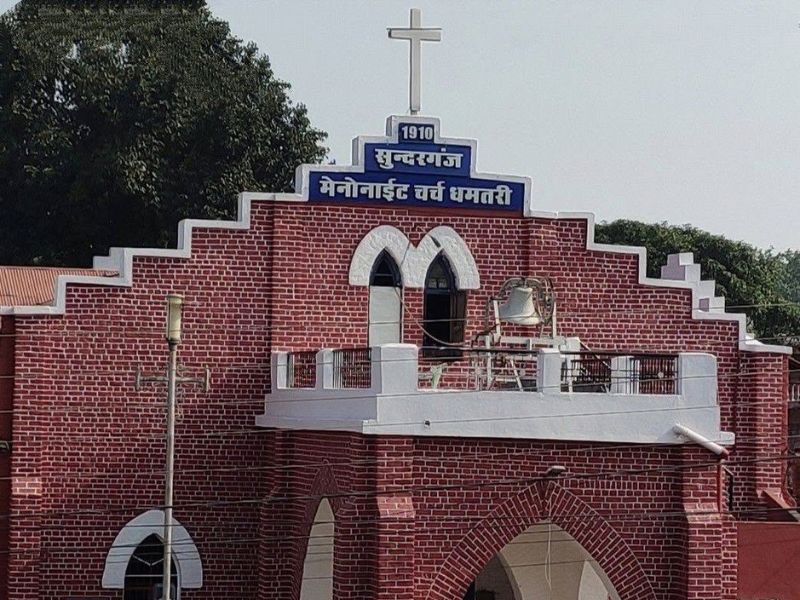
In an unprecedented development last week, more than 40 churches in the Dhamtari district of the central Indian state of Chhattisgarh, India, declared that worship is restricted to Christians only, raising eyebrows among Christians and non-Christians across the country.
The churches that restricted entry exclusively to Christians include the 116-year-old Sunderganj Mennonite Church, Dhamtari district’s famous church, run by the Mennonite Episcopalians who also own a hospital that had come under intense scrutiny over allegations of forced conversions in the past.
Currently, prominent Hindi notice boards at the entrance to church buildings explicitly warn non-Christians that if they choose to enter church premises voluntarily, they do so strictly at their own risk and responsibility.
This drastic step by local church administrations has sparked widespread debate across the region, redefining communal dynamics and the open-door nature traditionally associated with Christian places of worship.
What Prompted the Move
According to media statements by Diamond Philus, General Secretary of the Dhamtari District Christian Forum, the decision serves as a “precautionary measure” to safeguard congregations. The primary catalyst is the implementation of the strict Chhattisgarh Freedom of Religion Act, 2026, which heavily regulates and penalizes religious conversions through force, fraud, or inducement.
The immediate trigger occurred during a meeting at the district collectorate on Sept. 15. Local Hindu nationalist groups demanded that non-Christians be legally barred from entering churches until they are formally registered as converted Christians.
 Faced with targeted disruptions and complex legal vulnerabilities under the new law, the Christian Forum chose to restrict access explicitly to avoid unfounded legal harassment.
Before this, more than 1,000 non-Christians had independently submitted voluntary self-declaration forms to the administration confirming that they attended prayers of their own free will. However, the influx of these forms heightened suspicion and scrutiny among Hindu-nationalist activists, who routinely disrupted prayer services over conversion allegations.
Effect on Communities
The deployment of these notice boards has caused significant social friction among locals. The move has stripped away the welcoming, public nature of their faith. Worshippers feel a sense of siege and anxiety.
While the notices create a defensive legal barrier against allegations of “fraudulent conversion,” they have fundamentally compromised the community’s outreach and freedom to host inclusive gatherings.
Conversely, non-Christians — including many who frequented churches casually for peace, solace, or social interactions — now face an atmosphere of exclusion and suspicion. The traditional syncretic fabric of Dhamtari, where cross-community participation in festivals and prayers was common, has been severely strained.
Today, polarization has replaced that open-door policy. Legislative pressure and local vigilantism have forced minority institutions to operate like private clubs. The present reality is marked by defensive legal posturing, administrative silence, and an uneasy calm across the district.
This scenario is likely to trigger constitutional challenges regarding the freedom of religion and the right to access public places of worship.
Observers fear this precedent of restricting non-Christians could set a tense example for other districts to follow.
To read more news stories, visit the ICC Newsroom. For interviews, please email us. To support ICC’s work around the world, please give to our Where Most Needed Fund.