
Trump-Xi Meeting Comes Amid Ongoing Persecution in China
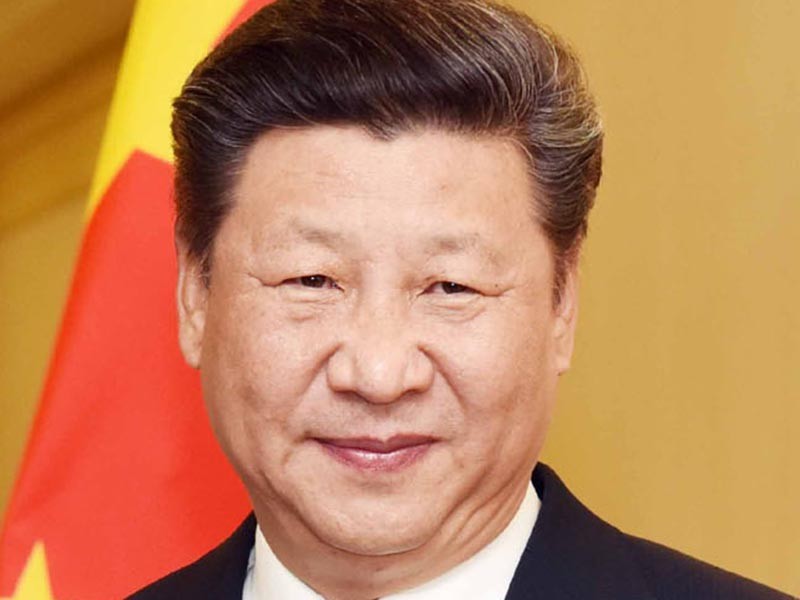
U.S. President Donald Trump and Chinese President Xi Jinping are scheduled to meet in Washington on Sept. 24, with trade, artificial intelligence, critical minerals, Taiwan, and other issues expected to dominate discussions.
But the meeting also comes as Christians and other religious believers in China continue to face imprisonment, surveillance, and government pressure to bring religious life under the control of the Chinese Communist Party (CCP).
The summit will be the leaders’ second face-to-face meeting of 2026. Their discussions are expected to focus heavily on extending a trade truce reached last year, while other contentious issues may also come up.
Religious freedom advocates are urging the Trump administration not to allow the issue of religious persecution to disappear behind economic and geopolitical negotiations.
The U.S. Commission on International Religious Freedom (USCIRF) called on Trump to directly raise China’s religious-freedom violations with Xi during the Washington summit. The commission specifically called for the release of imprisoned religious believers, including Christian leaders, and urged an end to China’s broader persecution of religious communities.
8 Zion Church Leaders Still Detained
The most prominent Christian cases include the imprisonment of leaders of Beijing’s Zion Church, an unregistered Protestant congregation that has faced sustained pressure from Chinese authorities.
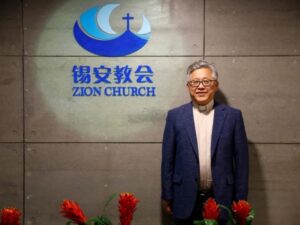 Pastor Ezra Jin Mingri, the church’s founder, was arrested alongside other church leaders during a government crackdown on house churches in 2025. After Trump intervened with Xi during the leaders’ May meeting in Beijing, Chinese authorities released Jin in July and allowed him to relocate to the United States.
Eight other Zion Church leaders arrested in the same crackdown remain detained. USCIRF has identified them as Wang Lin, Yin Huibin, Wang Cong, Lin Shucheng, Liu Zhenbin, Gao Yingjia, Elder Wang Zhong, and Wu Qiuyu.
Their continued detention demonstrates that the release of Jin did not end the campaign against independent Protestant churches in China.
The Ethics & Religious Liberty Commission (ERLC) recently urged Trump and Secretary of State Marco Rubio to advocate for the release of the eight pastors during their engagements with Chinese officials. ERLC President Evan Lenow also called on the administration to make clear that the United States will not accept continued suppression of religious belief in China.
Jimmy Lai’s Case Also Remains Before Xi
The summit also comes as Jimmy Lai’s family continues to seek his release.
Lai, a Catholic and Hong Kong media publisher, has been imprisoned under Hong Kong’s national security law. His son, Sebastien Lai, recently appealed to Trump to raise his father’s case with Xi during the Washington meeting.
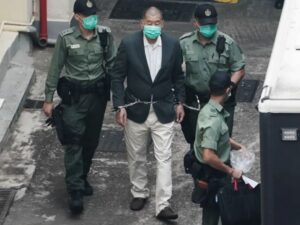 Lai is 78 years old and serving a 20-year sentence. His daughter, Claire, has been diagnosed with cancer and is undergoing chemotherapy in London. Her family is seeking his release so he can return home and be with her.
USCIRF has included Lai among the prisoners whose cases it wants Trump to raise with Xi, alongside several other religious prisoners and detainees, including Uyghur Muslims, Tibetan Buddhists, and imprisoned Christian leaders.
Lai’s case illustrates the increasingly broad reach of China’s restrictions on religious and civil freedoms. His imprisonment is connected to Hong Kong’s national security system, but his Catholic faith and public advocacy for freedom have made him an important case for religious-freedom advocates.
John Cao, Other Christians Remain in Prison
Other Christian prisoners also remain in need of international attention.
Pastor John Cao, a Chinese-American permanent resident, has spent years facing restrictions and imprisonment because of his Christian ministry. Religious freedom advocates have called for Chinese authorities to provide him with a passport and allow him to reunite with his family in the United States, particularly as he faces serious health concerns. USCIRF included Cao among the cases it urged Trump to raise with Xi.
 The cases of Cao, the Zion Church pastors, and other imprisoned Christians are part of a larger effort by the CCP to bring religious belief under state control.
China’s religious policy, the Sinicization of religion, seeks to reshape religious practice according to CCP ideology. Independent churches that refuse government registration and control are particularly vulnerable to detention, surveillance, fines, property seizures, and other forms of official pressure.
USCIRF has described China’s violations of freedom of religion or belief as systematic, ongoing, and egregious. Its 2026 annual report recommended that the U.S. government continue designating China as a Country of Particular Concern because of its religious-freedom violations.
A Critical Opportunity for Religious Freedom
The Washington summit will inevitably address issues of enormous consequence to the United States and China. Trade, technology, Taiwan, and other strategic questions will shape the leaders’ discussions. But religious freedom should not be treated as secondary.
Trump’s intervention in Pastor Ezra Jin’s case showed that individual prisoners can become part of high-level diplomacy. Jin’s release and subsequent relocation to the United States came after Trump raised his case with Xi in May.
The remaining prisoners now provide another opportunity for the United States to press Beijing on religious freedom.
For Christians in China, the outcome of the Sept. 24 meeting will be measured not only in trade agreements or diplomatic statements, but also in whether Christians imprisoned for their faith are remembered and whether Beijing faces continued pressure to respect freedom of religion or belief.
To read more news stories, visit the ICC Newsroom. For interviews, please email us. To support ICC’s work around the world, please give to our Where Most Needed Fund.