
U.S. Refugee Policies Leave Persecuted Christians with Fewer Paths to Safety
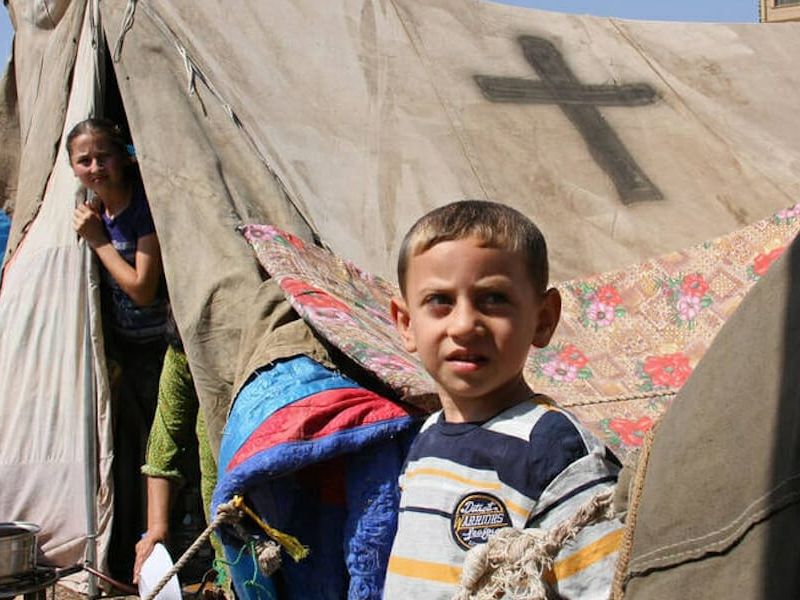
Christians facing persecution around the world are finding fewer pathways to safety in the United States as the country’s refugee resettlement program remains effectively suspended, and new asylum procedures change how some claims are initially reviewed.
A new report from World Relief and Open Doors U.S. found that fiscal year 2026 is on track to be the first year in the history of the U.S. Refugee Admissions Program in which no refugees from the 50 countries identified by Open Doors as the countries of greatest concern for Christian persecution were resettled in the United States.
The finding comes as Christians continue to face severe persecution worldwide. According to Open Doors’ 2026 World Watch List, 4,849 Christians were killed for their faith during the reporting period, while more than 224,000 Christians were forced from their homes, went into hiding, or fled their countries because of persecution.
For Christians living in countries such as Iran, Myanmar, Nigeria, and other nations where religious persecution is widespread, the consequences of changes to American refugee policy can be significant.
The U.S. Refugee Admissions Program was suspended by executive order in January 2025, with exceptions allowing the administration to admit refugees on a case-by-case basis when officials determine that doing so is in the national interest and does not pose a security or welfare threat. 
The administration has subsequently established a limited refugee admissions framework for fiscal year 2026. World Relief and Open Doors report that, based on available admissions data, the program has not resettled a persecuted Christian refugee from any of the top 50 countries of concern this fiscal year.
The issue is particularly relevant for Christians who cannot safely remain in their home countries but also have no realistic means of reaching the United States to request asylum.
Refugee resettlement and asylum are separate pathways. Refugees generally apply and undergo screening outside the United States, while people already in the country or seeking admission at a port of entry seek asylum.
For some Christians who manage to reach the United States, however, the asylum process is also changing.
Changes to the Asylum Process
On July 28, the Department of Homeland Security published an interim final rule allowing U.S. Citizenship and Immigration Services asylum officers, in certain cases, to refer affirmative asylum applications to immigration court without first conducting an asylum interview. The rule applies to cases officials determine can be referred based on the application and other evidence, including cases involving certain statutory bars or claims deemed ineligible based on the record.
The administration says the change is intended to make the asylum system more efficient and reduce a backlog that has grown to more than 1.4 million pending cases. USCIS also argues that eliminating interviews in cases unlikely to be approved will let asylum officers devote more time to other cases and reduce duplication between USCIS and immigration courts.
For Christians fleeing religious persecution, the practical impact may depend heavily on the circumstances of each case. Still, the fact that no Christian refugees were allowed in the previous year does not bode well for their chances of being granted asylum at a port of entry.
An asylum application often involves a complicated history of arrests, threats, family pressure, religious conversion, imprisonment, violence, or discrimination. Some converts to Christianity, for example, may have little documentary evidence of their persecution because the same authorities who threaten them are responsible for producing or controlling official records.
The written application therefore becomes particularly important under the new process.
The rule does not eliminate an asylum seeker’s opportunity to have a case heard in immigration court. Rather, it allows certain cases to move directly from USCIS to the immigration court without the preliminary USCIS interview. USCIS says the change is intended to move cases through the system more quickly.
For advocates for persecuted Christians, however, the broader concern is whether people fleeing religious persecution will have adequate opportunities to explain the circumstances surrounding their claims.
The changes come at a time when the number of Christians experiencing persecution remains extraordinarily high.
A Shrinking Path to Religious Freedom
Open Doors reports that the number of Christians killed for their faith increased from 4,476 in its 2025 reporting period to 4,849 in 2026. More than 224,000 Christians were forced from their homes or otherwise displaced because of violent persecution.
World Relief and Open Doors also found that asylum approval rates in immigration court for applicants from the 50 countries most associated with Christian persecution have declined substantially. The report says the overall approval rate for applicants from those countries fell to 10% in fiscal year 2026, compared with 26% in fiscal year 2025 and 58% in fiscal year 2023. These figures include applicants of all religious backgrounds, not only Christians.
The organizations point to particularly significant changes among applicants from countries such as Iran and China.
For Iranian applicants, the report says the asylum approval rate fell to 38% in fiscal year 2026, compared with more than 80% between fiscal years 2020 and 2024. Among Chinese applicants, the rate fell from 88% in fiscal year 2022 to 29% in fiscal year 2026.
These numbers do not mean that every rejected applicant is a persecuted Christian, nor that every asylum claim represents a legitimate case for protection. Asylum law requires individual determinations based on the facts and legal requirements of each case.
But for Christians who genuinely face imprisonment, violence, or death because they follow Christ, the shrinking number of available pathways can have serious consequences.
Pastor Ara Torosian, an Iranian Christian who came to the United States as a refugee in 2010 and now pastors a Farsi-speaking congregation in California, has seen both sides of the issue. He has watched Christians escape the same religious persecution he experienced while finding it increasingly difficult to reach safety in the United States.
“America gave us the freedom to stop being afraid,” Torosian told Christianity Today. “I don’t want to lose that.”
As the United States prepares its refugee admissions policy for fiscal year 2027, the experience of persecuted Christians will be one measure of how the country’s refugee system responds to people fleeing religious persecution.