
RSS Celebrates in New York Amid Continuing Persecution in India
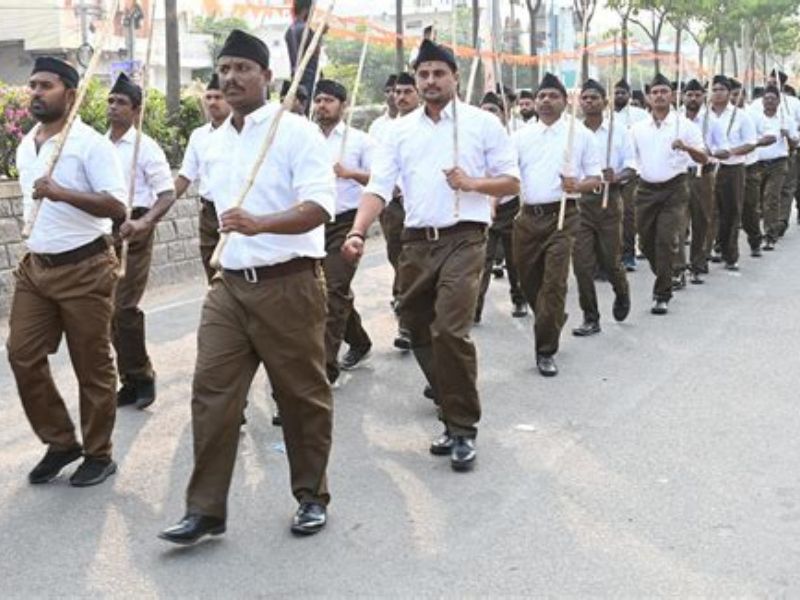
The Rashtriya Swayamsevak Sangh (RSS), India’s leading Hindu nationalist organization and ideological parent of the ruling Bharatiya Janata Party (BJP), has taken its campaign to reshape its international image to one of the world’s most prominent stages.
On Aug. 29, RSS Chief Mohan Bhagwat addressed thousands of people at Madison Square Garden in New York City as part of the “Universal Oneness Celebrations,” an event organized by American Hindus for Engagement and Dialogue (AHEAD).
His speech about unity and diversity was strikingly different from the concerns that have surrounded the RSS for decades.
Bhagwat’s appearance came only months after the organization publicly acknowledged an international outreach campaign intended to address what RSS leaders call “misgivings and misconceptions” about the group.
In May, the RSS sent representatives to the United States, Britain, and Germany and planned further outreach across Europe and Southeast Asia. The effort was explicitly framed as an attempt to counter international criticism of the RSS and its record concerning religious minorities.
The Madison Square Garden event represents a significant escalation of that effort. Rather than limiting its outreach to policy forums and academic institutions, the RSS placed its chief before a large American audience under the banner of universal unity.
But for Christians and other religious minorities in India, the event was simply the most recent attempt to whitewash the RSS’s record.
A New Face for an Old Movement
Founded in 1925, the RSS has developed into an enormous network of organizations that has profoundly influenced Indian political and social life. The BJP’s rise has given the movement unprecedented influence over national governance, while RSS-linked organizations remain deeply involved in social and cultural affairs.
The organization describes itself as a cultural movement committed to India’s unity and welfare. Critics, however, have long raised concerns about its vision of Indian identity and the place of religious minorities within it.
Those concerns have become increasingly important as the RSS has expanded its international presence.
 The May outreach campaign came as international scrutiny of the organization intensified. In its 2026 annual report, the U.S. Commission on International Religious Freedom (USCIRF) recommended targeted sanctions against the RSS and identified the organization among entities whose officials should face consequences for severe religious freedom violations.
The RSS has rejected such accusations, and the Indian government has repeatedly dismissed USCIRF’s assessments as biased and selective.
Nevertheless, the criticism is not based solely on recent political disputes. Religious minorities in India have experienced years of attacks, intimidation, discriminatory legislation, and restrictions on religious activity.
For Christians, one of the most persistent problems has been the spread and enforcement of state-level anti-conversion laws.
Christians Caught in the Crosshairs
More than a dozen Indian states now maintain laws regulating religious conversion. While these laws are generally presented as safeguards against conversion through force, fraud, or coercion, their broad provisions have repeatedly been used against Christians accused of attempting to convert Hindus.
In practice, pastors and Christian workers have been detained after prayer meetings, worship services, and community outreach activities. Churches have been disrupted by mobs alleging that Christians are conducting illegal conversions. Police regularly arrest Christians based on allegations made by Hindu nationalist activists rather than on any actual evidence of coercion.
These laws also provide legal and political cover for a wider campaign of intimidation.
When Christian charity is portrayed as an inducement to conversion, ordinary humanitarian activities — including distributing food, providing education, operating medical facilities, or assisting impoverished communities — can become grounds for suspicion. The result is an increasingly hostile environment in which Christians may be forced to choose between serving their communities and avoiding accusations that their activities constitute unlawful conversion.
The RSS’s growing influence is particularly significant in this context because of its extensive network of affiliated organizations and its close ideological relationship with the BJP.
The BJP and RSS are not formally identical organizations, but the RSS has long served as a major ideological and organizational force within the broader Hindu nationalist movement. Prime Minister Narendra Modi himself began his political career as an RSS worker before rising through the BJP.
The movement’s influence therefore extends well beyond the RSS’s own membership.
Taking the Message Abroad
The RSS has entered its centenary year amid increasing scrutiny over its domestic record. Rather than retreating from international engagement, however, the organization has expanded it. The RSS is deliberately reaching into Western societies to challenge perceptions of the organization and present its own account of its history and ideology.
The Madison Square Garden event’s emphasis on oneness, unity, and human solidarity offered an image of the RSS that is difficult to reconcile with the experiences reported by many Indian Christians and other minorities.
That contrast was evident in New York itself. Hundreds of protesters representing Muslim, Sikh, Christian, Hindu, and other communities gathered outside Madison Square Garden to oppose Bhagwat’s appearance and raise concerns about the RSS’s record.
The controversy also followed Bhagwat beyond the Garden. Some American faith leaders who attended an interfaith breakfast connected to the visit later said they had not understood the gathering was being organized around Bhagwat and the RSS, and some expressed regret over their participation.
To read more news stories, visit the ICC Newsroom. For interviews, please email us. To support ICC’s work around the world, please give to our Where Most Needed Fund.