
Christian Farmers Fear Returning to Their Fields in Plateau State After Fulani Militias Kill 27
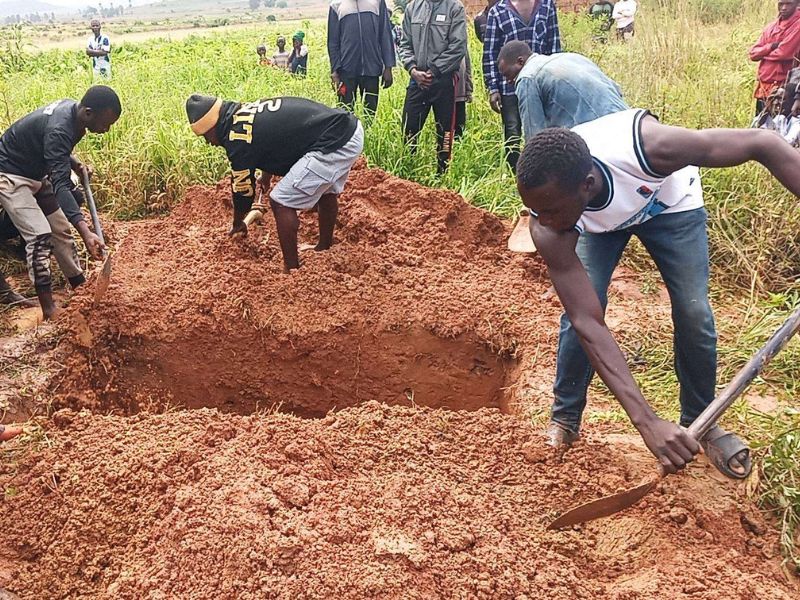
For many Christian farmers in Irigwe communities in Plateau state, Nigeria, traveling to their farms has become dangerous.
Some have stopped going altogether. Others now move in groups, hoping that numbers will offer some protection. But for families who depend on agriculture for survival, abandoning their land is not an easy choice.
The fear has grown following a series of attacks in Bassa Local Government Area, where community leaders said armed men suspected to be Fulani militias have targeted farmers traveling to and from their fields.
On July 30, 60-year-old Christian farmer Bulus Turu was reportedly attacked while returning from his farm near Ancha community in the district of Miango. His body was found the following morning.
According to Joseph Chudu Yonkpa, National Publicity Secretary of the Irigwe Youth Movement, Turu was a displaced farmer from Rotsu village who had relocated to Ancha after years of insecurity.
“Mr. Turu was attacked and macheted while returning from his farm,” Yonkpa said. Community leaders said the attack occurred despite previous warnings about armed movements in the area. They accused security agencies of failing to provide sustained protection after repeated alerts from residents.
Christian farmers in Miango and surrounding communities said the threat has affected their ability to cultivate their land. Sunday Gado, chair of the Miango Youth Development Association, told International Christian Concern (ICC) that at least 27 people had been killed in ambushes across Miango communities this year. He said many of those killed were Christian farmers traveling to their farms.
Gado mentioned the killing of John Telle Danjuma, whose attackers allegedly took his mobile phone. He said the incident was reported to police, but no arrests followed.
“The new pattern of ambushes is more dangerous,” Gado said. “Christian farmers are afraid to use the roads and footpaths leading to their farms.”
For displaced families who rely on farming for food and income, restricted movement has created additional hardship. Many farmers from communities affected by violence say they face a difficult choice: risk returning to their land or remaining without a harvest.
Gado said elderly farmers and women are among those most vulnerable.
“The young men sometimes try to go in groups. But mama, papa, 60 years, 70 years, they go alone,” he said. “That is how they are picked off.”
The attacks continued in August when residents of Ariri village in Nkienwhie District, Irigwe Chiefdom, reported another attack. According to community representatives, gunmen attacked the village at about 10 p.m. on Aug. 14, killing 21-year-old Jonathan Mangwa Ado.
Another resident, Joseph Ezekiel, 19, sustained gunshot injuries to his leg and was taken for medical treatment. Yohana Boh, community leader of Ariri and former councilor representing Tahu Ward, said residents were caught off guard.
“We received early warning, but the Nigerian Army ignored it,” Boh said. “We don’t know where the Fulani came from. They were just shouting and shooting on the roadside.” Boh appealed to Nigerian authorities and security agencies for increased protection.
“We can’t sleep. We can’t farm,” he said. “We’re calling for help.” Jonathan Mangwa Ado was buried on Aug. 15 according to Christian burial rites.
Yonkpa said they have repeatedly shared information with security agencies, including reports of suspected movements of armed groups and requests for protection around farming areas. He also said communities have provided warnings but often receive only temporary security responses.
“We tell them where the gunmen gather,” he said. “We tell them the time they come. Nothing happens until someone dies.”
The Irigwe are an indigenous farming community concentrated mainly in Bassa Local Government Area of Plateau state and part of Southern Kaduna in Kauru LGA. Agriculture remains central to their livelihoods, with many families depending on crops such as maize, potatoes, and vegetables.
The wider Plateau region and Southern Kaduna have experienced years of violent attacks, particularly in rural communities where disputes involving land, farming access, ethnicity, criminal activity, and armed groups have contributed to insecurity.
Community allegations have frequently identified armed Fulani groups as perpetrators in some attacks. However, the Fulani ethnic group is diverse, and allegations against armed groups do not represent the wider Fulani population.
To read more news stories, visit the ICC Newsroom. For interviews, please email us. To support ICC’s work around the world, please give to our Where Most Needed Fund.