
Sudan’s Christians Face Rising Persecution as War Devastates Churches
A pastor in Sudan’s Nuba Mountains was recently executed alongside six other people after being detained by an armed faction. Another church leader was abducted from the same region days later.
The attacks are part of a growing wave of violence against Christian leaders and communities as Sudan’s civil war enters its fourth year.
On July 23, members of the Sudan People’s Liberation Movement-North (SPLM/N) arrested Rev. Adil Idris Jangoul, a pastor with the Sudanese Episcopal Church, at his church residence in Heban. His body was later found on a road alongside six other members of the Otoro ethnic community. All seven had been extrajudicially executed.
A separate attack in Heban that same day resulted in at least 10 people being killed and more than 20 taken hostage, including Rev. Yakoub Brahim Tia, a former general secretary of the Sudanese Church of Christ. Tia and the other hostages were eventually released, but another church leader, Zakaria Suliman Jana, was later abducted in Heban on July 31.
The attacks highlight the increasingly dangerous environment facing Christians in Sudan, particularly in the Nuba Mountains, where armed factions are fighting for control.
Churches Destroyed by War
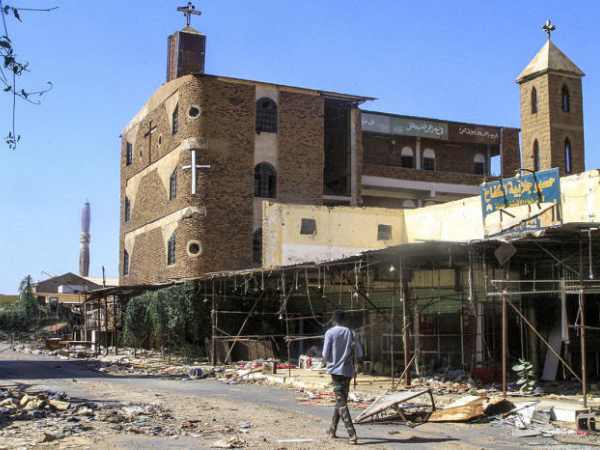
The persecution of Christians in Sudan extends far beyond attacks on individual pastors. Churches across the country have been bombed, looted, occupied, and destroyed since fighting erupted between the Sudanese Armed Forces (SAF) and the Rapid Support Forces (RSF) in April 2023.
At least 165 churches, and likely dozens or hundreds more, have been forced to close during the war, according to reports. Some have been converted into military bases or weapons depots, while the fighting has destroyed others.
In Omdurman, Christians who sought refuge inside St. George Coptic Orthodox Church were attacked by RSF fighters. The soldiers beat people inside the church, stole property, and targeted orphaned girls living on the church compound. One Christian who tried to stop them was struck with a gun and shot in the leg.
Nearby, RSF fighters attacked Marmina Coptic Orthodox Church, destroying the sanctuary, cemetery, furniture, windows, walls, and other property. The church has been unable to return to normal worship.
Other attacks have been deadlier. In December 2024, the SAF struck a church in Khartoum, killing 11 people, including eight children. In June 2025, three churches in El Fasher were bombed during a two-day RSF assault. A month later, a Pentecostal church complex in Khartoum was destroyed by extremists, SAF members, and police officers.
Churches have long been places of refuge, but in Sudan they have become regular targets of violence.
Christians Targeted Amid Broader Conflict
Sudan’s Christians are a small minority in a country where the overwhelming majority of the population is Muslim. The war has devastated civilians of every background, but Christians face additional vulnerabilities because of their religious identity.
Church leaders have been abducted, detained, and killed. Christian converts from Islam face particularly severe persecution, including threats from government officials, armed groups, relatives, and members of their communities. Men who convert have faced beatings, imprisonment, abduction, and death.
Christian women and girls also face extraordinary danger. Sexual violence has become widespread throughout the war, while Christian women face additional threats including forced marriage, domestic abuse, and the loss of inheritance rights.
In areas where government authority has collapsed, armed groups can act with near-total impunity. Christians have been subjected to extortion, violence, forced conversion, and displacement while receiving little protection from authorities.
Sudan’s Lost Religious Freedom Gains
The current persecution is particularly tragic because Sudan had made significant progress on religious freedom only a few years ago.
For three decades from 1989 to 2019, Sudan was ruled by Omar al-Bashir, whose government imposed a harsh Islamist system that severely restricted religious minorities. Christians faced apostasy laws, blasphemy restrictions, discrimination, and government pressure.
Bashir was overthrown in 2019, opening a brief period of dramatic reform. Sudan’s transitional government repealed its apostasy law, removed several references to Sharia from its legal framework, and took steps to protect religious minorities. The government also outlawed labeling religious groups as “infidels” and pursued broad political reforms.
The progress was significant enough that the U.S. Department of State removed Sudan from its list of Countries of Particular Concern in 2019. In December 2020, Sudan was removed from the State Department’s Special Watch List altogether.
For Sudanese Christians, these reforms offered hope that decades of state-sponsored religious discrimination were finally coming to an end.
That hope collapsed with the military coup of October 2021. The military takeover weakened the country’s democratic transition, and the rivalry between military leaders eventually erupted into full-scale war between the SAF and RSF in April 2023.
Since then, the fragile protections established after Bashir’s fall have been overwhelmed by violence, lawlessness, and the militarization of civilian life.
A Crisis Beyond the Battlefield
In Omdurman, Christians who once worshiped in large congregations have seen their communities scattered by death and displacement. Thousands of Christian families have fled to displacement camps or neighboring countries such as Egypt.
Yet many Christians remain. The international community must recognize that protecting Sudan’s Christians is part of protecting Sudan’s broader religious freedom. The country has already demonstrated that meaningful reform is possible. That progress must not be forgotten as the war continues.
Sudan’s Christians need more than statements of concern. They need protection for churches and clergy, humanitarian access for displaced communities, accountability for those responsible for religious persecution, and sustained international pressure for an end to the war.
The destruction of Sudan’s churches represents the destruction of a fragile religious freedom that had only begun to take root. Rebuilding those churches will require more than bricks and mortar. It will require rebuilding the political and legal protections that allow Sudan’s Christians to live and worship freely.
To read more news stories, visit the ICC Newsroom. For interviews, please email us. To support ICC’s work around the world, please give to our Where Most Needed Fund.