
Jim Elliot: A Life Shaped by Surrender
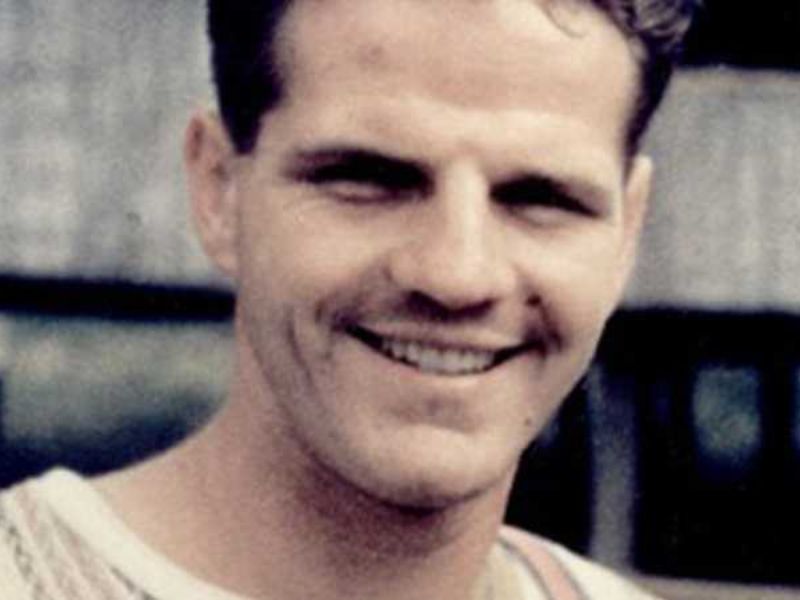
By Pieter Vermeulen, ICC Board Member, as part of a series, “Persecuted but not Forsaken.”
By the time we encounter the story of Jim Elliot, we are no longer in the world of the Reformation or the early church, but in the modern era, the age marked by unprecedented global access, growing opportunity, and expanding influence.
And yet, the call of Christ has not changed. The same gospel that called the first disciples still calls today. The same cross still stands at the center of discipleship.
Jim Elliot’s life did not begin on a distant mission field, but in the ordinary rhythms of family, education, and spiritual formation. Born in 1927 in the United States, he grew up in a Christian home where Scripture was taken seriously and where the call to follow Christ was not merely taught but modeled.
From a young age, Elliot displayed a deep sensitivity to the things of God, combined with a seriousness that set him apart from many of his peers. As a student, he wrestled with questions of purpose, calling, and the meaning of a life fully surrendered to Christ.
It was during these formative years that a defining conviction began to take shape within him.
He came to understand that following Jesus was not about building a successful life by worldly standards, but about giving one’s life fully to God’s purposes. This conviction would eventually be expressed in the words for which he is now widely known:
“He is no fool who gives what he cannot keep to gain what he cannot lose.”
This was not a slogan; it was a settled belief, and it would shape every decision that followed.
The Call to the Unreached
Jim Elliot’s calling to the unreached was neither impulsive nor driven by adventure or emotional zeal; rather, it was formed slowly through Scripture, prayer, and a growing conviction that obedience to Christ must extend beyond comfort, familiarity, and cultural Christianity.
During his university years, Elliot wrestled deeply with the question of what it meant to take the Great Commission seriously, not as a general idea for the church, but as a personal calling that demanded a response. As he read passages such as Matthew 28:19–20 and reflected on the reality that millions had never heard the name of Jesus, he began to sense that this was not simply a global problem but a personal responsibility.
He once wrote in his journal:
“God, I pray Thee, light these idle sticks of my life, and may I burn for Thee. Consume my life, my God, for it is Thine.” This was not the language of comfort. It was the language of surrender.
Elliot understood that the gospel is not only something to believe but also something to carry, and that carrying it faithfully would require going where others were unwilling to go. As this conviction deepened, it led him to Ecuador, where he began ministering among indigenous communities, yet even there, his heart was drawn further to those who remained completely unreached. When he learned of the Huaorani people, a tribe known for its isolation and hostility, he did not see danger as a reason to withdraw, but as a confirmation that the gospel had not yet reached them. This is what set him apart. He did not ask, “What is safe?” He asked, “What is obedience?”
In asking that question, he exposes something that we must now confront. Because the reality is that even today, there are still thousands of people groups who have little to no access to the gospel. Entire communities live and die without ever hearing the name of Jesus in a way they can understand. The question is no longer whether the need exists. The question is: Why does it still exist?
How is it possible that in a time of unprecedented global connectivity, financial resources, and technological advancement, there are still millions who remain unreached? Is it because we lack capacity? Or is it because we lack conviction? Have we, as the church, lost something that earlier generations carried so deeply? Have we become so shaped by comfort, security, and personal advancement that the call to go has been replaced by the desire to stay? And perhaps most searching of all: Are we truly willing to pay the price required to reach those who have never heard?
Because the gospel that Elliot believed in was not a message that centered on personal success, influence, or self-fulfillment. It was not a gospel that produced platforms, brands, or spiritual celebrity. It was a gospel that demanded everything.
And we must ask honestly: Is a gospel that costs nothing truly worth anything? Is a faith that demands no sacrifice the same faith that led men and women throughout history to give their lives for Christ? Or have we embraced a version of Christianity that is comfortable, appealing, and safe, but ultimately powerless to reach the lost?
Elliot’s life stands in direct contrast to this. He did not build a brand; he gave his life.
He did not seek influence; he sought obedience. And in doing so, he reminds us that the call of Christ has never changed. It still requires everything.
Obedience Despite the Risk
The decision to reach the Huaorani was not made lightly. The risks were clear. The danger was real. But the question that guided them was not, “Is this safe?” It was, “Is this obedience?” After months of preparation, including aerial contact attempts and efforts to build trust, the team decided to land and initiate face-to-face contact. On Jan. 8, 1956, what began as a hopeful encounter turned suddenly and violently. All five men were killed. Speared by the very people they had come to serve.
When the World Calls It Tragedy
From a human perspective, the story appears to end in failure. Five young men whose lives were cut short. Families left behind. A mission seemingly undone. And yet, this is where the deeper meaning of their story begins to emerge. Because what the world calls tragedy, God often uses as testimony.
The Seed of the Gospel
In the years that followed, something remarkable happened. The wives of the slain missionaries, along with others, continued the work. They returned, not in anger or in retaliation, but in love. And over time, the very tribe that had killed the missionaries began to change. The gospel took root and lives were transformed. The message that had cost five men their lives began to bear fruit in the very place it had been rejected. This is the pattern we have seen throughout this series: Faithfulness in one generation becomes transformation in the next. What is sown in sacrifice is often reaped in revival.
The Outworking of the Inner Cross
Jim Elliot’s story cannot be understood apart from the principle we saw in Madame Guyon’s life. The cross is first carried inwardly before it is expressed outwardly. Elliot’s willingness to give his life on the mission field was not the result of a sudden decision. It was the outworking of a life that had already been surrendered. He had already died to self.
Already yielded his future. Already entrusted his life fully to God. And because of that, when the moment came, he was ready.
Their Blood Still Speaks
Elliot and his companions did not seek death. But they refused to withhold obedience.
And in doing so, they became part of the same story we have been tracing from the beginning:
A story of men and women who understood that the gospel is worth everything. Their lives ask us a question we cannot ignore: What are we holding back from God?
The Question Before the Church
In a world where safety, success, and self-preservation often define decision-making, the story of Jim Elliot presents a different framework. The question is not:
What will make my life secure?
But:
What will make my life faithful?
Are we willing to go where God sends us?
Are we willing to give what he asks?
Are we willing to lay down not only our comfort, but our lives?
Are We Willing to Pay the Cost?
Jim Elliot understood that life is not ultimately about what we keep, but about what we give. And in giving his life, he gained something far greater than what he lost. His story reminds us that the call of Christ is not to comfort, but to surrender. Not to safety, but to obedience. Not to preservation, but to faithfulness.
The witness continues. Their voices are not silent.
And the question remains:
If the blood of the martyrs still speaks, are we listening?
Click here to read more from the series.
To read more news stories, visit the ICC Newsroom. For interviews, please email us. To support ICC’s work around the world, please give to our Where Most Needed Fund.