
Macron Visit Highlights Syria’s Uncertain Future for Religious Minorities
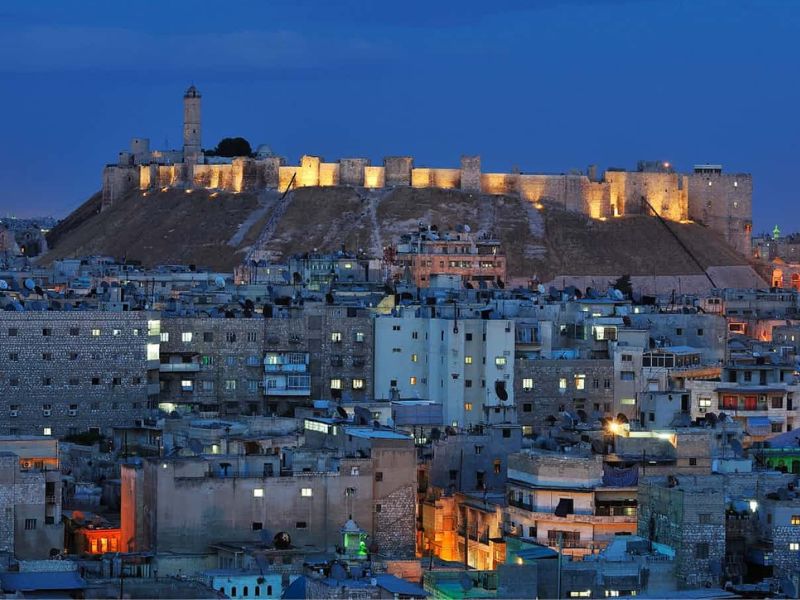
Syrian President Ahmed al-Sharaa had hoped to showcase his country’s transformation toward democracy during French President Emmanuel Macron’s historic visit to Damascus this week. Instead, the visit was overshadowed by violence after explosions in the capital injured at least 18 people, marking the second such attack in Damascus this month.
No group has claimed responsibility for either attack. Yet the violence highlighted the deep security challenges facing Syria as Sharaa’s government attempts to consolidate power and present itself as a new chapter after decades of authoritarian rule.
Macron continued with his scheduled meetings despite the explosions, signaling France’s support for Syria’s recovery efforts. The two leaders signed more than a dozen agreements, including a pact to restore diplomatic relations and reappoint ambassadors for the first time in roughly 14 years. France also announced plans to return more than $50 million in confiscated assets connected to former Syrian President Bashar al-Assad’s family.
The visit came as Sharaa’s government seeks international legitimacy following the December 2024 overthrow of Assad. In a little more than a year, Syria has joined the U.S.-led coalition against the Islamic State group, secured the lifting of European Union economic sanctions, and attracted billions of dollars in investment commitments aimed at rebuilding the war-torn country.
Uncertainty for Minority Communities
However, questions remain about whether Syria’s political transition will provide genuine protection for the country’s religious and ethnic minorities.
Since taking power, Sharaa has repeatedly pledged to protect minorities and build an inclusive Syria, and Macron appears optimistic about Syria’s future.
“Nothing can smother the aspiration of Syrian women and men to live in a fully sovereign, safe, pluralistic, and united Syria,” Macron wrote online shortly after the explosions. “This morning, I met Syria in all its diversity. I saw dignity, courage, and determination.”
Yet communities across the country — including Christians, Alawites, Druze, and Kurds — have faced violence, marginalization, and uncertainty under the new government.
Ethnoreligious minorities have experienced some of the most severe consequences of Syria’s instability. Large-scale massacres have killed hundreds of Druze and Alawite civilians in areas with significant minority populations, including Homs. Kurdish communities have also faced pressure from Damascus as the government seeks to bring the semi-autonomous northeast under greater central control.
The Syrian government’s efforts to integrate Kurdish forces into the national military have raised concerns among minority communities that local populations could lose the ability to protect themselves. Kurdish forces, which played a central role in defeating the Islamic State’s territorial control in Syria, have long maintained their own security structures in the northeast.
Christians in Syria have faced an alarming wave of violence since the fall of Assad. On June 22, 2025, a suicide bomber attacked Mar Elias Church in Damascus during Divine Liturgy, opening fire on worshippers before detonating an explosive vest inside the church. The attack killed at least 22 worshippers and injured dozens more.
The bombing was the first major church attack in Syria since Assad’s fall and sent shockwaves through the country’s Christian community. A report by the Syriac Strategic Research Center later documented a broader pattern of anti-Christian incidents, including vandalism of churches, desecration of cemeteries, forced displacement of Christian families, and threats against Christian communities in areas including Hama, Homs, Tartus, Latakia, and Suwayda.
Concerns about religious restrictions have also increased as the government has introduced policies influenced by conservative Islamic norms. Recent measures in Damascus restricted alcohol sales, allowing limited exceptions only in certain Christian neighborhoods. Earlier policies restricted government employees’ use of makeup and introduced government-defined modesty standards in public spaces.
Many Syrian Christians have viewed these measures as warning signs of a broader shift toward religious conservatism and fear that increased identification of Christian communities with Western or religious minorities could make them targets for extremists.
Challenges Past and Future
The challenges facing Syria extend beyond individual policies. The country is also confronting the consequences of decades of war, the collapse of the Assad regime, and the continued presence of extremist networks. Thousands of family members of Islamic State fighters escaped from Al-Hol camp after Kurdish forces withdrew amid clashes with Syrian government forces, raising concerns about renewed extremist activity.
Sharaa’s personal history has added to concerns among minority communities. Before leading the coalition that removed Assad, Sharaa was associated with jihadist movements, including al-Qaida-linked organizations. Although he has made public commitments to tolerance and inclusion, forces connected to his government have been accused of committing or allowing severe abuses against minority communities.
As Syria seeks international investment and diplomatic recognition, the future of its religious and ethnic minorities remains a central test of the country’s transition. For Syria’s Christians and other vulnerable communities, promises of inclusion must be matched by concrete protections, accountability, and the preservation of their ability to practice their faith and maintain their communities safely.
To read more news stories, visit the ICC Newsroom. For interviews, please email us. To support ICC’s work around the world, please give to our Where Most Needed Fund.