
India’s Second-Largest State Passes Discriminatory Anti-Conversion Law
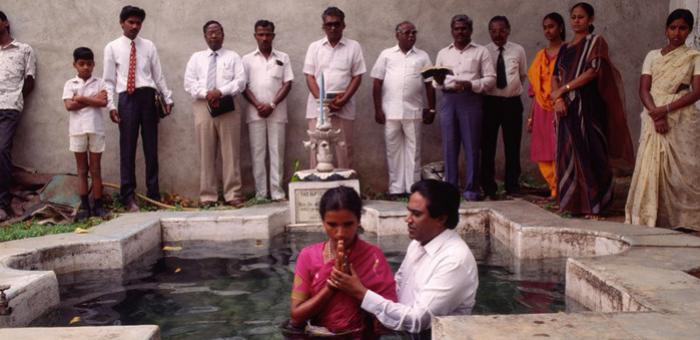
The Maharashtra Assembly passed a bill this week to legally regulate religious conversion. Ironically titled the Maharashtra Freedom of Religion Bill 2026, the legislation imposes stringent restrictions on individuals’ rights to convert to another faith tradition.
Those found guilty of an “unlawful conversion” now face fines and up to seven years’ imprisonment in India’s second-most populous state. Repeat offenders face up to 10 years in prison.
As is typical of anti-conversion laws across India, the bill was passed in the context of unfounded Hindu nationalist conspiracy theories alleging mass forced conversions of Hindus by Christians and Muslims.
In fact, census data indicates that these faiths have remained a relatively stable proportion of the population for decades. Despite more than a dozen such laws across the country and thousands of charges brought against religious minorities, convictions under these statutes are exceedingly rare.
Still, the human toll of these laws is enormous, costing religious minority communities incalculable losses in income and substantial legal fees as they fight spurious charges in court. The laws also provide moral backing for Hindu nationalist mobs that have taken it upon themselves to enforce these statutes. In many cases, local police side with the mobs, enabling widespread violence against Christians and Muslims.
Written under the guise of protecting citizens from coercion, these laws criminalize conversions so broadly that they effectively outlaw most minority religious activity. A typical example is Uttar Pradesh’s anti-conversion law, passed in 2021 in India’s most populous state, which prohibits “conversion from one religion to another by misrepresentation, force, undue influence, coercion, allurement, or any fraudulent means.”
While international law supports prohibitions on coercion, the law’s definition of “allurement” is cripplingly broad and itself in tension with international norms. Under the Uttar Pradesh law, allurement includes “the offer of any temptation,” such as “gratification, easy money … free education in [a] reputed school run by any religious body … better lifestyle, [or] divine displeasure.”
Under this definition, nearly any religious activity could be construed as an attempt at forced conversion. Even something as innocuous as explaining one’s beliefs about divine reward or eternal consequences could be deemed criminal under the statute.
While these laws trace their roots to an early post-colonial India wary of Western missionaries imposing religion on Hindu populations, their continued expansion decades later — particularly under the Modi administration, which began in 2014 — suggests the driving concern is less about foreign influence and more about preserving the Hindu-dominated status quo.
In a March 2023 update on India’s anti-conversion laws, Luke Wilson, a researcher for the United States Commission on International Religious Freedom, wrote that “India’s enforcement of state-level anti-conversion laws suggests the legislation intends to prevent conversions to disfavored religions — such as Christianity and Islam — and not to protect against coerced conversions.”
International Christian Concern (ICC) regularly documents how these laws make minority religious life in India more difficult and works with pastors who mobs have attacked during services, where singing and worship are perceived as potential avenues for conversion. Similar mob raids occur outside church services as well, sometimes targeting community outreach programs such as food or clothing distributions.
To read more news stories, visit the ICC Newsroom. For interviews, please email [email protected]. To support ICC’s work around the world, please give to our Where Most Needed Fund.