
Platform Censorship Threatens Online Expressions of Faith
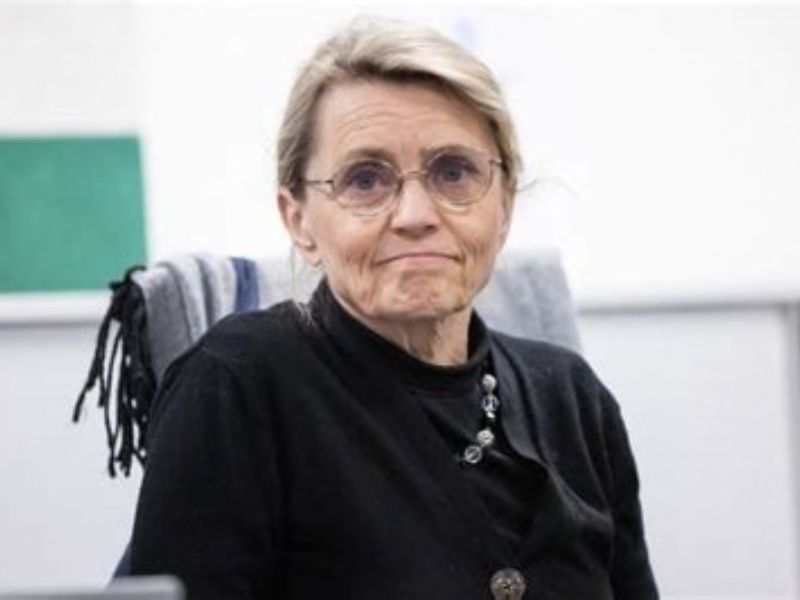
On Feb. 4, Päivi Räsänen, a member of the Finnish Parliament, testified before the House Judiciary Committee in Washington, D.C., highlighting how the European Union’s online censorship policies could threaten Americans’ freedom to express religious beliefs online.
The hearing, “Europe’s Threat to Speech and Innovation: Part II,” reviewed online censorship laws, including the European Union’s Digital Services Act (DSA), which overmoderates online platforms and broadly labels content as “hate speech.”
Räsänen, 66, weighed in with her personal testimony. In 2019, she quoted Romans 1:24-27 in a tweet that questioned an evangelical church’s support for an LGBTQ pride event. She has spent the last six years in court, fighting against three charges of hate speech.
“The crime of ‘agitation against a minority group’ falls under the ‘war crimes and crimes against humanity’ section in the Finnish criminal code and can carry up to two years of prison time,” Räsänen said in her testimony. “I did not insult or call for harm against anyone. I was being criminally charged for simply expressing convictions rooted in my faith and conscience.”
Räsänen is awaiting a decision from Finland’s Supreme Court on her case. While she waits, she advocates for freedom of speech in courtrooms, press conferences, and broadcasts, which are heard around the world.
“Speech that is lawful today can become criminalized tomorrow. This should concern every person that values freedom,” Räsänen said. “My case shows where this path can lead. Recent developments from the European Union, like the Digital Services Act, make European censorship a worldwide concern.”
In her speech, Räsänen referenced her legal supporters at ADF International, including her lawyer, Lorcán Price, who also testified before Congress. Price warned that online speech regulations create a global censorship issue that cannot be passively dismissed.
“It is now undeniable that the reach of the DSA is not just a European problem,” Price said. “The Commission has fired the first shots in a global struggle over whether people can speak the truth and whether American companies, including Google, Bing, and Meta, are free to continue to drive Internet innovation or instead be forced to help Europe silence speech worldwide.”
Although an EU-enforced law, the DSA incentivizes companies to comply with its requirements and revise their worldwide content moderation policies. From politics to religion, online content is being classified as “hate speech.” In cases like Räsänen’s, this censorship can criminalize the user.
Räsänen closed her statement saying, “I look forward to the day when the fundamental right to free speech is upheld for all who seek to peacefully express their convictions.”
Story by Bella Agnello
To read more news stories, visit the ICC Newsroom. For interviews, please email [email protected]. To support ICC’s work around the world, please give to our Where Most Needed Fund.