
Fulani Christians Deny Link to Miyetti Allah as Plateau State Violence Rages
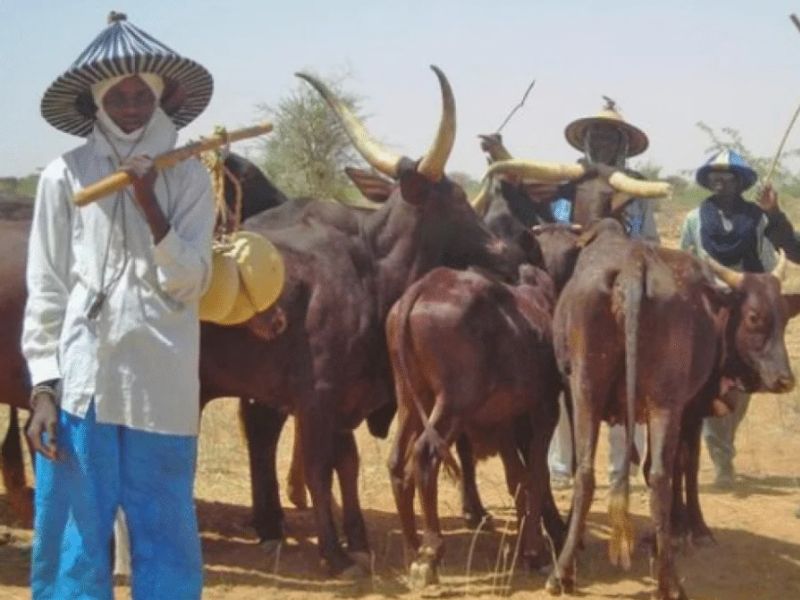
Fulani Christians in Nigeria say they are not members of Miyetti Allah, a Fulani socio-political organization that civil society groups, lawmakers, and its victims have accused of being involved in terrorism and the persecution of Christians.
Their clarification comes as attacks linked to Fulani militants continue to affect communities in Plateau state, where at least 16 Christians were killed in March, including a 12-year-old Christian Fulani boy in Miango District.
Rev. Buba Aliyu, chairman of the Fulani Christian Association of Nigeria (FCAN), addressed the issue during a recent visit to Miango, speaking with International Christian Concern (ICC) and Christian leaders. He explained that Fulani Christians represent a distinct religious community within the broader Fulani ethnic group and should not be associated with organizations or individuals promoting violence.
“The Fulani Christian Association of Nigeria is a fellowship of Fulani believers in Christ,” Aliyu said. “We are not part of Miyetti Allah, and we do not support violence. Our faith teaches us peace and respect for human life.”
The Miyetti Allah movement, comprising the Miyetti Allah Cattle Breeders Association of Nigeria (MACBAN) and Miyetti Allah Kautal Hore, has been widely discussed in debates over farmer-herder conflicts and violent attacks in Nigeria’s Middle Belt. Community leaders and advocacy groups have raised concerns about the activities of armed groups linked to radicalized Fulani militants operating in rural areas.
Lawmakers in the United States have also addressed the issue. Representative Christopher Smith introduced legislation in the U.S. House of Representatives proposing sanctions on individuals associated with organizations implicated in religious persecution in Nigeria. The legislation specifically named the Miyetti Allah Cattle Breeders Association of Nigeria (MACBAN) and Miyetti Allah Kautal Hore as entities accused of involvement in abuses.
The bill proposes visa restrictions and asset freezes against members linked to attacks on civilians.
Smith presented the legislation while commending the decision by U.S. President Donald Trump to redesignate Nigeria as a Country of Particular Concern (CPC) due to severe violations of religious freedom.
“President Donald J. Trump acted appropriately and decisively to redesignate Nigeria as a CPC and hold the Nigerian government accountable for its complicity in religious persecution by radical Islamists, such as Boko Haram and Fulani terrorists,” Smith said while presenting the bill before Congress.
Communities in Plateau state have experienced a series of attacks in recent years. In March alone, ICC recorded the killing of 16 Christians in separate incidents in the Miango, Barkin Ladi area of Plateau state, including a 12-year-old Christian Fulani boy whose family had converted to Christianity. Residents told ICC the attacks occurred in rural farming Christian communities where armed militants frequently target villages at night.
During his visit to Miango, Rev. Aliyu attended a women’s fellowship conference organized by the Evangelical Church Winning All (ECWA). He introduced several leaders and members of the Fulani Christian Association, including Rev. Jibir Dabo of the Church of Christ in Nations (COCIN), former national treasurer Rev. Suleiman Modibo, and the association’s public relations officer, Lawal Usman.
The visit was also intended to encourage Christians in the community following recent attacks and deaths in the area.
“We came to greet you, to sympathize with you, and to encourage one another,” Aliyu said during the gathering.
He noted that the Fulani Christian Association has historical ties to Miango, explaining that the organization began there in 1972 and later expanded beyond Nigeria.
“Our association started in Miango in 1972,” he said. “From here it spread to other places. Today we have branches in Central Africa, Cameroon, and even China.”
According to Aliyu, the association previously held many of its meetings in Miango. However, rising insecurity has forced some gatherings to relocate to larger towns such as Jos for safety.
Despite the challenges, he said the association continues to maintain its presence in the area and support local believers.
Aliyu also disclosed that he has received threats related to his work among Fulani Christians.
“On several occasions, I have received messages telling me that I am a walking corpse and that my time is finished,” he said. “But by the help of God, I am still alive and continuing the work.”
He thanked traditional leaders in the region for engaging with Christian communities and acknowledged remarks made by the Irigwe paramount ruler during a recent convention attended by Fulani Christian leaders.
The Fulani Christian Association describes its role as providing fellowship and support for Fulani who have converted to Christianity. Leaders say the group works with churches across Nigeria to promote peaceful coexistence and to give voice to Fulani believers who often find themselves caught in the middle of ethnic and religious tensions.
Aliyu also addressed widespread perceptions that associate the entire Fulani ethnic group with terrorism or insurgent groups such as Boko Haram.
“Among the Fulani people, there are many who live peacefully,” he said. “Those involved in crimes do not represent the entire community.”
He urged Nigerians to distinguish between criminal groups and ordinary citizens belonging to the same ethnic background.
During the Miango gathering, Aliyu also encouraged Christians to remain committed to their faith despite insecurity affecting the region. He referenced passages from the Bible that speak about believers coming from different tribes and nations.
Community leaders in Miango report that Fulani Christians have also faced threats from extremist elements who oppose religious conversion. Some families who left Islam for Christianity have relocated to other communities for safety.
The district of Miango in Plateau state has experienced repeated attacks in recent years, particularly in Christian farming communities inhabited largely by Christian residents. Local reports indicate that dozens of people have been killed in separate incidents during the past several months.
Church leaders and locals continue to hold prayer gatherings and community meetings following the March killings, which included both Irigwe Christians and Fulani converts to Christianity.
Aliyu concluded his visit by urging members of the Fulani Christian Association in Miango and surrounding communities to continue meeting and supporting one another.
“We ask for your prayers and encouragement,” he told those in attendance. “Hold firmly to Jesus.”
To read more news stories, visit the ICC Newsroom. For interviews, please email [email protected]. To support ICC’s work around the world, please give to our Where Most Needed Fund.