
Kurdish Commander Appointed to New Role as Syria’s Deputy Minister of Defense
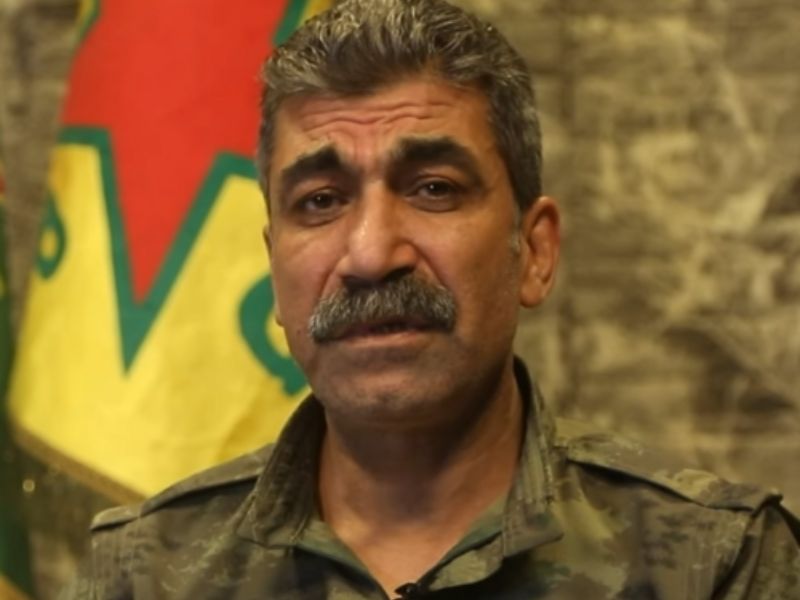
Leaders in Damascus have appointed outspoken Kurdish commander Sipan Hemo to serve as the new Deputy Minister of Defense, a position that will reportedly focus mainly on eastern Syria.
The news comes amid growing efforts by the Syrian government to exert control over the semiautonomous Kurdish region in the northeast. A major element of that plan has been to integrate Kurdish forces into the national military — a move that many Kurds have rejected.
After decades under the brutal Bashar al-Assad dictatorship, Syria is now led by President Ahmed al-Sharaa, an Islamist militant who deposed Assad in December 2024.
Religious freedom experts have expressed concern over efforts by Damascus to absorb Kurdish forces into the national military, pointing to large-scale massacres committed against the Druze and Alawite ethnoreligious minority communities since Sharaa took power.
The U.S. threatened sanctions against Damascus after what Kurdish forces described as an unprovoked attack in early January. That attack led to abuses some have described as war crimes, though not at the scale experienced by the Druze and Alawites.
The Kurdish SDF militia lost about 80% of the territory under its control in January, leading to a truce announced Jan. 28 after U.S.-led negotiations.
While details of the truce were never publicized, many see Hemo’s appointment as deputy minister of defense as a direct result of that agreement. He is an outspoken advocate for Kurdish rights, and his appointment to such a significant post may signal that the Sharaa administration sees value in working with the Kurds.
Still, human rights observers, regional policy analysts, and experts on religious freedom have expressed concern about the extent of control Damascus insists on exercising over the Kurds and other minority communities. Many have urged granting these communities a limited but meaningful level of autonomy and have called for local forces, such as the SDF, to remain distinct entities rather than be fully absorbed into national forces.
Behind this concern over full integration is Sharaa’s ideological history. While his recent rhetoric emphasizes inclusion and respect for human rights, he was previously a member of the Islamic State group and is an avowed jihadist, making his motives difficult to discern. While he has made bold public statements about his commitment to peace and tolerance, forces associated with his government have repeatedly committed — or allowed — mass tragedies to take place, often against members of ethnoreligious minorities.
At a September 2025 Capitol Hill event titled “Fortifying Religious Freedom in Syria,” civil society groups gathered in support of decentralization. Speakers included Nadine Maenza, Ambassador Sam Brownback, Representative Frank Wolf, and representatives of the Druze, Alawite, Kurdish, and Christian communities.
A central theme of the event was the model established in the semiautonomous Kurdish region in the northeast. Panelists and keynote speakers urged U.S. policymakers and the Syrian government to safeguard this model, along with the SDF, and to extend it to other minority communities.
The preservation of the semiautonomous Kurdish region in the northeast is not necessarily at odds with high-level Kurdish appointments in the national government.
“Their inclusion in the Syrian government would strengthen all of Syria,” event organizer Nadine Maenza said after the September event, referring to the Kurdish region in the northeast. “A united Syria, with decentralization or federalism, gives this beautiful country its best chance at peace and stability.”
Hemo’s appointment may be a positive step toward increasing recognition of Kurdish rights in the new Syrian government. Still, the government’s aggressive campaign against the Kurds earlier this year suggests that there is a long way to go before meaningful progress is achieved.
Sharaa appears to be moving toward a system that grants the central government significant authority, rather than a federated system in which local areas retain robust self-determination and the right to organize their own security.
To read more news stories, visit the ICC Newsroom. For interviews, please email [email protected]. To support ICC’s work around the world, please give to our Where Most Needed Fund.