
Locked Out by Law (Part 2 of 5)
By Lisa Navarrette, ICC Fellow
Economic persecution rarely operates in isolation. It is sustained, protected, and often legitimized by legal systems. These systems quietly encourage discrimination to continue unchecked. When employers refuse to hire, when licenses are denied, when aid is withheld, these acts are rarely spontaneous. Instead, laws that fail to protect minorities, courts that do not enforce equal rights, and legal frameworks that punish faith enable these actions. The marketplace becomes hostile because the justice system allows it to be.
For many Christians living under persecution, the law is not experienced as a safeguard of justice or a guarantor of human dignity, as we enjoy in the United States. Instead, the law is often felt as a constant source of fear, uncertainty, and vulnerability. In many countries, it is an invisible hand that quietly restricts opportunity, undermines stability, and erodes hope. While violence captures headlines, legal and bureaucratic systems frequently accomplish the same goal with far less scrutiny and visibility. They lock Christians out of economic life while maintaining a facade of order and legitimacy.
Persecution increasingly operates through legal mechanisms that appear neutral on the surface but, in practice, marginalize believers. Laws governing registration, licensing, property ownership, employment eligibility, and religious activity are routinely weaponized. They restrict Christians’ ability to earn a living, operate businesses, or plan for the future. Because these barriers are embedded within formal systems, they are often dismissed as regulatory rather than recognized as persecution.
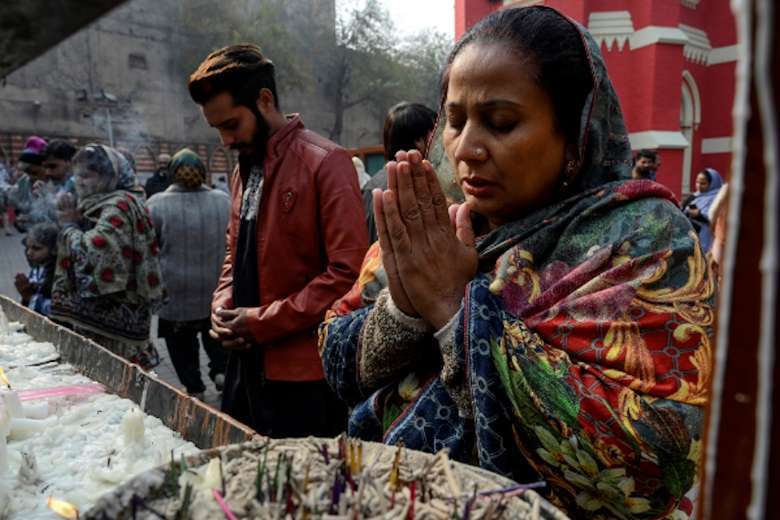
Pakistan
In Pakistan, blasphemy laws exemplify how legal frameworks can devastate Christian livelihoods. While these laws are seemingly designed to protect religious harmony, they are frequently misused to settle personal disputes or target minorities.
According to the U.S. Commission on International Religious Freedom (USCIRF), blasphemy accusations are often weaponized against religious minorities, leading to arrest, mob violence, and prolonged detention.(1)
The U.S. Department of State similarly documents how even unproven accusations can result in property destruction and long-term economic fallout.(2)
A single accusation, often made without credible evidence, can trigger not only criminal proceedings but mob attacks that burn homes and businesses. Even when courts ultimately dismiss charges, the damage is irreparable. Reputations are shattered, leading to customer losses. Employers, often fearing backlash themselves, will fire employees. Without a livelihood, families are forced to relocate, and economic recovery becomes nearly impossible.
For Christian entrepreneurs, visibility itself becomes dangerous. Many retreat into informal labor, avoiding public-facing businesses simply to reduce risk. The law, rather than protecting commerce and stability, becomes the mechanism that destroys it.
The consequences ripple beyond individual cases. Entire communities internalize the message: success invites retaliation. Entrepreneurship becomes dangerous, and advocacy becomes impossible. Over time, economic stagnation takes root — not because of a lack of ability, but because of legally reinforced vulnerability and a lack of equal opportunity.
Middle East and Central Asia
Across much of the Middle East and Central Asia, legal discrimination often hides within bureaucratic procedures. In several countries, strict registration laws prevent churches from operating legally. Without registration, congregations cannot own property, open bank accounts, or employ staff. This directly affects economic participation, as church-linked schools, charities, and businesses cannot function openly.
The Pew Research Center consistently reports high levels of government restrictions on religion in parts of the Middle East and Central Asia, including limitations that affect institutional and economic life.(3) In some contexts, Christians face barriers to public-sector employment or are informally excluded from positions of authority. Licensing processes for Christian-owned institutions stall indefinitely. Permits are delayed or denied without explanation. Officials invoke “regulatory compliance,” but enforcement is uneven. These policies are rarely labeled as persecution in official documents. Yet their economic impact is profound and enduring. They create inaccessible opportunities.
Living Under Legal Uncertainty
For Christian families, legal discrimination produces a life defined by uncertainty. Without secure employment or recognized businesses, parents struggle to educate their children, access healthcare, or build savings. Long-term planning becomes impossible. Financial resilience erodes.
Over time, this pressure contributes to migration. Some move internally to seek safer regions. Others leave their countries altogether. These communities rarely disappear in a single moment. Instead, they fade under the weight of continual legal barriers that steadily narrow their future. The erosion is slow, quiet, and often invisible to the outside world.
Understanding legal persecution clarifies why economic support is so often a matter of survival rather than convenience. When courts fail to uphold equal protection, the laws quietly increase discrimination. Believers are left without institutional defense.
Support for legal advocacy, emergency relief, and livelihood restoration becomes a bridge — not toward comfort, but toward dignity. It enables families to endure systems designed to break them.
Throughout Scripture, unjust laws are repeatedly confronted. From Pharaoh’s decrees to imperial edicts against the early church, authority has often been used to burden rather than protect. Today’s persecuted Christians navigate similar realities — courts and bureaucracies that quietly deny them the right to work freely and live securely.
Locked-out livelihoods are not accidental. They are the predictable outcome of legal systems that privilege conformity over conscience. As the global church responds, it must do so with clarity and compassion — recognizing that defending religious freedom includes defending the right to earn a living without fear.
This article is the second in a five-part series examining how Christians are economically marginalized as a form of persecution. Tomorrow, we will turn from statutes and courtrooms to the power of social hostility, exploring how communities themselves enforce economic exclusion.
Sources
- https://www.uscirf.gov/countries/pakistan
- https://www.state.gov/reports/2023-report-on-international-religious-freedom/pakistan/
- https://www.pewresearch.org/wp-content/uploads/sites/20/2024/03/PR_2024.3.5_religious-restrictions_REPORT.pdf
To read more news stories, visit the ICC Newsroom. For interviews, please email [email protected]. To support ICC’s work around the world, please give to our Where Most Needed Fund.