
Supreme Court of India Halts Exhumations of Christian Burial Sites
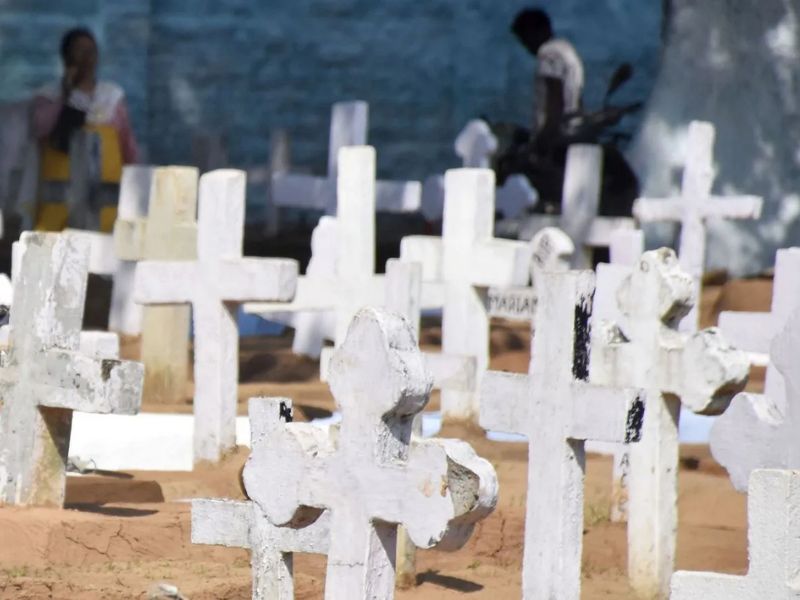
The Supreme Court of India passed an interim order on Feb. 18, restraining the forcible exhumation and relocation of dead tribal Christians’ bodies away from their village burial grounds in Chhattisgarh.
The Apex Bench of Justices Vikram Nath, Sandeep Mehta, and N.V. Anjaria directed an immediate halt to the exhumation of buried bodies in the state while issuing notice to the Chhattisgarh government.
The court said that “in the meantime, no further exhumation of buried bodies shall be permitted.”
The Supreme Court order followed a public interest petition (PIL) filed by the Chhattisgarh Association for Justice and Equality, supported by pastors, activists, and affected villagers.
Senior Advocate Colin Gonsalves, appearing for the petitioners, told the court that Christian families in tribal areas were being forced to exhume their deceased relatives from village burial grounds and relocate them without consent.
According to the PIL, the burial spaces traditionally shared by villagers were increasingly being restricted along religious lines, with families allegedly pressured to abandon Christian funeral rites.
Gonsalves said these exhumations are not isolated events but reflect a recurring trend throughout Chhattisgarh, particularly in tribal areas.
Families are often forced to abandon Christian burial customs and adopt Hindu practices as a precondition for interment in their own villages, the PIL noted.
The plea described forced exhumations and reburials, sometimes carried out dozens of miles away, as violations of protections under Articles 14 and 21 of the Indian Constitution.
The United Christian Forum (UCF), a Christian welfare organization that also runs a national helpline, welcomed the Supreme Court’s interim order, describing the ruling as a “beacon of hope” for minority communities facing hostility over burial rights.
The organization expressed hope that “Christian graves will not be disturbed any longer,” following the court’s intervention.
UCF president Michael Williams, in a media statement, said the Supreme Court’s intervention marked “a vital step in protecting the dignity of the dead and the constitutional rights of religious minorities.”
The UCF also raised concerns over campaigns seeking to delist Christian tribals from Scheduled Tribe status in some States in India, calling such efforts “discriminatory” and warning that linking tribal identity to religion risks undermining constitutional protections.
This court ruling provides huge relief to tribal Christians living in Chhattisgarh because the denial of burial grounds for dead Christians had been weaponized in many large swathes of tribal areas.
Christian activists have alleged that Hindu nationalists are instigating the non-Christian tribals to use village-level autonomous laws to browbeat Christians into submission by using such tactics.
The UCF claimed that burial-related conflicts were not isolated events but part of a broader pattern across tribal regions of Chhattisgarh, Odisha, and Jharkhand.
The UCF said it recorded 23 burial-related incidents in 2025, most of them in Chhattisgarh, which it described as part of a “pattern of intimidation and discrimination” against tribal Christians.
To read more news stories, visit the ICC Newsroom. For interviews, please email [email protected]. To support ICC’s work around the world, please give to our Where Most Needed Fund.