
Russia’s Persecution of Ukrainian Churches Continues as War Enters Fifth Year
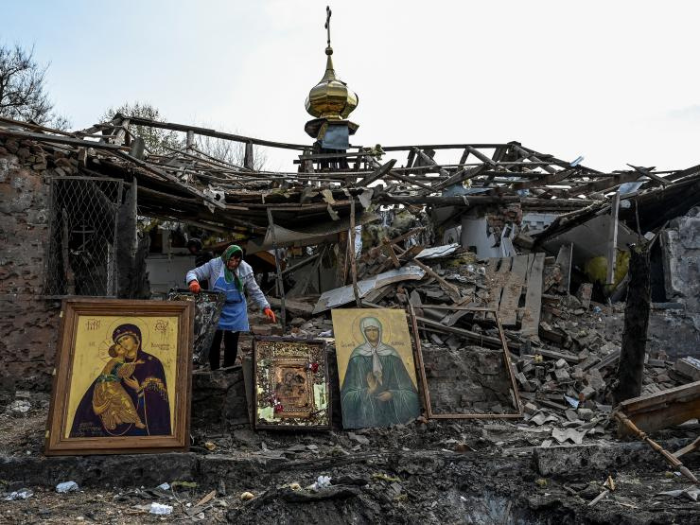
As Russia’s war against Ukraine enters its fifth year this week, religious communities in Russian-occupied territories face increasing pressure, harassment, and violence.
Reports from church leaders and human rights groups indicate that Protestant congregations in Ukraine have been particularly targeted with raids, closures, and intimidation, with Moscow aggressively seeking to reshape the religious landscape to serve its political and military objectives.
Since the full-scale invasion launched by Vladimir Putin in February 2022, occupying authorities have systematically moved to restrict or remove religious groups they view as disloyal from territories under their control.
In multiple regions under Russian control, Protestant churches have been forced to shut down or register under Russian regulations that many congregations refuse to accept. Pastors and church members have reported detentions, interrogations, and the confiscation of church property.
One widely reported case involved Baptist pastor Sergey Ivanov, who served a congregation in occupied southern Ukraine. According to church networks and human rights monitors, Russian forces detained Ivanov after accusing him of cooperating with Ukrainian authorities and refusing to register his church under Russian regulations.
Members of Ivanov’s congregation reported that services were disrupted, and the church building was effectively shut down while the pastor was interrogated. The case reflects a broader trend of pressure on Baptist and evangelical communities, many of which have refused to submit to occupation-imposed oversight of religious activity.
Orthodox clergy have also faced restrictions when they resist Russian control. In Crimea, priest Serhii Mykhalchuk of the Orthodox Church of Ukraine reported repeated harassment and legal pressure from Russian authorities following the peninsula’s annexation.
Courts ordered the eviction of his parish from its cathedral in Simferopol, and authorities seized church property after the community refused to re-register under Russian religious laws tied to Moscow’s ecclesiastical structures.
Advocates for religious freedom say the pattern reflects a broader campaign to eliminate independent civil society and replace it with institutions loyal to Moscow. Protestant communities — long active in humanitarian aid and community outreach in Ukraine — have drawn scrutiny from occupation authorities who often accuse them of being linked to Western governments.
At the same time, Russian officials have openly coopted structures tied to the Ukrainian Orthodox Church (UOC), a body historically connected to the Russian Orthodox Church. Analysts say that in occupied areas, the church has increasingly been used as a vehicle for political messaging and administrative control, blurring the line between religious life and state policy.
Critics argue that Moscow’s approach represents a blatant co-option of religious institutions to legitimize its authority over occupied territory. While many Orthodox believers in Ukraine worship independently of politics, occupying authorities have promoted clergy aligned with Moscow and marginalized or removed religious leaders who express loyalty to Kyiv.
Human rights monitors warn that the result is a narrowing of religious freedom across occupied areas of Ukraine. Churches unwilling to cooperate with occupation officials face harassment, closure, or expulsion, while religious structures perceived as supportive of Russian governance are given preferential treatment.
As the war drags on, faith leaders say the targeting of churches reflects a wider attempt to reshape Ukrainian society under Russian control. Observers note that the fate of religious communities in occupied territories will remain a key indicator of the broader human rights situation as the conflict continues.
To read more news stories, visit the ICC Newsroom. For interviews, please email [email protected]. To support ICC’s work around the world, please give to our Where Most Needed Fund.