
U.S. Military Training Force Arrives in Nigeria
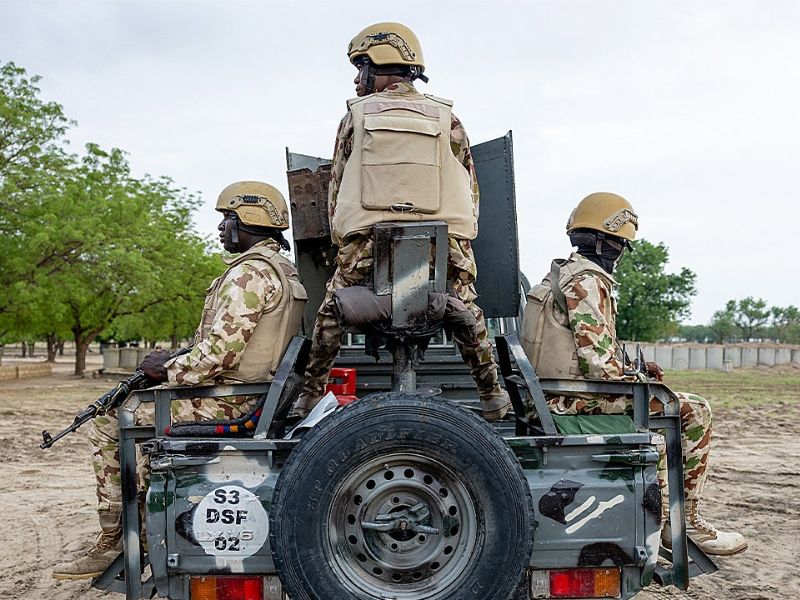
U.S. officials confirmed to the media that roughly 100 U.S. troops arrived in Nigeria on Monday, tasked with a mission to train and equip Nigerian anti-terror forces in their ongoing struggle against the country’s rising terrorist threat.
About 200 troops are expected to be deployed in the coming weeks, according to The Wall Street Journal.
An international coalition led by American military trainers has long worked to train their Nigerian counterparts, with a particular emphasis on such programs since the rise of Boko Haram militancy in the early 2010s and the corresponding uptick in religious-based violence in the middle and northern parts of the country.
The most recent group was sent to Bauchi, in the country’s northeast, at the invitation of the Nigerian government, and comes amid rising international attention to the violence, largely perpetrated by radical Muslim extremists against vulnerable Christian communities, continuing to metastasize across Nigeria.
“The collaboration,” a Nigerian military spokesman said about this week’s deployment of American military trainers, “will provide access to specialized technical capabilities aimed at strengthening Nigeria’s ability to deter terrorists’ threats and enhance the protection of vulnerable communities across the country.”
Nigeria has faced significant internal violence for years, mostly at the hands of terrorist groups and militant Fulani herdsmen. Tens of thousands have been killed or abducted by these two groups, and hundreds of thousands have been internally displaced.
The most prominent of these militant groups is Boko Haram, which was founded as an Islamic school in 2002. From there, Boko Haram quickly developed a radical Islamist agenda and, in 2009, began a campaign of violence that continues to this day.
While the group has splintered and changed leaders several times since its founding, today it calls itself Jama’tu Ahlis Sunna Lidda’awati wal-Jihad, or JAS — it has maintained its violent tendencies and its “priority scale” of targets, with Christians at the top, followed by the government and Muslims who have not joined the group.
In addition to organized terrorist groups like Boko Haram, many communities have become radicalized over time and now collectively contribute significantly to the national death toll. Often triggered by disputes over limited grazing or water resources, such conflicts quickly take on a religious tone that leads to violence against religious leaders, houses of worship, and entire communities known for their faith.
According to one analyst of local militancy in Nigeria, Islamic State West Africa Province (ISWAP) is funding Fulani militants in their attacks on Christian farmers — an ongoing conflict that ISWAP views as “another opportunity to target Christians, who they view as a key obstacle to establishing an Islamic State in West Africa.” This insertion of terrorist funding further underscores the religious undertones of even local conflicts. It highlights the need to address the element of religious persecution at every level of violence in Nigeria.
Meanwhile, the government — under Christian president Goodluck Jonathan, Muslim president Muhammadu Buhari, and now Bola Tinubu — has long failed to provide an effective response to the violence or adequate protection to vulnerable communities regularly targeted for their religion, such as in southern Kaduna State, where certain Christian communities have been attacked by Muslim extremists repeatedly throughout the years.
To read more news stories, visit the ICC Newsroom. For interviews, please email [email protected]. To support ICC’s work around the world, please give to our Where Most Needed Fund.