
Arrests of Yemeni Christians Demonstrate a Growing Faith
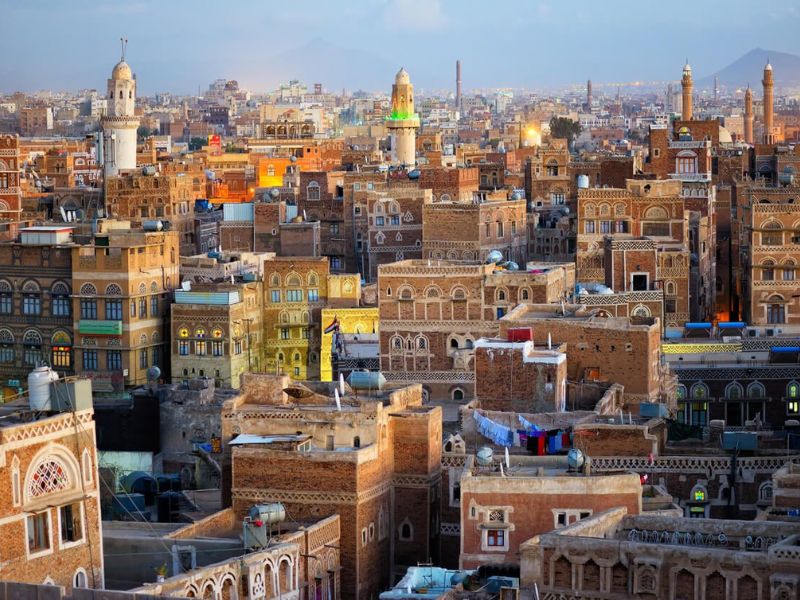
In recent months, at least 20 Yemeni Christians have been arrested for the crime of following Christ.
Taken from their homes or detained on the streets, these believers are accused not of violence or political dissent, but of faith. While exact numbers are difficult to verify due to Yemen’s closed and chaotic security environment, credible sources confirm that some are being held in Houthi-run prisons, while others have disappeared entirely. They likely tragically face torture or even possibly death for their confession of Christ.
Christians in Yemen are not permitted to publicly display their faith, with symbols such as crosses and the public sharing of one’s Christian faith banned. National Yemeni Christians worshiped only in secret. Most of the members of Yemen’s tiny Christian population are from Muslim backgrounds, and to decide to become a Christian is to decide to suffer great persecution.
These recent arrests of Yemeni Christians represent a major milestone in Christianity’s spread in the heavily persecuted nation. Far more than a crackdown on religious minorities, they demonstrate a growing Christian presence in Yemen significant enough to provoke a response from various ruling entities, including the Houthis, across regions of the fractured nation.
Even secular human rights sources have noted the arrests of Yemeni Christians in recent months in Houthi-controlled areas. Human Rights Watch and ministries in contact with Christians in Yemen confirm that arrests have been made, with some believers confirmed to be in Yemeni prisons while others have simply disappeared.
This acknowledgment itself is significant. Neither international sources nor the Yemeni government has ever officially recognized any Christian minority. The country is normally listed as 99% to 100% Muslim in demographic breakdowns, with a reference to “diminishing other religions.”
The country’s religious composition has traditionally been evaluated in terms of Sunni and Shia percentages — distinctions that have defined its civil war, with the Sunni majority southern provinces against the northern Houthis claiming support through their identity as a Zaidi (Shia) religious sect and aligning themselves with majority-Shia Iran in the latter’s attempt to export its Islamic Republic revolution to Yemen.
A Nation Shaped by Revolution and War
Understanding the context of these arrests requires understanding Yemen’s recent history. The country descended into civil war in 2015, but the roots of the conflict reach back to 2011. That year, Yemen experienced its own revolution alongside several other Arab nations in the so-called “Arab Spring,” toppling dictator Ali Abdullah Saleh, who had ruled for 33 years, long before Yemen was unified, when it was still divided into North Yemen and the Arab Republic of Yemen.
Since 2015, Yemen has been torn apart by conflict between government forces and the Houthis, with Saudi Arabia leading a coalition backing the government. The humanitarian toll has been catastrophic. According to the United Nations, Yemen ranked as the world’s worst humanitarian crisis from 2014 to 2021. It has since been replaced by new crises in Ukraine, Sudan, and Gaza, despite the war in Yemen continuing to the present. The conflict has killed at least 370,000 people and displaced millions, most of whom have been displaced multiple times.
Yemen, with a population of 35 million, is also the largest country in the Arabian Peninsula. Long considered the poorest country in the Middle East, Yemen’s poverty has only been exacerbated by a decade of civil war and periods of horrific famine and disease outbreaks. In recent years, Yemen has remained in the global spotlight due to Houthi piracy attacks on international shipping in the southern Red Sea, where Yemen occupies an economically strategic maritime corridor.
The current Christian presence in Yemen was cultivated at great cost. Al-Qaida found refuge in Yemen for several years and was responsible for attacks on foreign missionaries in the early 2000s. In December 2002, a gunman killed three American Baptist missionaries: William Koehn, Kathleen Gariety, and Martha Myers at the Jibla Baptist Hospital. The attacker, a self-described Islamic jihadist, told police he attacked the missionaries to “cleanse his religion and get closer to God.”
Later, an al-Qaida group shot and killed Joel Shrum, a 29-year-old American teacher and development worker, while on his motorcycle on March 18, 2012, in the city of Taiz, Yemen. They claimed responsibility for the attack and said they did it because he was spreading Christianity in their country.
The violence continued. In March 2016, gunmen with the Islamic State group attacked a Missionaries of Charity home for the elderly in Aden, killing four nuns and 12 others. Pope Francis described the murders as an “act of senseless and diabolical violence,” calling the sisters “martyrs of today.”
These attacks led to the eventual departure of most foreign missionaries from the country. Yet those early seeds have clearly continued to spread.
A Hidden Church Emerges
By 2017, nearly all foreign missionaries had ceased to live in Yemen, yet various Christian ministries focused on Yemen report thousands of Christians located both in cities and in remote mountain and desert regions.
If even the most conservative estimates were true, there were — and are — more Yemeni Christians than in any other country on the Arabian Peninsula, despite Yemen being considered the most dangerous country to be a Christian across that same region.
Yemeni Christians have also experienced persecution abroad, with some being detained and deported back to Yemen, including Abdul-Baqi Saeed Abdo in 2022 in Egypt.
Yemen consistently ranks among the top countries for Christian persecution. On Open Doors’ World 2026 Watch List, Yemen holds the position as the third-worst country globally for Christian persecution. Under Yemeni law, conversion from Islam remains a capital offense, making the simple act of faith a potentially deadly decision.
Persecution Helps the Church Grow
Throughout church history, the gospel has often spread most rapidly when authorities attempt to crush it. Similar situations have unfolded in recent years in places such as Mauritania, Somalia, and Afghanistan — nations where Christianity was thought to be nearly extinct. Yet, indigenous movements of believers have emerged and grown despite severe persecution.
The arrests in Yemen paradoxically confirm what missionaries and human rights observers have long suspected: despite being one of the most dangerous places on earth to be a Christian, Yemen hosts a growing indigenous church. These are not foreign missionaries or expatriate workers, but Yemeni citizens who have embraced Christianity at enormous personal risk. The fact that authorities feel compelled to arrest dozens of Christians suggests the movement has grown to a size that concerns them, significant enough to require suppression.
The blood of martyrs, from William Koehn and Martha Myers to the Missionaries of Charity sisters, and now unnamed Yemeni believers, has not been shed in vain. Their sacrifice has borne fruit in one of the most hostile environments on earth.
As Yemen continues to suffer under war, famine, and political collapse, Christ is building his church in secret. The believers now being arrested are not remnants of a dying faith, but witnesses to a living and growing one. In the darkness of Yemen, the light still shines, and the darkness has not overcome it.
By Joseph Daniel
To read more news stories, visit the ICC Newsroom. For interviews, please email [email protected]. To support ICC’s work around the world, please give to our Where Most Needed Fund.