
U.S. Lawmakers Introduce Legislation to Stem Persecution in Nigeria
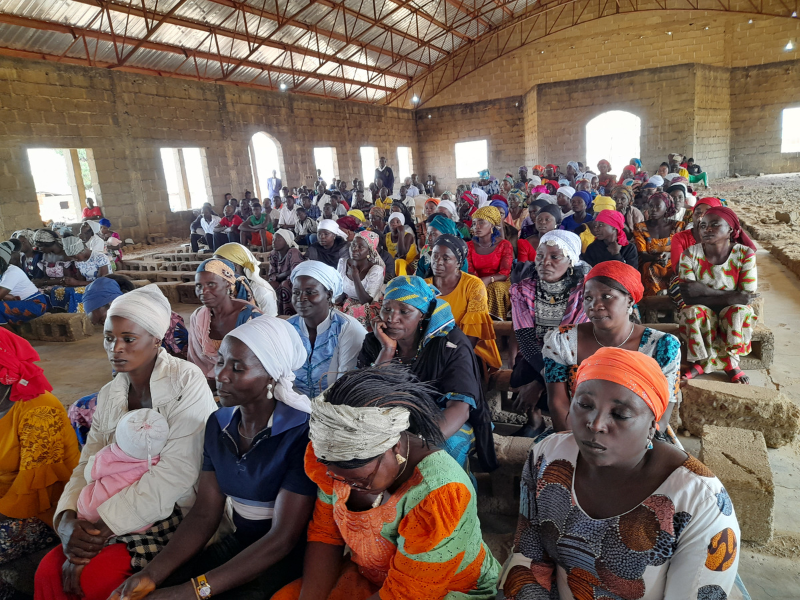
U.S. Rep. Chris Smith (R-NJ), Chairman of the House Foreign Affairs Africa Subcommittee, and Rep. Riley Moore (R-WV), with the support of other lawmakers, introduced legislation that would require the U.S. Secretary of State to compile and submit a comprehensive report to Congress on U.S. efforts to address Christian persecution and mass atrocities in Nigeria.
For more than two decades, International Christian Concern ICC has chronicled mass killings and displacements of Christians by Fulani militias, Boko Haram, Islamic State West Africa Province (ISWAP), extremist groups near the Nigeria-Niger border region, and less organized bandits. Plateau State Gov. Caleb Mutfwang has described the attacks by Fulani militias as genocide.
Rep. Smith said the proposed legislation, Nigeria Religious Freedom and Accountability Act of 2026 (H.R. 7457), should advance through the U.S. House of Representatives quickly and has already garnered broad support. Last year, President Trump pushed to designate Nigeria as a Country of Particular Concern (CPC) because of ongoing, systemic persecution against Christians.
“The Nigerian government’s blatant denial of the religious persecution occurring within its borders has only enabled the religious-based violence in the country to fester, with Christian deaths and church attacks reaching unprecedented numbers,” said Rep. Smith.
Lawmakers cited figures estimating that between 50,000 and 125,000 Christians were killed between 2009 and 2025. The bill also references reports that more than 19,000 churches have been attacked or destroyed during that period.
Nigeria, Africa’s most populous nation, has faced multiple security crises for many years. Boko Haram began its insurgency in 2009 in the country’s northeast, later splitting into factions, including ISWAP. In central Nigeria, particularly in Plateau and Benue states, communities have reported repeated attacks attributed to armed Fulani militias.
In addition to killings, incidents have included kidnappings for ransom, church bombings, village raids, destruction of farmland, and mass displacement. Internally displaced persons (IDP) camps in affected regions have grown as families flee violence.
The Nigerian government has acknowledged ongoing security challenges but has often described the violence in central Nigeria as stemming from land disputes and competition over resources. Some lawmakers in the United States and advocacy groups argue that Christian identity has been a significant factor in many attacks.
Rep. Moore said, “For years, Christians in Nigeria have faced unspeakable violence—churches burned, villages destroyed, families slaughtered—while the global community looked away. As part of the investigation President Trump asked me to lead, I visited Nigeria and witnessed firsthand the horrors our brothers and sisters in Christ face and saw the security challenges Nigeria faces.”
The legislation calls for greater scrutiny of extremist groups, a stronger response from the Nigerian government, and greater transparency in U.S. efforts on sanctions and solutions. According to Rep. Smith, the U.S. Secretary of State-issued report mandated by the Smith-Moore bill requires the following components:
- An assessment of Nigeria’s compliance with the International Religious Freedom Act, including specific actions taken, or not taken, by the Government of Nigeria to prevent persecution, prosecute perpetrators, repeal blasphemy laws, protect vulnerable communities, and facilitate the safe return of internally displaced persons.
- Identification of all individuals and entities sanctioned, or under consideration for sanction, under the Global Magnitsky Human Rights Accountability Act or the Entities of Particular Concern list.
- A description of co-investments and collaborative efforts between the Governments of Nigeria and the U.S. to provide and deliver humanitarian assistance to Christians displaced by the attacks from Fulani-ethnic militias, through faith-based or nongovernmental partners, including amounts, recipients, type of assistance provided, and measurable outcomes.
- An evaluation and description of historical, ongoing, and planned U.S. security assistance to Nigeria, and a comprehensive assessment of whether such assistance risks enabling or exacerbating religious persecution.
- An investigation into whether the Nigerian government is taking appropriate steps to cease enforcement of blasphemy laws, and to investigate instances of non-Muslims, Muslims, and dissenters being subjected to Sharia law or blasphemy laws.
- An assessment of internally displaced persons (IDP) conditions, including safety, humanitarian needs, and prospects for return.
- Recommendations for further executive actions or congressional authority deemed necessary and most helpful to halt the religious persecution and mass atrocities occurring in Nigeria.
- An evaluation of any steps taken by the Government of Nigeria during the reporting period to address religious persecution, dismantle extremist networks, prosecute attackers, reform security forces, or improve protection for at-risk communities.
To read more news stories, visit the ICC Newsroom. For interviews, please email [email protected]. To support ICC’s work around the world, please give to our Where Most Needed Fund.