
Age of Concealment: How the Bible is Banned and Slandered
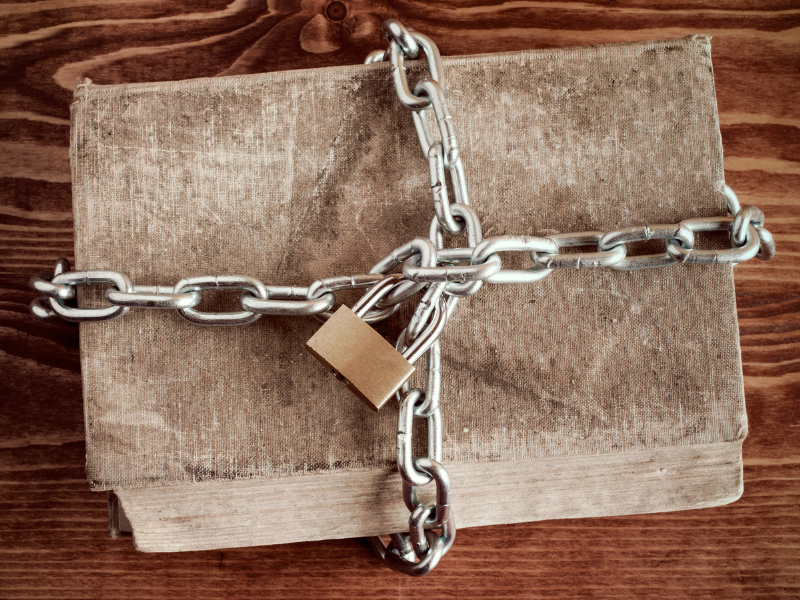
A concerted effort to rewrite, slander, or outright ban the Bible is happening around the globe.
Some attacks are fully exposed and out in the open, while others are more insidious and covert.
Schools
In 2025, a university in England placed a deceitful warning label on the Bible for English Literature students who would be reading it as part of their coursework. Due to the crucifixion of Jesus and the story of Cain and Abel, the University of Sheffield inaccurately described Scripture as containing “graphic bodily injury and sexual violence.” However, the warning is a false flag, as the text regarding both accounts of what happened is neither graphic nor sexual in nature. Andrea Williams, chief executive at the Christian Legal Centre, expressed concern about the label.
“To suggest that the crucifixion story involves ‘sexual violence’ is not just inaccurate, it’s a profound misreading of the text,” Williams stated. “The account of Jesus’s death is not a tale of trauma; it is the ultimate expression of love, sacrifice, and redemption, central to the Christian faith.”
Angus Saul, head of communications for the Christian Institute, also expressed frustration with the faulty label.
“Neither the Gospels nor Genesis give explicit accounts of Abel’s murder or Jesus’ crucifixion, and what the ‘sexual violence’ label refers to is mystifying,” Saul stated.
In the United States, the Canyon Independent School District in Texas, containing elementary through high school institutions, removed the Bible from its libraries in 2024. In a statement, the district asserted it was complying with a law banning ‘sexually explicit’ materials from public school libraries. However, the bill cited states that ‘sexually explicit’ is defined in Texas as something that is “so offensive on its face as to affront current community standards of decency.”
After pushback from community members and “receiving clarification from [Rep.] Jared Patterson [R-Texas] regarding library content,” the district reversed its decision and returned the Bible to library shelves.
World Powers
In Africa, authorities in Mauritania and Somalia make Bible ownership nearly impossible.
According to the 2025 Bible Access List (BAL), Mauritania, a nation governed by Islam, “the legal framework prohibits the importation, printing, storing, distribution, and even public display of Christian materials.”
And, the Somali government, ruled by Sharia law, reportedly surveils its citizens’ use of the internet, intervening with extreme consequences if an individual is found attempting to read the Bible online. The BAL’s report explains that “local believers face life-threatening consequences for possessing Christian materials, and Bible access is considered unsafe and severely restricted across the country.”
In the Middle East, nations like Afghanistan and Yemen so severely restrict the Bible that simply owning one can result in the death penalty or imprisonment. Afghan authorities, specifically the Taliban, have criminalized the Bible, turning it into severely punishable contraband. And, in Yemen, possessing a Bible, printed or digital, is extremely dangerous and can lead to death.
The BAL states that “all forms of Bible importation, printing, storing, distributing, or owning are illegal and punishable with severe consequences” in Afghanistan. Both Afghanistan and Yemen have governmental structures that are ruled by Islam.
In Iran, the Bible can’t be translated into Farsi, Iran’s native language. Individuals caught with Farsi-language Bibles are subjected to harassment, imprisonment, and death penalties. Despite the Farsi language ban, there have been reports that Iranian authorities have intentionally allowed Farsi Bibles to be printed with portions of them rewritten to support Islam. According to a November 2024 report from Frontlines International, the Iranian government has printed counterfeit Bibles with the intention of purposefully misleading individuals seeking to learn more about Jesus Christ.
“This fake Bible is designed to look authentic at first glance, with some pages containing unaltered passages from Scripture,” the report stated. “However, upon closer inspection, key doctrines of the Christian faith have been tampered with, altered, or removed entirely. The most deceptive change is the replacement of references to the Holy Spirit and the promise of the Comforter with references to Muhammad. In this version, the crucifixion of Jesus Christ … is also omitted.”
Story by Lynn Arias
To read more news stories, visit the ICC Newsroom. For interviews, please email [email protected]. To support ICC’s work around the world, please give to our Where Most Needed Fund.