
Turkey’s Christians Face the Future with Reasons for Hope, Caution
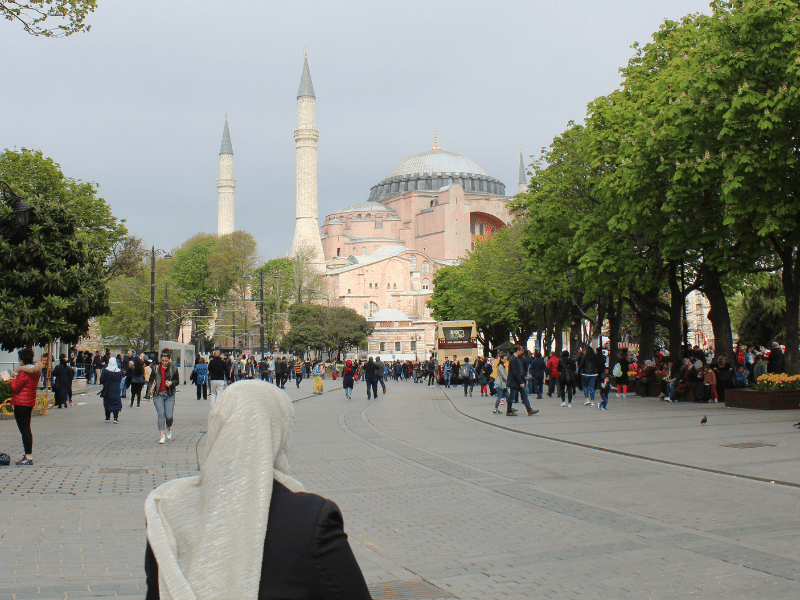
At the crossroads of East and West, Turkey, also known as Türkiye, is a secular state and a country many would consider at least semi-Western. And yet few places on earth have seen as drastic a decline in their Christian population.
In just one century, Christians went from 20% of Turkey’s population to two-tenths of 1%. These are numbers you might expect from Iraq or North Korea or some other land of human rights travesty.
But would you expect such numbers from Turkey? It wants to join the European Union. Its main city is so hip and cosmopolitan. Many of the people seem far more suited to nightclubs than mosques. So where does the hostility come from? Because it must take a great deal of hostility for a country to reduce its Christian population by a factor of 100 times.
There remain some highly resilient Orthodox Christians — typically Armenian, Assyrian, or Greek — who have refused to leave despite ongoing monitoring, along with incidents of land theft and assault.
Turkey also has a sizable number of Christian refugees from such fractured homelands as Afghanistan, Iran, and Syria. Though hardly a nirvana of religious freedom, Turkey is better than the currently unlivable conditions from which the refugees have just escaped.
Anti-Christian violence here is not as common as in much of the Middle East. But recent years have seen both lethal and non-lethal attacks on churches in Turkey, as well as violent attacks on elderly worshipers and a group attack on an Assyrian Christian family.
There are also ethnic Turks who have turned to Jesus, though statistics are hard to find, as many conceal their faith for safety.
Though current statistics tend to say Turkey is more than 99% Muslim, many of these nominal Muslims have either given up on religion, or — in a phenomenon seen in more recent years — found Jesus.
“Many people are curious about the church,” said “Yusuf,” who comes from a Turkish secular Muslim family and was an atheist before converting to Christianity.
Yusuf said that many young Turks, like himself, have turned to Christianity after a period of secular indifference toward any religion.
Christianity is “growing slowly but steady,” and “most of the converts are young people,” said “Mustafa,” who is a rare Turkish convert to Catholicism.
A huge portion of the country, though, remains less than accepting of such a transition. “Many people find it strange for a Turk to be Christian,” Yusuf said. “Some comment that Turks are only Muslim.”
Many Turks, even if not religious, have negative views of other faiths “due to political Islam,” Mustafa said.
Christian history in Turkey predates the existence of Islam, and yet Christianity is often regarded as an agent of foreign subversion. Some sources contend that a rising current of Turkish nationalism has intensified this sentiment.
Though much of the population is not especially religious, there is a prevailing sense that anyone who changes their religion has betrayed both family and nation.
“Dangers still exist,” Yusuf said, noting he has received death threats for online evangelism.
Mustafa said online harassment of Turkish Christians is “pretty common,” and identifying as one attracts “internet toxicity.”
Yusuf said, “It depends on the job” whether Christians in Turkey face employment discrimination or workplace difficulties. “I’m a blue-collar worker, and I hide the fact that I’m Christian from my work environment,” he added.
Mustafa said he knows of some such cases of discrimination, but it is by no means guaranteed to take place.
One important variable is the particular region: Both Mustafa and Yusuf said that Central Anatolia is the part of Turkey most hostile toward Christianity. This region includes Ankara, which is the nation’s capital, despite being far smaller and less famous than the megacity and cultural hub of Istanbul (which, until its invasion in 1453 A.D., had long been the center of Eastern Christendom).
Turkey’s federal government is based in Ankara and has shown a tendency toward anti-Christian sentiment.
Recent years have seen a rise in incidents of Turkish authorities targeting foreign Christians. Even though their religious activities are supposed to be legal in a technically secular country, these foreign Christians — who come from multiple continents — are labeled as security threats. This includes Christians who have lived lawfully in Turkey for years or decades; some of them have married a Turkish national and are raising a family together.
Mustafa said he hasn’t noticed worsening conditions for Christians in Turkey. But he knows his adopted faith has many adversaries in his homeland.
Speaking of his religious conversion, Mustafa said, “I hide it from my parents. But my siblings and close friends know.”
*Names have been changed for security reasons
Story by R. Cavanaugh
To read more news stories, visit the ICC Newsroom. For interviews, please email [email protected]. To support ICC’s work around the world, please give to our Where Most Needed Fund.