
Activists Call for Self-Defense Measures After Fulani Militias Kill 7 Christians in Nigeria
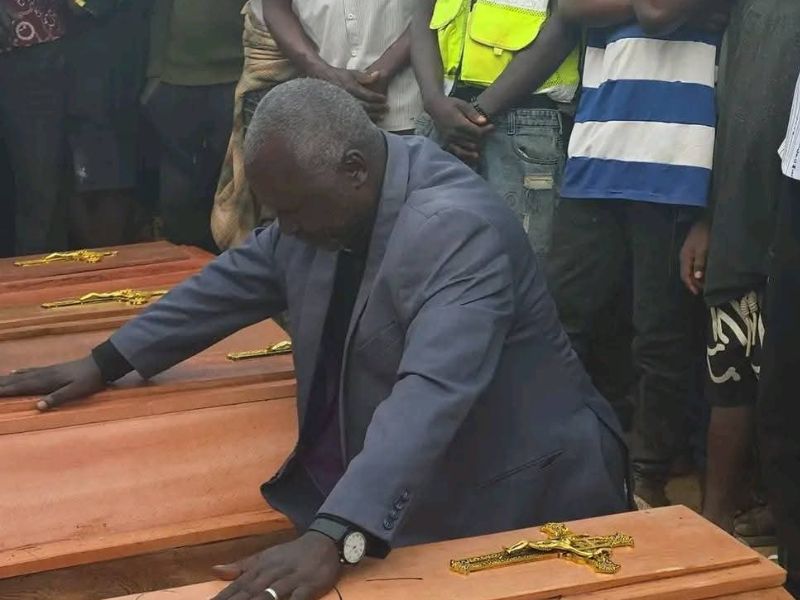
In the middle of the night, seven Christian men were brutally killed in a coordinated night attack on a mining site at Capitex, Kuru community, in Jos South Local Government Area of Plateau state, Nigeria.
The incident has reignited long-standing fears of targeted violence against Christian communities and intensified calls for lawful self-defense amid persistent insecurity.
Military sources confirmed that the attack occurred at about 1 a.m. on Thursday when suspected Islamic Fulani militias stormed the site, opening fire on miners who had remained overnight.
Though authorities have described the victims as illegal miners, community leaders and family members insist the deeper story reflects a pattern of vulnerability faced by predominantly Christian rural communities in Plateau state — communities that have endured years of night raids, ambushes, and mass killings with little warning and, often, delayed rescue.
Troops of Sector 6, Operation Enduring Peace (OEP), were alerted to the incident at about 8:40 a.m. by a resident and immediately mobilized to the area to restore normalcy. By the time soldiers arrived, the attackers had long fled, leaving behind spent ammunition and lifeless bodies.
“Troops of Sector 6 Operation Enduring Peace received information that seven illegal miners were shot dead at about 0100 hours by suspected bandits at an illegal mining site in Kuru, Jos South Local Government Area of Plateau state,” a senior military source disclosed.
During a sweep of the area, troops recovered 10 empty shell cases of ammunition believed to have been used by the assailants.
The bodies of the victims were evacuated to the Primary Health Care Centre in Dabwak, Kuru, for documentation before being released to their families for burial. At the graveside, grief gave way to anger, frustration, and an unmistakable sense of abandonment. Weeping relatives and neighbors spoke of fathers and sons lost — not in open combat, but while struggling to survive in an economy that has pushed many into informal and illegal livelihoods.
Preliminary investigations by security agencies indicate that the victims had remained at the mining site late into the night, in violation of the Plateau state government’s ban on illegal and night mining. The military also revealed that the incident was reported several hours after it occurred, attributing the delay to fear of sanctions associated with enforcing the ban.
“The approximately eight-hour delay in reporting the incident is assessed to have resulted from fear of sanctions linked to the prohibition of night mining,” the source said.
Yet for many residents, the official explanation — focused on illegal mining — fails to address what they describe as a broader and more troubling reality: repeated attacks on Christian communities across Plateau state, often at night, often in remote locations, and often with devastating consequences. From Riyom to Barkin Ladi, Bokkos to Jos South, survivors recount similar patterns — assailants striking under the cover of darkness, communities overwhelmed, and security forces arriving after the fact.
At the burial ceremony, human rights advocate and community mobiliser Alex Barbir delivered an emotionally charged address that has since reverberated across Plateau state and beyond. Standing beside freshly dug graves and flanked by grieving families and clergy, Barbir described the killings as part of what he called a sustained assault on Christian lives and livelihoods.
“This is no longer just about illegal mining or banditry,” Barbir told mourners. “It is about our people being hunted in the night, killed without mercy, and buried without justice. How long do we continue to die quietly?”
His remarks marked a turning point from humanitarian appeals to explicit advocacy for community self-protection within the bounds of the law. While stopping short of encouraging violence, Barbir argued that communities must be empowered to defend themselves where the state has repeatedly failed to provide adequate security.
Rev. Dachomo, who led prayers at the graveside, echoed similar concerns, lamenting what he described as the normalization of Christian deaths in Plateau state.
“We preach peace, but peace must not mean surrender to slaughter,” he said. “The right to life is sacred, and protecting that life is not a crime.”
Governor Caleb Manasseh Mutfwang condemned the killings as “barbaric, senseless, and most unfortunate,” directing security agencies to apprehend the perpetrators. The Plateau Youth Council (PYC), Jos South Chapter, also issued a statement calling for stricter enforcement of mining regulations and improved night patrols.
However, for many residents, official condemnations ring hollow. Community leaders argue that repeated statements without decisive outcomes have deepened mistrust and fueled the growing belief that self-defense is becoming inevitable.
Security analysts warn that this sentiment, while understandable, carries serious risks.
“When communities perceive that the state cannot or will not protect them, calls for self-defense naturally emerge,” one analyst said. “The danger is that without clear legal frameworks and effective security reforms, such dynamics can spiral into wider conflict.”
The Kuru attack, analysts note, is not an isolated tragedy but part of a persistent cycle of violence in Plateau state, where land disputes, criminality, and ethno-religious tensions intersect. For Christian communities already traumatized by years of bloodshed, the killings have become a rallying point — symbolizing both their vulnerability and their resolve not to remain passive victims.
As troops continue intelligence-driven operations to track the attackers, residents said the true test lies ahead: whether the government can restore a credible security presence and rebuild trust, or whether communities, pushed to the brink by repeated losses, will increasingly seek their own means of protection.
To read more news stories, visit the ICC Newsroom. For interviews, please email [email protected]. To support ICC’s work around the world, please give to our Where Most Needed Fund.