
Judicial Oversight Exposes Systemic Religious Mislabeling in Sabah, Malaysia
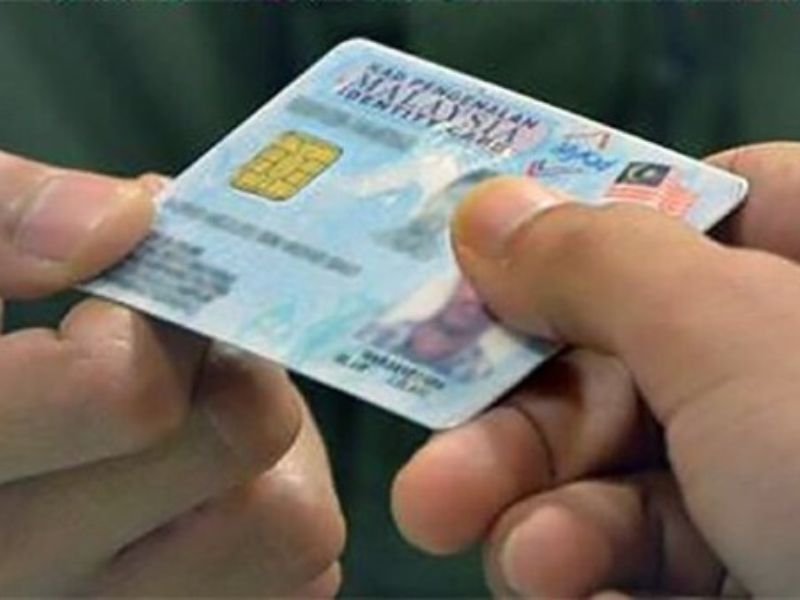
For decades, a profound and silent struggle has permeated the heart of the Malaysian state of Sabah, in northern Borneo.
Thousands of indigenous Christians have faced a life-altering discrepancy on their National Identity Cards, called MyKad: the classification of “Islam” where it should never have been.
While the National Registration Department (NRD) has historically dismissed these instances as mere “administrative errors,” a landmark court ruling has recently exposed a systemic failure that many local communities characterize as a deliberate campaign of institutionalized Islamization.
A Judicial Breakthrough
In January, the Kota Kinabalu High Court delivered a transformative judgment that has resonated throughout the state. Justice Datuk Celestina Stuel Galid ruled in favor of Abdul Manap bin Bakusai Abu Bakar and his three children, ordering the NRD to rectify their MyKads to accurately reflect their lifelong Christian faith.
The significance of this judgment lies in its legal clarity.
- Correction vs. Renunciation — The court clarified that this was not a matter of apostasy or renouncing Islam, which would typically fall under the restrictive jurisdiction of the Shariah Court, but rather the rectification of a record that was never factually true.
- Challenging Institutional Assumptions — Justice Galid noted with “serious concern” that NRD officers had been assigning Islamic status to individuals based on assumptions, often triggered by “Muslim-sounding” names or the use of “bin” and “binti” common among Christian Bumiputeras.
- Jurisdictional Authority — By affirming that civil courts possess the authority to correct these errors, the ruling provides a vital exit from the “legal limbo” where victims were previously forced to seek Shariah Court intervention to prove they were never Muslim.
Systemic Pressures in Rural Communities
The issue is deeply rooted in Sabah’s socio-political landscape. For years, indigenous communities in rural districts like Pitas and Kota Marudu have reported being pressured or misled into religious reclassifications.
- Naming Conventions — The automatic categorization of Christians as Muslims based on the “bin/binti” suffix during MyKad processing.
- Coercive Inducements — Reports of villagers being offered financial aid or welfare assistance, only to discover later they had signed conversion documents they could not read or understand.
- Bureaucratic Obstruction — The NRD’s historical refusal to amend records without a Shariah Court order, effectively “trapping” Christians in a legal identity against their will.
The Human Cost of Religious Misidentification, for affected Sabahan Christians, this is far more than a clerical error; it is a fundamental violation of Article 11 of the Federal Constitution, which guarantees the right to freedom of religion. This mislabeling infiltrates every aspect of private and public life:
- Matrimonial Rights — Individuals cannot legally marry other Christians or non-Muslims unless their partner converts to Islam.
- Educational Coercion — Children are frequently mandated to attend Islamic religious classes in national schools against the explicit wishes of their parents.
- Burial Disputes — Families often endure traumatic legal conflicts with religious authorities over the remains of loved ones who lived as Christians but were registered as Muslims.
A Call for Administrative Reform
While the recent ruling serves as a vital vindication of constitutional rights, human rights advocates argue that citizens should not be forced into costly, multi-year High Court battles to correct government errors. There are now urgent calls for the NRD to establish a dedicated, transparent unit to immediately rectify these religious statuses, removing the burden of proof from the victim.
For the people of Sabah, this judgment represents a beacon of hope — a step toward ending an era of forced religious identity and restoring the religious pluralism that remains a core pillar of the 1963 Malaysia Agreement (MA63).
To read more news stories, visit the ICC Newsroom. For interviews, please email [email protected]. To support ICC’s work around the world, please give to our Where Most Needed Fund.