
Inside Southeast Asia’s Expanding Islamization
In one part of Southeast Asia, angry mobs constantly threaten a church with physical violence to try to prevent the church from worshipping Jesus.
In another country in the region, local government officials once again deny a church a building permit after it has waited 30 years to fix its crumbling building. In yet another area in the region, a young Christian female student fends off men relentlessly pressuring her into marriage, so she is forced to convert to their religion.
These are real-life situations that countless numbers of Christians face daily across Southeast Asia as they live in Muslim-majority nations and areas. In fact, these are current persecution cases and projects in which International Christian Concern (ICC) is involved.
Islam has a strong presence and history in Asia, gaining a foothold in the region through Arab traders in the 7th century.
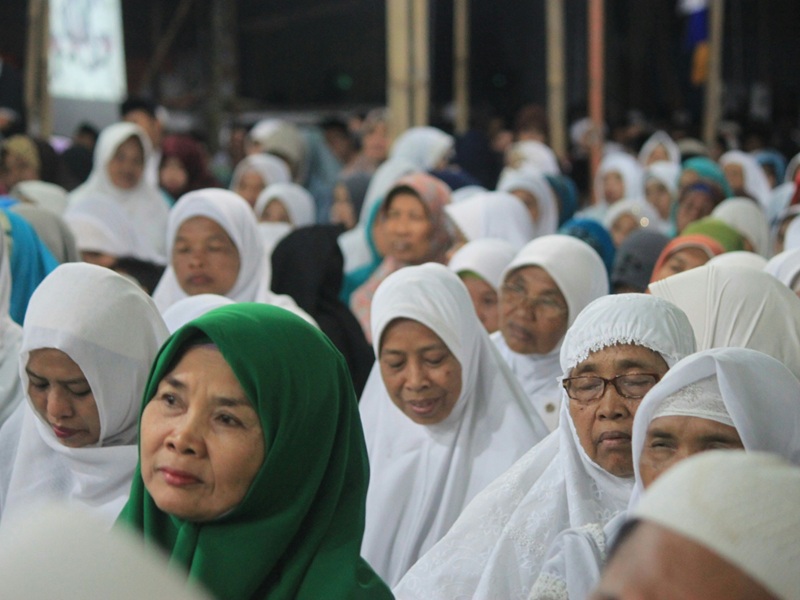
It is currently the predominant religion in Asia, with more than 1.3 billion Muslims across the region and more than 242 million followers in Southeast Asia alone, primarily in Indonesia, Malaysia, Brunei, the Philippines, and major pockets in other countries. More than 60% of the world’s Muslims live in Asia. Indonesia now has the largest Muslim population in the world.
Today, Islam is aggressively and intentionally expanding even further throughout Southeast Asia. This is called Islamization, which is the process of bringing people or society under the strong influence of Islam or under Islamic rule and control.
This often spreads through political power, religious authority, or Sharia law.
In this context, Christianity and Christians also continue to grow and thrive in Asia. Missions research has found that Asia now has the second-largest number of Christians globally — more than 415 million throughout the region.
However, Christians regularly face different pressures and persecution in Asia when the forces of Islamization in Muslim-majority nations clash with the steady growth of Christianity.
The persecution of Christians in Southeast Asia is complex, damaging, and deep-rooted. It includes direct, violent, and deadly attacks and incidents. But it also involves immense, complex, and indirect pressure, discrimination, threats, intimidation, problematic laws, and social isolation.
Islamization occurring today in Southeast Asian nations takes different forms:
INDONESIA
About 10% of the Indonesian population is Christian. Islamization has led in various parts of the country, particularly in the last five years, to longer delays for church permits, more church and Christian building attacks, threats and intimidation against Indonesian Christian apologists, and arrests of Christians for alleged blasphemy against Islam.
Also, a local law requiring girls to wear the hijab, or Muslim female head covering, in schools has led to many incidents of discrimination against Christian students who do not wish to wear the hijab.
MALAYSIA
Islamization is highly intricate in Malaysia. For example, Muslims intentionally target people from traditionally Christian states like Sabah and Sarawak to convert to Islam. In August 2025, up to 40 new dakwah da’i (preachers propagating Islam) were sent to Sabah in East Malaysia.
Annually, the Malaysian government and Muslim NGOs spend $500 million on Islamic affairs, which includes funding for dakwah-related initiatives. Islamization in Malaysia was also highlighted again in November 2025 with the landmark court ruling finally acknowledging the Malaysian government’s clear involvement in the disappearance of Pastor Raymond Koh in 2017.
PHILIPPINES (MINDANAO)
The violence against Christians in Mindanao includes church bombings, martyrdoms, and other pressures. The Bangsamoro Autonomous Region in Muslim Mindanao (BARMM) especially remains tense with Sharia law in place and elections postponed until 2026. The influence of Sharia law and Sharia courts in BARMM is expected to increase after the election, as the primary political parties have alleged ties to Abu Sayaff, the Islamic State group, and other Islamic jihadist terror organizations.
The prospects of peace for Christians in Mindanao are slim, with 242 people murdered in the seven-month election period in 2025 — 92 murdered in BARMM alone. Christian leaders in Mindanao have expressed growing public concerns about the election violence and the extension of Sharia law that will affect Christians and freedom of religion in Mindanao. Evidence of the aggressive Islamization of the Philippines is also seen with the biggest mosque in Southeast Asia (Sadik Grand Mosque) currently being built in Mindanao.
OTHER SOUTHEAST ASIAN NATIONS
Islamization is also extremely strong in countries like Brunei, the Maldives, Southern Thailand, and parts of Myanmar and Cambodia. ICC also continues to implement projects in these nations to strengthen and support persecuted Christians.
It is in this context that ICC has the privilege of serving and strengthening persecuted Christians in Southeast Asia. So, how does ICC respond to this increasing Islamization in these regions? Primarily with the love, truth, and power of the saving gospel of Jesus Christ.
ICC cannot compete with the financial and political influence and ideological drive behind this hostile Islamization in Southeast Asia. But by God’s grace and provision, we continue to find ways to respond to persecution incidents and hopefully bless believers in the region so they can endure the suffering and continue to love and evangelize their neighbors.
In 2025 alone, God has allowed us, through our local Indigenous ICC missionaries and our local partners, to contribute the following efforts to stand against Islamization in Southeast Asian nations:
- Supporting Muslim Background Believers (MBB) house group leaders through Bible college training.
- Conducting workshops with Christian communities and young adults, teaching on Islamization, apologetics, and freedom of religion in their nation.
- Investing in isolated and under-resourced Christian communities in remote rural areas with farm equipment, children’s Sunday school materials, and water filters.
- Hosting trauma healing and Biblical counseling retreats for MBB missionaries working in hostile areas.
- Supporting meetings for pastors and other leaders to strategize against Islamization.
- Sending Bibles to remote areas where Bibles are restricted or difficult to obtain.
- Supporting house churches in their worship and evangelism by sending necessary equipment (e.g., keyboards, guitars, motorcycles).
These are just some of the gracious efforts God and ICC’s supporters have allowed us to join with. All glory to God!
To read more stories like this, sign up for ICC’s free magazine.