
Christian Leader Killed in Ambush as Violence Targets Rural Communities in Central Nigeria
A Christian traditional ruler was killed in an ambush on Jan. 5, while returning to his village in central Nigeria’s Plateau state, adding to a pattern of attacks targeting Christian leadership in rural communities across the Middle Belt.
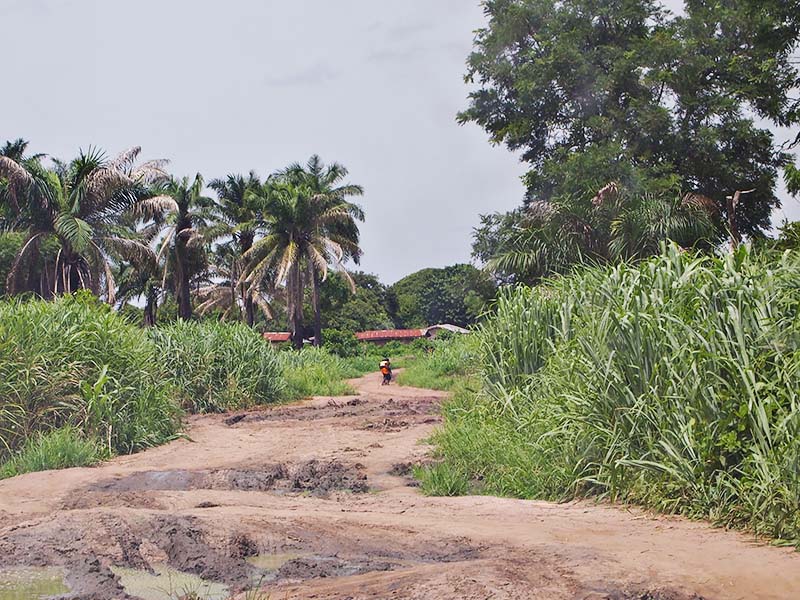
James Jatau, the village head of Hurra, a small farming settlement in Bassa Local Government Area (LGA), was attacked while traveling home from a community gathering in nearby Zirshe village. Residents said he did not arrive home that evening, and his body was later found along a rural road linking the two communities.
Hurra village is in Rigwe land, a predominantly Christian area in northern Plateau state. Bassa LGA sits along a volatile border zone that connects Plateau state to southern Kaduna state, particularly Kauru LGA, and lies close to Riyom LGA within Plateau. The area consists largely of rural farming settlements, where families depend on maize, vegetables, and livestock for survival. Traditional leaders in these communities play key roles in land administration, conflict mediation, and local governance.
According to community members, Jatau was returning from Zirshe, another Rigwe village, when he was attacked. The road where the ambush occurred is commonly used by farmers, traders, and villagers moving between settlements. Residents described Jatau as a farmer and community mediator who had served as village head during a period of growing insecurity in the area.
Local leaders said Jatau had previously expressed concern about rising attacks in surrounding communities. During the past decade, several Rigwe villages in Bassa and neighboring Barkin Ladi and Riyom LGAs have experienced repeated assaults, often involving armed men arriving on motorcycles. Residents consistently identify the attackers as Fulani militants.
The Fulani are a large ethnic group spread across West and Central Africa, traditionally known for cattle herding. While many Fulani live peacefully among other communities, armed Fulani groups have been accused in Nigeria’s Middle Belt of carrying out attacks on farming villages, particularly those that are predominantly Christian. Residents and local authorities often describe these groups as heavily armed and operating with military-style coordination.
In Plateau state, the conflict has increasingly affected traditional rulers. Community leaders said that targeting village heads removes figures responsible for organizing local defense, managing communal land, and representing villagers to government authorities. Rights organizations and church groups report that dozens of Christian traditional leaders have been killed in Plateau state and other Middle Belt areas during the past 10 years, often during ambushes or raids on their communities.
Following Jatau’s killing, residents of Hurra reported a limited security response. According to community members, a security commander visited the village to offer condolences before the burial, but no arrests were announced. Residents said there was no sustained security deployment in the area after the incident.
Sunday John, a community leader in Hurra, said the killing has heightened fear across neighboring villages. He noted that many residents now avoid traveling between communities, even for routine activities such as farming or attending social events.
Youth representatives also expressed concern about the influence of the killing. Zino Yakubu, a youth leader from Hurra, said villagers had not observed any unusual movements before the ambush. He explained that fear has increased among young people, many of whom rely on daily travel between villages for farming and trade.
Plateau state lies within Nigeria’s Middle Belt, a region marked by long-running disputes over land, identity, and political control. Farming communities, many of them Christian, said they face repeated attacks that result in deaths, kidnappings, and destruction of homes and crops. Entire villages have been displaced, with survivors often fleeing to neighboring towns or living with relatives.
Humanitarian organizations estimate that thousands of people in Plateau remain internally displaced due to years of violence. Many displaced families attempt to return to their farmlands during planting seasons, despite the risk of renewed attacks. Local leaders say insecurity has reduced agricultural activity, worsening food shortages and economic hardship.
The Nigerian government has stated that insecurity in rural areas involves a mix of criminal banditry, communal tensions, and competition over resources. Security agencies said they are working to improve intelligence gathering and protect vulnerable communities. However, residents of Rigwe land said attacks often occur without warning and that perpetrators are rarely apprehended.
Christian advocacy groups argue that the repeated targeting of Christian villages, leaders, and farmlands indicates a sustained pattern of persecution. They note that attacks frequently occur in areas with limited security presence and along rural roads used by villagers for daily activities.
In Hurra, elders have begun discussions on appointing an interim village head, but concerns remain about the safety of anyone who assumes the role. Residents said the road where Jatau was killed is still used daily by farmers, schoolchildren, and traders.
As communities across Rigwe land continue to bury their dead and rebuild damaged homes, the killing of a Christian traditional ruler has deepened uncertainty. With no arrests announced and limited security presence, villagers said they remain dependent on local vigilance while awaiting a response from authorities.
To read more news stories, visit the ICC Newsroom. For interviews, please email [email protected]. To support ICC’s work around the world, please give to our Where Most Needed Fund.