
Nicaragua Bans Bibles at Border Crossings
According to a report by the local media outlet CentroAmérica360, notices were posted at bus terminals in Costa Rica warning travelers that they could not bring Bibles into neighboring Nicaragua. Other prohibited items on the list included sharp objects such as knives, drones, and perishable food.
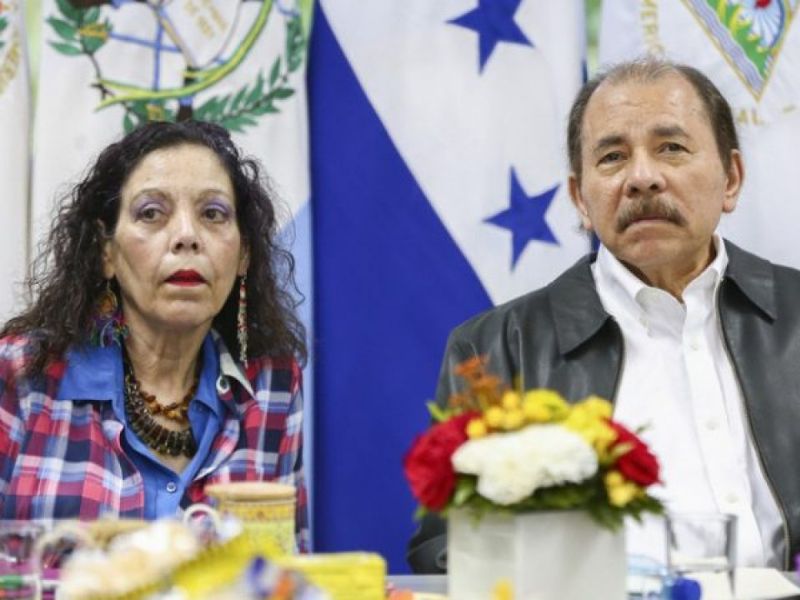
The restrictions seem to have come down from the Ortega-Murillo dictatorship ruling Nicaragua and were enacted earlier this month, according to CentroAmérica360. Other sources, however, indicated that the policy is months old and was implemented earlier this year.
Magazines and newspapers are also banned from entering the country, according to the notice. Nicaragua has lacked an independent press since 2021, when the government raided the headquarters and halted the operations of the influential La Prensa newspaper.
Before the raid, the government had used other tactics, such as preventing it from accessing paper and ink. Some members of the La Prensa team now operate in Costa Rica, where the notices banning Bibles and newspapers were posted.
The move to ban Bibles from entering the country is a concerning development. While the Nicaraguan government has been escalating its persecution of the Catholic church for years, most of that attention was focused on the church as an institution rather than on associated elements like access to scripture.
The Ortega regime has aggressively targeted the Catholic church in Nicaragua since 2019, when some churches decided to shelter student protestors from police brutality. Seen as an organized force and a threat to the president’s total control of the country, the church has faced an unrelenting barrage of legal challenges and watched as many of its leaders have been imprisoned or exiled.
Even in exile, these leaders experience constant pressure and repression, with the Ortega regime threatening to punish family members, friends, and parishioners should they speak out in America or elsewhere.
Nicaragua withdrew from the U.N. Human Rights Council in February, days after a group of U.N. experts released a strongly worded report rebuking it for systematically cracking down on human rights, democratic norms, and religious groups.
“We are seeing the methodical repression of anyone who dares to challenge Ortega and Murillo’s grip on power,” said Ariela Peralta, an expert who contributed to the report. “This is a government at war with its own people.”
The Ortega regime claims that the U.N. and the Organization of American States, both of which have issued statements opposing Nicaragua’s crackdown on religious groups, are part of an international smear campaign against it. Murillo denounced the U.N. report as “falsehoods” and “slander.”
In October, the White House’s Office of the U.S. Trade Representative (USTR) issued a report highlighting Nicaragua’s consistent “abuses of labor rights, human rights and fundamental freedoms, and dismantling of the rule of law.”
While the investigation and report were conducted under a legal provision known as Section 301, which allows the USTR to pursue action against countries with unfair trade barriers, the October report contained many references to the escalating religious persecution being conducted by the Nicaraguan government under President Daniel Ortega and his wife, co-President Rosario Murillo.
“The regime has repressed religious organizations,” the report said, “through the forced closure and seizures of institutions and properties.” The report goes on to cite several prominent incidents of religious persecution, including the seizure of the Jesuit-run University of Central America and harassment of a U.S.-based church.
The U.S. Department of State added Nicaragua to the Special Watchlist (SWL) of countries with particularly severe violations of religious freedom in 2019. This designation remained in place until 2022, when it was elevated to the Countries of Particular Concern (CPC) list. The latter designation indicates increased concern about the state of religious freedom in Nicaragua and normally entails certain legislatively mandated consequences, including sanctions.
“Catholic clergy and laity continued to experience government harassment,” said a U.S. State Department publication, citing media reports, “including slander, arbitrary investigations by government agencies based on charges that clergy and laity said were unfounded, withholding of tax exemptions, and denial of religious services for political prisoners.”
USCIRF similarly began including Nicaragua in its report in 2020, recommending that it be added to the SWL, and upgraded its recommendation to the CPC list in 2023.
To read more news stories, visit the ICC Newsroom. For interviews, please email [email protected]. To support ICC’s work around the world, please give to our Where Most Needed Fund.