
Clergy Call Out Violence Against Christians in Nigeria Following Abduction
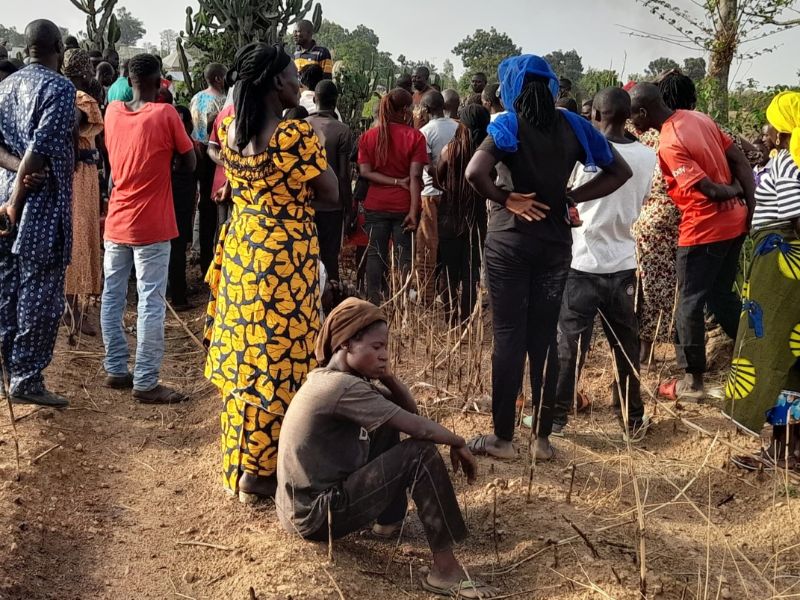
Christian leaders in Nigeria have renewed claims that Christians face systematic violence, following the abduction of dozens of worshippers during an attack on an Evangelical Church Winning All (ECWA) congregation in Kogi state.
Speaking to journalists in Jos, Plateau state, ECWA General Secretary Rev. Ayuba Asheshe stated that the church considers ongoing violence against Christians in Nigeria to amount to genocide. He said ECWA’s position is based on years of documented attacks, killings, abductions, and displacement of Christian communities across several regions of the country.
“We, the Evangelical Church Winning All (ECWA), therefore, categorically affirm that there is an ongoing Christian genocide in Nigeria,” Asheshe said.
According to him, records compiled by the church and other organizations show repeated attacks on Christian communities, particularly in northern Nigeria, the Middle Belt, and parts of western Nigeria. He added that while violence has affected people of different religious backgrounds, Christian communities are disproportionately targeted by organized armed groups whose attacks often focus on churches, Christian villages, and clergy.
Asheshe said these attacks have occurred over decades but intensified significantly after 2009, coinciding with the rise of Boko Haram and the spread of armed Fulani militia activity in several states. He attributed the violence to organized groups whose stated or demonstrated objectives include targeting Christian populations and symbols of the Christian faith.
“There is clear, verifiable evidence of a systematic and coordinated campaign of terrorism against Christians in Nigeria,” Asheshe said. “Hardly a day passes without reports of attacks on Christian communities.”
He pointed to patterns that include the destruction of churches, mass kidnappings, killings of clergy and congregants, and the displacement of indigenous Christian populations from ancestral lands. He said in many affected areas, displaced Christians are unable to return to their communities, while armed groups occupy or control farmland and villages previously inhabited by Christians.
The ECWA leader also referenced economic consequences linked to insecurity, including the loss of livelihoods and prolonged displacement, which he said have weakened the capacity of affected Christian communities to recover.
While acknowledging that Muslims have also suffered violence in Nigeria, Asheshe said the church’s position is that Christians remain the primary targets of certain armed groups operating with explicitly anti-Christian rhetoric or objectives.
He called on the Nigerian government to fulfill its constitutional responsibility to protect all citizens regardless of religion. Asheshe noted that ECWA recognizes steps taken by federal authorities to address insecurity but said those efforts must translate into improved protection for vulnerable communities.
He also urged international bodies, including the United Nations, the African Union, and global human rights organizations, to increase engagement with the Nigerian government over the security situation facing Christians.
“The blood of innocent Nigerians, men, women, and children, cries for justice,” he said, calling for international attention to the issue.
Asheshe added that ECWA remains open to cooperation with government institutions and civil society organizations focused on peacebuilding, reconciliation, and security. He cautioned authorities to ensure that individuals involved in security decision-making are impartial and committed to protecting all communities.
The remarks came amid fresh reports of violence targeting ECWA congregations. On Sunday morning, armed men attacked an ECWA church in Ayetoro Kiri, near Kabba in Kabba/Bunu local government area of Kogi state, during an ongoing worship service.
Eyewitnesses told local sources that the attack occurred at about 10 a.m. while congregants were gathered for Sunday worship. According to multiple accounts, more than 30 armed attackers arrived on motorcycles, firing gunshots into the air as they entered the church’s compound.
As worshippers attempted to flee, the attackers reportedly seized an undisclosed number of people and forced them into nearby bush paths. Locals said the gunmen appeared organized and operated for several minutes before leaving the area.
Community members and church sources later said that nearly 30 worshippers were abducted, including women, elderly congregants, and other vulnerable individuals. Authorities in the area subsequently confirmed that about 30 people were taken during the attack.
One resident, Caleb Majekun, said the attackers moved through the town on motorcycles before heading into the surrounding bush.
“They came into the town on motorcycles and took about 20 people, including women and children,” he said.
Local sources also reported that one person was killed during the assault on the church in Ayetoro. The victim’s identity had not been publicly released at the time of reporting.
In a related incident on the same day, three additional individuals were reportedly abducted in Ilai, another community near Kabba. Residents attributed the abductions to suspected Fulani gunmen operating in the area.
The attacks in Kabba/Bunu are part of a pattern of church-related kidnappings and assaults reported in parts of Kogi state and neighboring regions in recent years. Christian leaders and residents say armed groups increasingly target churches during services, when large numbers of people are gathered in one location.
Kogi state, located in Nigeria’s North-Central region, has experienced a rise in kidnapping incidents along major roads and in rural communities. Local officials have previously acknowledged security challenges in forested areas that provide cover for armed groups.
In recent months, churches across several Nigerian states have reported similar incidents involving gunmen entering worship services, abducting congregants, and retreating into remote terrain. In some cases, victims are held for ransom, while in others, the abductees’ whereabouts remain unknown for extended periods.
International Christian Concern (ICC) has documented repeated attacks on Christian communities in Nigeria, including church assaults, mass kidnappings, and killings linked to Boko Haram, Islamic State West Africa Province (ISWAP), and armed Fulani militias. According to data compiled by human rights organizations, Nigeria continues to record some of the highest numbers of Christians killed or abducted for their faith globally.
Nigerian security agencies have yet to release detailed statements on the Ayetoro Kiri attack. Residents say security forces arrived after the attackers had already fled the area.
Church leaders in Kogi have called for increased security presence around places of worship, particularly in rural communities where response times are often delayed. They have also appealed for coordinated efforts between federal and state authorities to address kidnapping networks operating across state boundaries.
As of the time of reporting, the abducted worshippers from Ayetoro Kiri had not been released, and families were awaiting further information on their condition and location.
To read more news stories, visit the ICC Newsroom. For interviews, please email [email protected]. To support ICC’s work around the world, please give to our Where Most Needed Fund.