
A Stable Christian Community in Lebanon is Vital for the Middle East
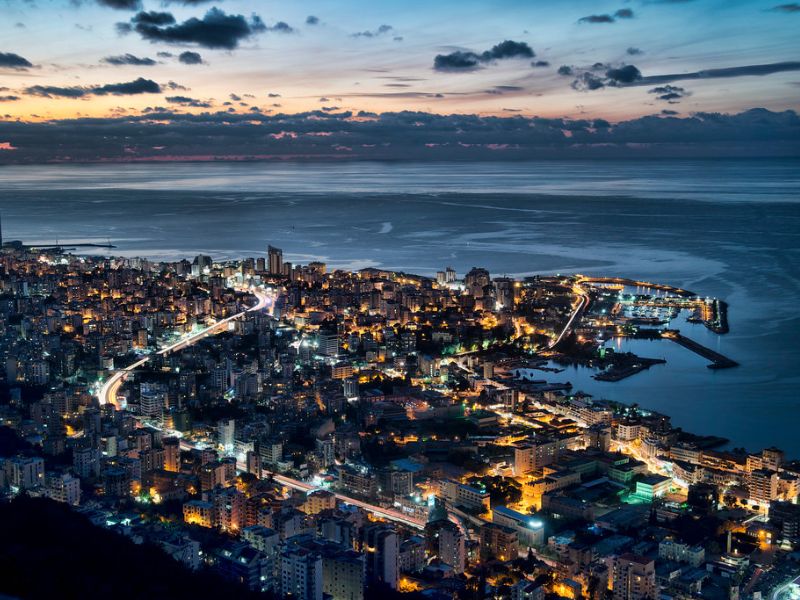
Lebanon rarely garners headlines like other Middle East actors. It’s a relatively stable homeland. Yet the country hangs in the balance as a beacon of Christianity and stability amid growing threats from radical Islam.
Christians accounted for about 70% of Lebanon’s population a century ago. Today, they are in the minority, numbering 20% to 40%, or roughly 2 million people in a nation of nearly 6 million people. Statistics vary depending on the source. The last nationwide census was in 1932.
A hodgepodge of private industry, Christian nonprofits, top government officials, leaders, Middle East experts, military veterans, Lebanese advocates, friends, and others recently gathered for a program on a chilly weeknight at The Hamilton two blocks from the White House in Washington, D.C.
The group, including International Christian Concern (ICC), met to support the launch of the America Lebanon Peace Advancement Council (ALPAC). The nonprofit strives to safeguard Christianity in Lebanon and strengthen its ties to the United States. For ALPAC, its founders, and President Fouad Arbid, a safe and religiously free Lebanon is vital for peace and stability in the Middle East.
The launch comes at a critical juncture as offshoots of the Islamic State group, and the radical proxies that serve as Iran’s marionettes, threaten the region and the Christian numbers that are in decline.
Lebanon, like most of the world, wants to live in harmony with all faiths and keep jihadists at bay. Throughout its 30-year history, ICC has advocated for and served persecuted Christians in the Middle East and North Africa and documented their struggles.
More than 200 people packed the lower floor of The Hamilton, a historic building built in 1929 that served as the Garfinckel department store. That was three years after Lebanon’s 1926 Constitution affirmed freedom of religion and other rights when Christians were in the majority. The international community must protect the rights of Christians and other minority faiths to worship in Lebanon or risk losing it altogether in the region.
The International Community Must Protect Lebanese Christians
Nationally recognized, Lebanese American Toufic Baaklini, founder and former president of Defense of Christians, is ALPAC’s chairman. Throughout his career, Baaklini has been instrumental in protecting Christians across the Middle East and in raising awareness at the highest echelons of government. His professional career, like Christians in the Middle East, can be defined by perseverance.
“For too long, our story has been one of endurance, decades of struggle built on centuries of resilience for Middle East Christians,” Baaklini said. The fight to survive is not new. It is a continuum, searching across generations shaped by regimes that were sometimes tolerant but far too often oppressive.”
Baaklini chronicled Lebanon’s rich history and the struggles the nation and its Christians have faced for eons. He noted that throughout the 20th century, waves of immigration, driven by poverty, persecution, and civil war, eroded the Christian foothold in Lebanon. Yet a multi-religious Lebanon thrived, proof that diversity, when protected and empowered, can be a source of national strength.
“Historically, the Christians of Lebanon have always been a bridge between East and West and are the biggest contributor to Lebanon being a cultural melting pot,” Baaklini said. “They are the glue that holds Lebanon together, natural allies to the west, but with roots in the east.”
Today, Baaklini is optimistic yet sees a country that is crumbling under a fiscal crisis, displaced communities, rampant corruption, and armed militias.
“We need a new way forward, a last chance to lift Lebanon from the ashes,” he said.
Midstream Amid a Current of Threats
“Today, the simple expression of faith could get you killed in parts of the world, from Afghanistan to Yemen to regions in the Middle East to Somalia and Nigeria,” said Lebanese American Dr. Anthony Moawad, secretary of ALPAC and one of the top dentists in the District of Columbia. “This is the level of persecution that Christians face in our time, and that reminds us that religious freedom is not guaranteed. It must be defended.”
That was the consensus of those who spoke and attended ALPAC’s enthusiastic launch. This is a pivotal moment and crossroads for democratically controlled Lebanon and its pluralistic leadership — shared by a Maronite Christian president, a Sunni Muslim prime minister, and a Shia Muslim speaker of parliament. While this shared family of faith has existed since 1943 and has been supported on paper, it has fought to keep tyranny at bay. Lebanon has long been determined to define and defend its future in a sea of competing ideologies.
Lebanon’s Christians stand midstream in a current of threats, including Islamist extremists. The country navigated a lengthy civil conflict between sectarian factions, Christians and Muslims, and outside forces in a geopolitical landscape. The Western world recoiled in horror when terrorists bombed the U.S. Marine barracks in 1983, killing more than 200 soldiers. Later attacks, including the USS Cole suicide bombing in 2000, brought the horrors of radical Islam into the Western world’s living room.
Those images and the “Beirut bombing” nomenclature may be cemented in people’s minds, but ALPAC and others are trying to course-correct. To go on the offensive and mimic the safety and still waters of the Mediterranean Sea that borders Lebanon to the West, and away from the volatility of its Syrian and Israeli neighbors, or Iran and other Middle East and North Africa flashpoints. To continue fending off Islamic extremists who want to tear down the fabric of anything Western, Christian, or democratic. Terrorists have clamored for the heart and soul of the Lebanese nation, pulling it toward more radical elements in the Middle East.
“The Lebanon that I see in this room tonight, because of you, is not the Lebanon of crisis and collapse. It’s not the Lebanon of a port explosion or a currency crash. It’s not a Lebanon held hostage by foreign proxies or paralyzed by political dysfunction,” said Johnnie Moore, vice chancellor and managing director of Middle East studies at Pepperdine University in Washington, D.C. Rev. Moore is also president of The Congress of Christian Leaders and a two-time presidential appointee to the U.S. Commission on International Religious Freedom (USCIRF).
“The Lebanon I see in my mind tonight, through your eyes, is the Lebanon that can be and will be one of the world’s most impactful countries, again,” Moore added. “If we have the courage to finish what history has started for us, and what a history it is. Lebanon is not another country in the Middle East. It is sacred ground.”
Moore recalled Lebanon’s rich biblical heritage — and economic and political importance — since the foundations of Christianity. He cited the cedars of Lebanon, used to build Solomon’s temple, mentioned some 70 times in the Bible. Jesus walked and performed miracles on the same hallowed Lebanese soil. Cherishing its biblical roots, holding to its democratic pursuits, the nation can free itself of the shackles of its past and define its future. Yet it takes a village.
“Lebanon is the missing puzzle piece in a regional transformation that’s happening before our eyes,” Moore noted. “Look at the Abraham Accords. Look at the modernization sweeping across the Gulf … Look at Syria emerging from Assad’s shadow, a new Middle East being born, one defined, as President Trump said, by commerce and not chaos, by technology and not terrorism. But if we leave Lebanon unfinished, if we allow Iran or Hezbollah to stage a comeback, the entire picture remains incomplete. Lebanon must be pulled firmly into the orbit of freedom and prosperity.”
A Beacon of Peace in the Middle East
Jacob McGee, deputy assistant secretary of the Bureau of Democracy, Human Rights, and Labor at the U.S. Department of State, has visited Lebanon twice, most recently on vacation, and loves its people and culture.
He said the United States has provided billions of dollars to aid the Lebanese people, safeguard vulnerable populations and communities, and bolster its armed forces.
“Lebanon stands apart in the Middle East,” McGee said. “Not only is it the only country in the region with a Christian head of state. It is home to one of the most vibrant Christian communities in the region, a community deeply integrated into public life, governance, civil society, and cultural leadership.”
The Middle East has been reeling from the Israeli-Hamas conflict, the fall of the Assad regime in Syria, the Houthis’ disruption of vital shipping lanes in the Red Sea, and Iran’s constant tentacles of influence through Hezbollah and other surrogates.
The region is a maelstrom of chaos, a religious scale that often dips toward radical Islam. More than 90% of the population of the Middle East and North Africa is Muslim, yet elements of the Islamic State want to grasp Lebanon and the region in its clutches.
Pope Leo IX recently reminded the world on his historical visit to Lebanon that Christians and religious freedom must be protected at all costs.
“The pope spoke with compassion about the suffering of Lebanese families, the importance of safeguarding Lebanon’s Christian communities and institutions, the duty of the international community to support Lebanon’s path, and the irreplaceable role of Lebanon as a model of interfaith coexistence,” Moore said.
“His message reinforced what many of us have long argued, the survival of Lebanon’s Christian community is essential for regional stability. The pope’s visit did not erase Lebanon’s challenges, as you know, but it reminded the world and the Lebanese people that Lebanon matters. We in the Trump administration could not agree more. Lebanon that protects its Christian communities and sustains religious freedom is a Lebanon that can be a beacon of peace in the Middle East.”
Lebanon Through the Eyes of a Marine
Gary Harrington was a young Marine officer in charge of 20 soldiers when they were called to Beirut, Lebanon, in 1982 to aid the Lebanese people, who had suffered greatly.
“The first thing that struck me upon seeing Beirut from the sea was its beauty,” Harrington said. “I saw its white beaches in the city above them and the mountains rising to meet the sky beyond the city. Then, as we approached the shore in our small boats, I began to see the city up close. Beirut still bore witness to its former beauty, for which it was called the Paris of the Middle East, but it now lay in ruins. What once had been beautiful structures were now collapsed on the streets that had been reduced to twisted paths around mounds of trash and debris. We could see and smell the signs of death and war.”
Harrington said the Lebanese people first welcomed the U.S. troops and celebrated their beach landing.
“Looking back, America’s the most significant contribution to the people of Lebanon at that time was to create the space … to allow their resilience and courage to surface and blossom. But in the vacuum created by the chaos and confusion of those times, different armed groups tried to gain power, and the Iranians began efforts to push back against our presence in the region, after being initially welcomed and celebrated. Protests and demonstrations against us began. Soon, we started taking sniper fire and motor fire, and the overall security situation for Americans deteriorated. As a young Marine, it was hard to understand how we could, at the same time, be celebrated and hated by those that we thought we were helping.”
Harrington’s deployment in Lebanon ended before the horrific Marine Corps barracks bombing on Oct. 23, 1983, attributed by many to Iran’s planning and execution. “It turned out to be only the beginning of Iran’s spread of terror and death throughout the region for many years to come,” Harrington offered.
His military journey took him from the Marine Corps to the Army’s Green Berets, where he worked in special forces and became a Delta Force counter terrorist expert in 1989, studying the tactics of al-Qaida, the Palestine Liberation Organization, and other extremist groups.
He watched as one American administration after another ignored or downplayed the threats of Iran’s rulers and their ability to foment hate toward the West.
Harrington saw firsthand how Iran exported its strategies and attacks against Americans and “brand of terror to Yemen, Iraq, Afghanistan, and other countries in the region.”
“Iran now has operatives on multiple continents, and as it seeks to destroy those who would oppose it in establishing a caliphate,” said Harrington, who in the military faced assaults from Iranian-backed missiles. “Iranian assassination teams have been arrested in the U.S., and in 2021, 11 Iranians, some with ties to Hezbollah, were arrested crossing the southern U.S. border. In my professional view, Iran has done more to spread death and disruption across the globe than all the other terror groups combined.”
Lebanon, like other bastions of the Middle East, is caught in Iran’s Axis of Resistance and the Iranian Revolutionary Guard Corps. Iran’s rulers have called America the “Great Satan,” and Israel the “Little Satan.”
The Iranian regime’s anti-Israel, anti-U.S., and anti-Western proxy — Hezbollah — weighs on Lebanon like a tumor. The Iranian intermediary exerts influence on Lebanon’s military, economy, politics, and society.
Harrington noted that Lebanon and the Middle East are at a crossroads. Iran and Israel have eroded Iran’s influence by chasing terrorists in Yemen, Iraq, and Syria. The Trump administration’s bombing of Iran’s nuclear sites and Israel’s targeting of its scientists and decimation of Hamas, and other setbacks for Iran, have opened a narrow window for aiding Lebanon.
“Now, Lebanon has the margin to develop new strategic international relations and treaties, as well as create better economic opportunities for its citizens,” Harrington said. “For the first time in a long while, Lebanese leaders have a chance to offer citizens the hope for a future of peace and security.”
Getting in the Game to Help Lebanon’s Christians
It’s hard to imagine a more optimistic, faith-inspired gathering in support of Christians in Lebanon than the ALPAC launch. The room was filled with professionals who had the resources and connections, the passion and Christian resolve, from State Department officials to wealthy benefactors, and everything in between.
Above all, speaker after speaker urged Lebanon’s advocates to get involved; to get off the sidelines so Christians aren’t sidelined permanently in Lebanon or its far shores, as Baaklini noted.
“This is Lebanon’s last chance to change the dynamics that have destroyed its fabric,” Baaklini said. “Jesus said in His Sermon on the Mount, ‘Blessed are the peacemakers, for they shall be called the children of God.’ Pope Leo said to the Lebanese youth, ‘The future is in your hands, and you have a historic opportunity to shape it.’
“We are gathered here together to act on these words, to make Lebanon peaceful, again, safe again, secure again, and prosperous again. Let’s make Lebanon great again.”
To read more news stories, visit the ICC Newsroom. For interviews, please email [email protected]. To support ICC’s work around the world, please give to our Where Most Needed Fund.