
A Tense Christmas for Christians Hunted in Nigeria
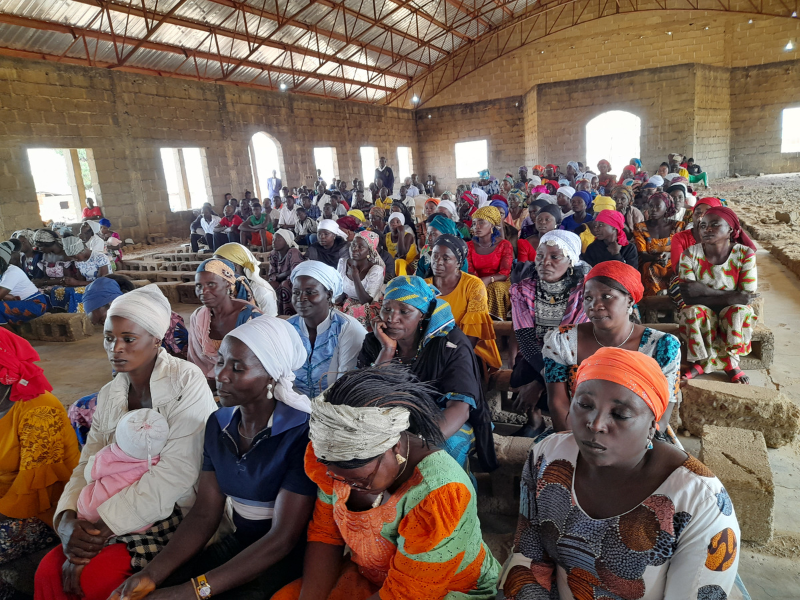
Ongoing attacks on Christians in Nigeria have recently gained more recognition: President Trump has declared Nigeria a “Country of Particular Concern” for its violations of religious freedom, and his administration is creating a plan for sanctions.
While many Nigerian Christians might appreciate such acknowledgment, the situation in much of the country remains as dangerous as ever. And the approaching Christmas season brings added concern: Jihadists are even more inclined to attack on Christian holidays, as shown by the massacres they undertook during the past two Christmases.
The previous Christmas Day in 2024 saw attacks on five villages, killing dozens, in Benue state in Nigeria’s Middle Belt.
And Christmas 2023 was astoundingly violent for Plateau state in the Middle Belt, where hundreds of Christians were murdered. This chain of attacks, perpetrated by Islamic Fulani jihadists on several remote Christian villages, began on the night of Dec. 23 and finished on Christmas Day.
Christmas Eve 2020 attacks in northeastern Nigeria’s Adamawa and Borno states killed a combined two dozen Christians and saw almost as many abducted. The attackers reportedly later released a video showing the murders and describing them as a “Christmas present.”
Additionally, Borno state saw seven people killed in a Christmas Eve 2019 attack and 14 people killed on Christmas Day 2015.
The timing of such attacks shows clear religious motivation on the part of the attackers. People may debate about the motivations of attacks during other parts of the year, but in the view of Jonathan* (a pseudonym) — a Christian in northeastern Nigeria — “well over 80%” of the group attacks throughout the year in his country are religiously motivated.
Though jihadists may not care much for Christian holidays on a spiritual level, they are attracted to such days for their own types of reasons.
“The festive period is usually taken advantage of,” Jonathan said. The jihadists know that many people will be traveling back to their home villages to celebrate with relatives, “so road attacks and abductions are common.”
Almost all Christians are heavily outgunned by jihadists, but there are some security measures they can take.
“Night movements and activities are discouraged in order to reduce risks,” Jonathan said. He also mentioned that some churches might have people conduct searches of individuals entering the church or inspect vehicles entering the church grounds.
There is good reason to search: Reports have started to circulate in Nigerian media that Islamic Fulani jihadists are planning Christmas Day attacks on communities in the country’s Middle Belt region.
“Jeremiah,” a Christian in that region, related information he received about Islamic Fulani jihadists reinforcing militias and preparing for a series of attacks on Middle Belt communities, including those where he lives in Plateau state.
Among the reported plans are group kidnappings of Christmas travelers and the invasion of villages during Christmas church services.
Jeremiah related that several warnings and recommendations have been given. Among them is wearing sturdy trousers and athletic footwear to improve your chances of escaping approaching jihadists, especially if you must run through rugged terrain.
Other recommendations are for individual travelers to avoid using headphones, which could limit their ability to perceive oncoming danger. For the same reason, households are advised to celebrate upcoming holidays at a reduced noise level.
All churches are advised to close on both Christmas and New Year’s Eve before darkness sets in. Churches are also encouraged to have surveillance systems capable of long-distance observation — but such technology is in many cases prohibitively expensive.
“As Christmas 2025 approaches, fear is widespread,” said Justice G. Danjuma, an evangelist for the Remnant Christian Network in eastern Nigeria’s Taraba state. In his home region, “past massacres have left communities traumatized and defenseless.”
So, what should be a time of celebration has instead been largely supplanted by grim expectations. Danjuma related that Christians in his area have spoken of “sleepless nights as Christmas approaches.”
A series of violent attacks during recent Christian holidays, combined with an overall violent year in 2025 and, most recently, a warning of an impending attack, is now converging on the psyche of millions of Christians in Nigeria.
“These patterns make Christians expect renewed attacks during Christmas 2025, especially in rural communities,” Danjuma said.
What they do not expect is that their attackers will have to face justice.
“Government complacency is appalling,” Jonathan said. “It is clear that there’s a deliberate plan to arm the terrorists while others are disarmed and threatened.”
Technically speaking, Nigeria has strict gun laws. But they are inconsistently enforced. The result is that Christians of civilian status must “rely on protection by state security agents,” but the government “isn’t standing up to their security,” Jonathan said.
He added, “The recurring attacks and the inability of the government to solve it suggest that they’re either helpless or complicit.”
To read more news stories, visit the ICC Newsroom. For interviews, please email [email protected]. To support ICC’s work around the world, please give to our Where Most Needed Fund.