
Rwanda, DRC Reaffirm Intentions for Peace Amid Ongoing Violence in Eastern DRC
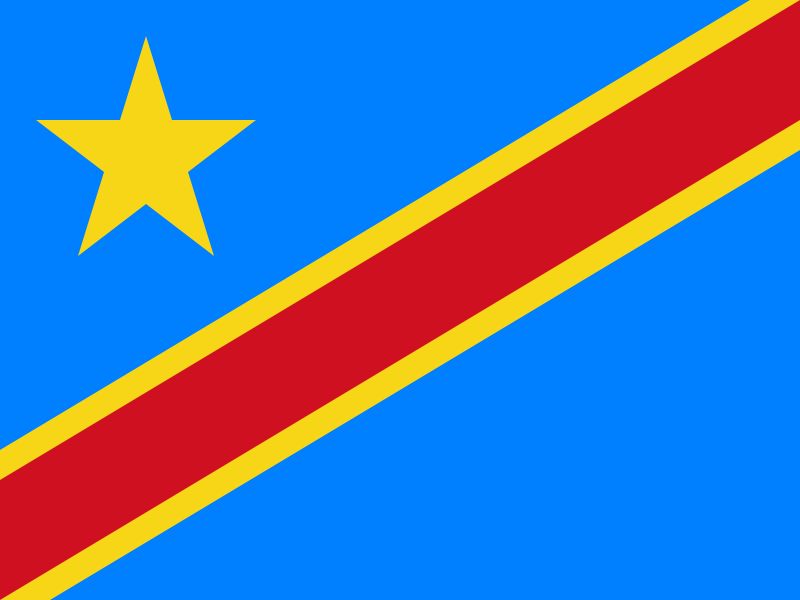
President Donald Trump gathered in Washington, D.C. this week with the leaders of Rwanda and the Democratic Republic of the Congo to sign a document aiming to reinforce the countries’ respective “commitments to end decades of conflict, foster economic cooperation, and build a foundation for lasting peace,” according to a press release from the U.S. Department of State.
The event follows a similar signing in June, when the same leaders gathered at the White House to sign an early-stage peace framework.
This week’s agreement was written in broad, sweeping language. “We affirm our unwavering commitment to peaceful relations, mutual respect, and cooperation,” it began, going on to thank President Trump for his “significant contributions to advancing the normalization of bilateral relations.”
Last month, the DRC signed an agreement laying out a framework for peace with the biggest militant threat within its borders, the Rwanda-backed M23 militant movement.
Approximately six million people have been killed since the Rwanda-DRC conflict began in the 1990s as a spillover from the 1994 Rwandan genocide. Today, nearly 8 million people remain internally displaced within the DRC.
While the peace deal marks a significant step forward in the decades-long conflict, many analysts caution that it is unlikely to bring widespread peace to the region or ensure the safe return of millions of displaced persons.
“There will be neither any change in the situation on the ground, nor any activity whatsoever,” the head of the M23 delegation said after the November meeting, “until the measures are debated, negotiated and discussed one by one and a final peace agreement is reached.”
Rwanda is known to support the M23 militant group, but the extent of that support — and the group’s willingness to stand down following the agreement — remains unclear. Though M23 receives backing from Rwanda, its fighters are primarily Congolese.
Even if M23 were to dismantle its operations and relinquish control of the parallel administrations currently governing several areas of eastern DRC, it would still be far from the only militant group operating in the region. Without a robust force to fill the void, its withdrawal would likely create a dangerous power vacuum.
More than 7.8 million people are currently displaced in eastern DRC. At the same time, 28 million face urgent food insecurity, according to the U.N. Violence has surged in 2025, largely due to an M23 offensive and attacks by other groups, including the Islamic State-aligned Allied Democratic Forces (ADF).
In late July, ADF fighters attacked a Christian church in Ituri Province, killing at least 40 worshipers and burning numerous shops, homes, and vehicles. Thirteen children were killed in that attack alone.
A week-long attack stretching from Aug. 9-16 in North Kivu Province led to the deaths of at least 52 civilians. The attack was attributed to ADF, which also conducted “abductions, looting, and the burning of homes, vehicles, and motorcycles, as well as the destruction of property belonging to the population already facing dire humanitarian conditions,” according to the U.N. mission in the DRC.
The U.N. recorded 33 attacks on healthcare workers and facilities in the first six months of 2025, nearly triple the number of attacks as compared to the last half of 2024.
According to Human Rights Watch, M23 “summarily executed over 140 civilians” in July, possibly on ethnic grounds. An Amnesty report, published in August, detailed a widespread pattern of brutality in M23 actions, including gang rape, torture, and extrajudicial executions.
While M23 and ADF are among the most prominent rebel groups, about 120 other armed rebel groups are active in the DRC, making lasting peace difficult to achieve. The U.N. has described the situation in the DRC as “one of the most protracted, complex, serious humanitarian crises on Earth.”
Given the number of other militant groups, it is unclear what would happen if M23 dismantled its operations and relinquished control of the parallel administrations currently governing several areas of eastern DRC. Without a robust force to fill the void, its withdrawal would likely create a dangerous power vacuum.
Without decisive action to ensure the safety of civilians, restore government authority, and address the complex network of militias fueling instability, the DRC risks repeating the cycle of broken promises and renewed bloodshed that has defined past peace efforts.
Soberingly, M23 itself emerged from a failed peace deal, forged some 16 years ago, that was never fully implemented.
While the international community is coming to recognize the extreme danger posed by terrorism in the area, it does not seem to fully appreciate the element of religious extremism within these organizations. In searching for long-term solutions to terrorism in the country, it is important that the world address not just the economic roots of the insurgency but the ideological ones as well.
Whether through targeted information campaigns on the ground or specific efforts to protect religious communities in the DRC, it is vital that the world recognizes the persecution happening and addresses it accordingly. Only then can a workable solution be reached.
To read more news stories, visit the ICC Newsroom. For interviews, please email [email protected]. To support ICC’s work around the world, please give to our Where Most Needed Fund.