
Dissolution and Predation: Threats to the African Youth Movement
By Greg Cochran, Ph.D., ICC Fellow
12/01/2023 Africa (International Christian Concern) – A quick Google search of the phrase “Youth Movement” yields millions of links to an unimaginable number of causes trying to lay claim to the next generation: Youth for Scouting, Youth for Palestinians, Youth for Jews, Youth for Civil Rights, Youth for the Environment, and Youth for Africa. Reading through the links is more tedious than watching a boring movie with a joyless companion. It takes so long!
Why do people hunger for a youth movement? Most likely, the hunger reflects a hope to see their own movements have a future. As Thomas Bergler writes in his book The Juvenilization of American Christianity, people are concerned about “what they need to do to appeal to ‘the young people’ and to remain viable….” Obviously, Bergler has church ministries in view, but the strategy for all movements is the same: appeal to youth. Youth appeal drives entire industries like entertainment, fashion, and sports, and potentially drives noble causes like education, Christian ministry, and political reform movements. Everyone who cares about a cause also cares about that cause continuing into the future. So, youth appeals.
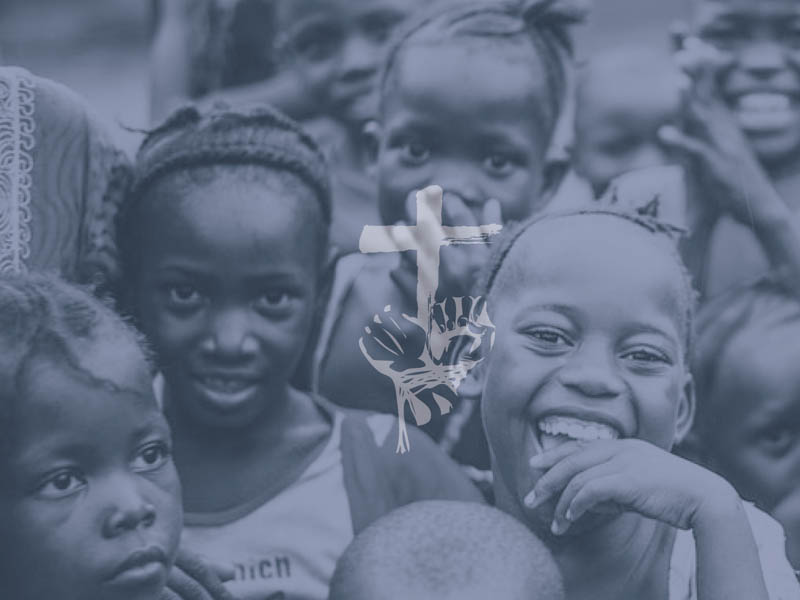
The continent of Africa is currently pregnant with a massive youth movement. Given the demographic outlook of African nations, marketers will likely be targeting Africa more in the future. Currently, people living on the continent of Africa make up 17.89% of the world’s population. However, Africa keeps growing younger. By 2050, more than 40% of the children in the world will be born and living in Africa. Thus, Africa represents a disproportionate opportunity for youth movements—particularly in those African nations across the Sahel. Across Africa, 19 of the 20 “youngest” nations in the world reside. And 14 of the 20 youngest nations are located in the Sahel.
The fact that Africa is about to experience a global youth movement is not in dispute. As noted in an earlier article, Africa is the youngest continent; by 2050, it will be the only “youthful” continent. Yet, what might be disputed is whether this impending youth movement is a good thing. Is this growing African youth movement good and desirable?
Maybe. It depends. If marketers in the U.S. accurately assess the value of youth, then Africa is primed to succeed in the next century. But what if the marketers are a little misguided or short-sighted? What if the vitality of a movement isn’t determined by youth but by something more critical than age?
Like a timid kid in a classroom of bullies, these questions want to raise a hand to get the teacher’s attention. And like a good teacher, Silvana Taska has noticed the questions. Writing a brief on behalf of the Project on Middle East Political Science (POMEPS), Taska explains that Yemen had a unique opportunity for political reform fueled by dozens of youth movements. As a result of this mobilization of youth, Yemen’s revolution lasted longer than most of the movements at the same time across the Middle East. Taska points out the particular vulnerability of youth and, thus, youth movements. The youth movement in Yemen—like other youth movements—dissolved predictably in one of two directions. Taska says, “Lack of employment and increasing poverty further pushed youth activists to two opposite actions: demobilization or taking up arms.”
Taska’s study is instructive for the coming youth movement across Africa’s Sahel. First, the existing political order doesn’t relinquish power easily. Youth movements historically have dissolved and demobilized into the existing political order. Political power brokers understand the value of youth and, thus, absorb them into their own agendas, repaying with a seat at the table or with the promise of having a voice in the movement. Will the African youth movement dissolve into the existing political order? What will that dissolution produce?
The second direction in which youth movements dissolve is more troubling—as youth are absorbed into violent extremist movements. Given the recent trend of violence across the Sahel, the coming youth movement may arrive with ominous overtones. According to the Africa Center for Strategic Studies, militant Islamist group-linked fatalities have reached an all-time high earlier this year across the Sahel.
For the political opportunist, the coming youth movement offers hope for the renewal and longevity of the movement. For the militant extremist, the coming youth movement represents the hope for new recruits. The current situation in Borno state, Nigeria, is instructive on this point. Babagana Zulum, governor of Borno state, recently made this startling remark: “We have to stop the younger ones from being recruited into Boko Haram and ISWAP; otherwise, in the near future, the entire Nigeria will be wiped off the map.” In this instance, youth is a danger, not an advantage.
Because of the vulnerability of those displaced persons in Borno state, violent extremist groups prey upon young, hungry recruits. These recruits aren’t necessarily hungry for violence. They’re just hungry. Violence has produced extreme poverty for these displaced Nigerians. In at least four areas of Borno state, poverty has reached beyond the crisis stage to the IPC Phase 4 emergency level. Youthful energy and the threat of starvation make for fruitful extremist recruiting.
What Zulum’s statement signifies for the future is that youth alone is not enough to sustain a good movement. If any good movement goes forward, it does so by youth and by the conditions necessary for youth to thrive. What conditions allow youth to thrive? Strong families, faith in the God who created and sustains all things, access to private property, entrepreneurial opportunities, education, jobs, and a predictable rule of law. Many of these conditions are currently in flux in Nigeria and Borno state.
In Borno state, violence, poverty, corruption, and predation dominate. Governor Zulum is leading an ambitious effort to get control of the situation, but many are critical of his actions. He aims to close the refugee camps in the area and move the internally displaced residents back to their original villages. His efforts are highly controversial. He maintains that the refugee centers create dependency and predation—dependency on NGO’s supplying food and other necessities. By predation, he means the predatory recruiting by ISWAP and Boko Haram in the areas where refugees are most vulnerable. Maybe Zulum’s strategy is too ambitious or is moving too fast. His point is still one that should be heard. A youth movement with the wrong conditions could actually hasten the demise of Nigeria and other African nations.
Christians—particularly Christians in Nigeria—should continue to have strong marriages, strong families, and strong churches in the spirit of Christ’s command to “let the little children come and do not forbid them; for such is the kingdom of heaven” (Matthew 19:14). Both the Old Testament and the New Testament affirm the value of a Christian household, including children (Deuteronomy 6, Psalm 127, Ephesians 6). Christians have an opportunity and an obligation to invest in families, children, and youth discipleship strategies, which include youth leader development. While it may seem that other political matters are more urgent, the real existential crisis in Nigeria and across the Sahel might be determining how to welcome a healthy youth movement. May the Lord grant this movement to be an awakening rather than a darkening, a revival rather than a repeat of the violence to the poverty cycle.
For interviews, please contact: [email protected]