
Ashray: A Sanctuary for Community Renewal
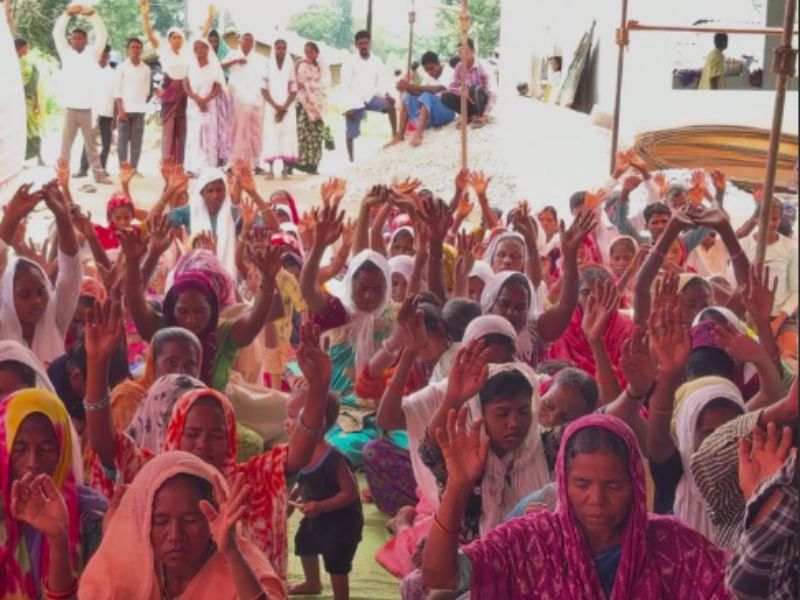
In the high-stakes humanitarian landscape of central India’s Chhattisgarh, addressing displacement has become a critical strategic priority. For families in this region, persecution is not a theoretical risk but a physical onslaught that has reached the “point of death.”
The situational analysis across nine distinct villages revealed a systemic pattern of violence: families are not merely being harassed; they are sustaining life-threatening wounds, enduring severe physical beatings, and being stripped of every means of survival.
This crisis is compounded by a significant ecclesiological gap. While the need is staggering, many existing episcopal institutions have failed to provide a safety net, leaving the vulnerable with no recourse. This vacuum of support has forced believers into a desperate struggle for survival that transcends standard poverty metrics.
Recognizing this dire need, International Christian Concern (ICC) conceived and supported Project Safe House not just as a building, but as a strategic tool to prevent backsliding and even apostasy through neglect. Building a safe house is a tangible expression of faith through “deeds and acts,” showing that the Christian community will not abandon its own in their hour of greatest crisis.
Holistic Refuge
On Sept. 4, a two-room safe house was dedicated for the persecuted people in central India by ICC staffers in the presence of local pastors, believers, and those Christians who have been ostracized from their villages and were leading nomadic lives until now.
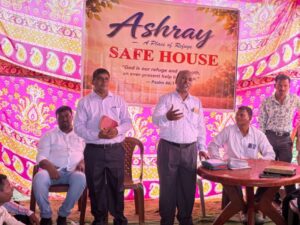 Tucked away from the hustle and bustle of city life, the safe house, christened Ashray (place of refuge) and located in a village area, includes separate living rooms for men and women, a kitchen, washrooms, and a patio for relaxation.
ICC has also provided bedding, blankets, cooking vessels, miscellaneous vessels, buckets, tubs, mugs, etc., so displaced people can lead a decent life in a home far from their actual residence.
“The lack of a haven had created a profound crisis of hope,” observed an ICC staffer who oversaw this project from the inception stage. “Without a secure location to retreat to, families have been forced to flee into the depths of forests, surviving under trees and exposed to the elements, living in constant fear for their lives.”
According to the ICC staffer, to ignore the physical reality of the persecuted people is to risk the total collapse of these displaced communities. The severity of the wounds — both physical and psychological — demanded a transition from ad hoc aid to a permanent, structural intervention.
From Intercession to Infrastructure
Historically, the response to persecution in the region was limited to reactive intercession and sporadic assistance. However, the region needed an evidence-based strategic pivot. While prayer remains a cornerstone of the mission, local leadership recognized that “words of blessing” alone cannot heal a physical wound or house a homeless family.
This shift was driven by a critical retention crisis. When families are beaten and abandoned by the broader community, the resulting despair often leads them to return to “old faiths” and traditional practices simply to survive without tangible community support.
ICC has observed this retention crisis as a stark ground reality during its ongoing coverage of persecution cases and incidents across many districts of Chhattisgarh, such as Bastar, Dantewada, Narayanpur, Kondagaon, Kanker, etc.
Core Objectives of Safe House
Provision of immediate refuge — Establishing a high-security environment for those currently “on the run for their lives.”
Spiritual and communal retention — Mitigating the risk of believers returning to old faiths by providing a consistent, supportive presence.
Tangible faith execution — Moving beyond verbal support to provide a functional, physical sanctuary that validates the gospel through action.
The reality of the Safe House would not be possible without Pastor Madey Nag, whose dedication serves as the project’s moral and operational anchor. Nag has in the past been a witness to the trauma faced by hundreds of persecuted believers who ran from pillar to post seeking relief and a place to hide themselves from the onslaught of fanatics.
The physical completion of the Safe House serves as a powerful symbol of security in a region defined by volatility. For the displaced, this facility is the first evidence that the global church prioritizes their safety.
The Restoration Model
The Safe House functions as a medium-term stabilization center. Persecuted and displaced families can reside here for one to three months, allowing them to cook their own meals, recover from injuries, and pray in the local church.
This duration is critical to moving residents from a state of emergency to readiness for the next phase of their lives.
ICC hopes to assist these persecuted believers by providing essential provisions like food, water, and groceries to eliminate the stress of basic survival for a minimum period of four to five months for every victim family.
Medical assistance will also be provided for those who sustain physical injuries during beatings and persecution.
The ultimate goal of this model is for families to be not just sheltered, but “strengthened and blessed” to continue their journey. By providing a space to pray and recuperate, believers can gain the fortitude needed to maintain their faith despite the trials they have endured.
ICC has plans to set up similar safe havens in other districts in central Indian states where persecution is rampant.
To read more news stories, visit the ICC Newsroom. For interviews, please email us. To support ICC’s work around the world, please give to our Where Most Needed Fund.